Gaza Herald — My relationship with Gaza was forever reshaped on June 13, 2024, when I arrived for my initial rotation as a visiting surgeon. Spending three weeks at Deir al-Balah’s Al-Aqsa Hospital brought my Palestinian roots and medical calling into sharp alignment, permanently altering my perspective and purpose.
As my departure approached, I turned to my local colleagues, asking how best to support their struggle from abroad. Their directive was simple yet unyielding: “Tell them about Gaza. Do not forget us. You can help change things from the outside.”
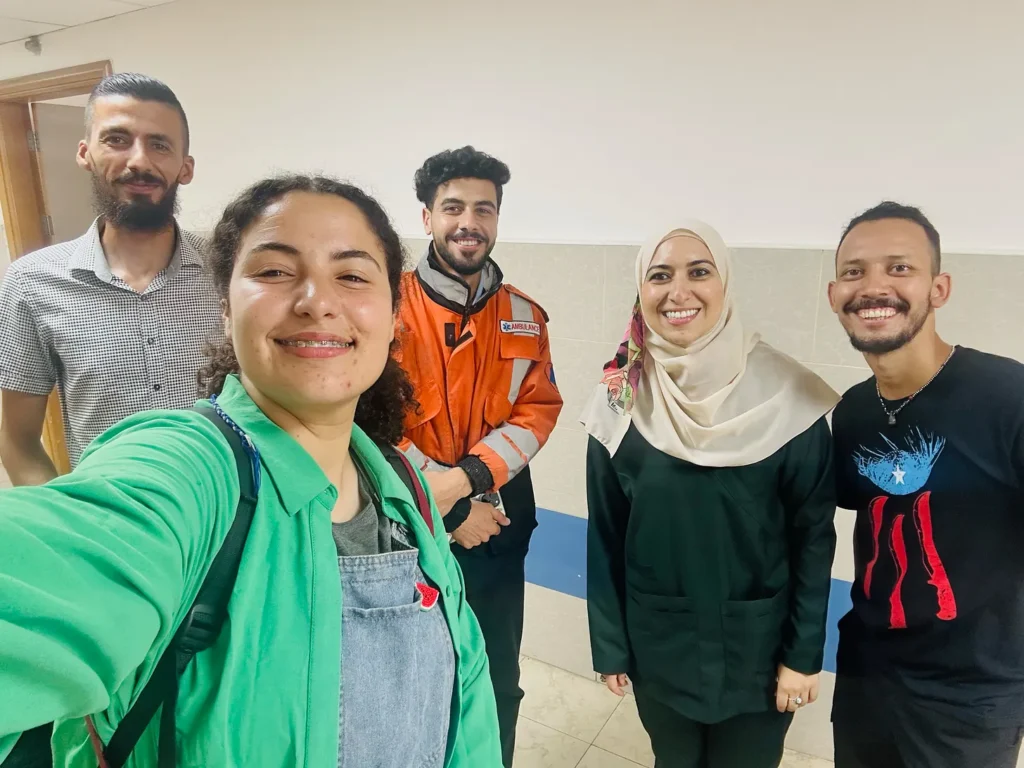
During that brief period, I integrated into the beating heart of Al-Aqsa Hospital, forging unbreakable ties with fellow caregivers, patients, journalists, and displaced families seeking shelter on the facility’s grounds.
The Fracture of Global Moral Precepts
I held an initial, naive hope that broadcasting the raw truth would compel the international community to intervene. Yet for nearly eight decades, Palestinians have documented the harsh realities of living under Israeli occupation. Even as this crisis unfolded as history’s most documented genocide, global political bodies and legal institutions responded with an agonizing paralysis, a silence that leaves an enduring scar on human conscience.
Conditions spiraled further downward following my departure in July 2024. I vividly recall 16-year-old Malaak, confined to a thin floor mat with her severely fractured legs immobilized by external steel pins, her open abdominal stoma constantly draining intestinal fluids. Wasted away to skin and bone, she desperately needed clinical nutrition. Despite her younger brother’s tireless care in changing her surgical dressings, Malaak starved to death because the military blockade denied entry to critical nutritional feeds.
When news broke in August 2024 that Israeli armored units were encircling Al-Aqsa Hospital, horror rippled through the staff. Everyone knew the devastating pattern that unfolds when military forces assault a medical center.
My Palestinian colleagues previously shared harrowing accounts of the 40-day siege at Al-Shifa and Indonesian Hospitals, where staff members wearing medical scrubs were shot by snipers near windows or exits. Soldiers called out clinicians by name over megaphones, summoning them for detention, brutal interrogation, and forced disappearance. Trapped personnel survived for weeks on patient IV fluids and sporadic canned rations. Many of those health workers remain in military detention facilities, while others died under severe abuse.
Operating in Ruins Amid Unbroken Grief
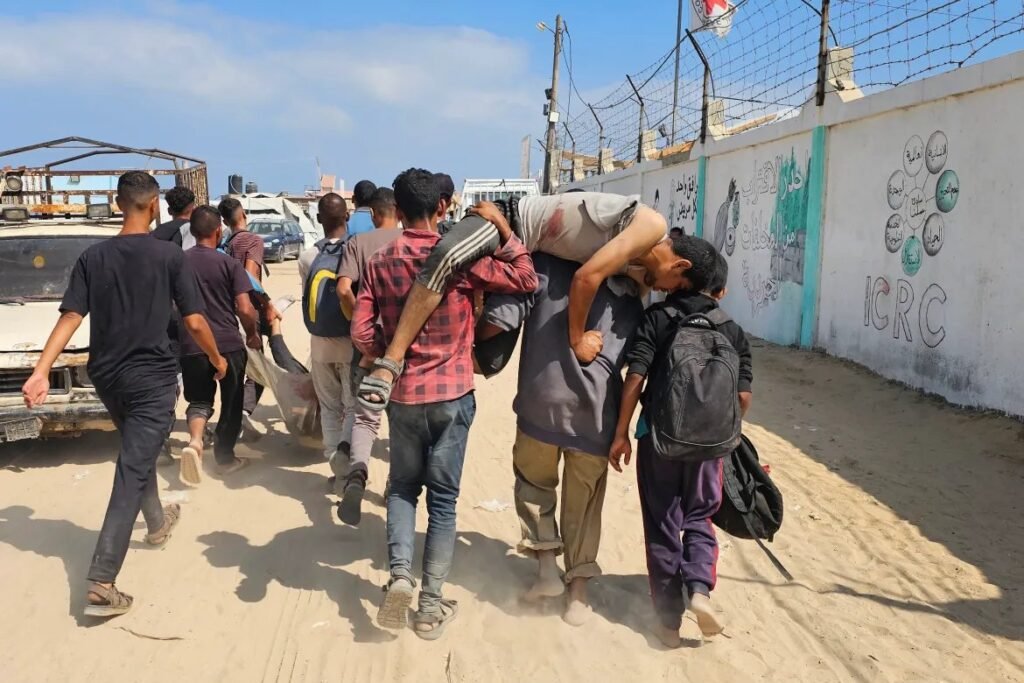
The relentless flood of mass casualties overwhelmed all clinical workflows. Doctors were assigned exclusively to register hundreds of unidentified bodies under the designation Majhool. Surgeons operated on corridor floors and in facility kitchens as operating rooms reached total capacity, all while local telecom networks were repeatedly severed.
Medical staff finishing exhausting shifts would step out into makeshift shelters, only for their colleagues to receive their remains in the trauma bay hours later—torn apart by air strikes or targeted by armed drones. The most agonizing moments occurred when staff members had to treat their own parents, partners, or children. In Gaza, the Janazah funeral rites have remained in perpetual motion for over 1,000 days.
This systematic destruction exposes a calculated doctrine: to destroy a society’s capacity to heal by methodically dismantling its hospitals and eliminating its healthcare professionals.
Systematic Exclusion and the War on Healthcare Workers
Returning to Al-Aqsa Hospital in December 2024, I witnessed an intensified military campaign alongside stricter prohibitions on incoming humanitarian aid. Israeli authorities rejected between 50 and 60 percent of international healthcare volunteers seeking entry on organized medical delegations.
Securing entry approval from COGAT felt like an anomaly amidst institutionalized discrimination. Palestinian health workers holding national identity cards were uniformly banned from entry; possessing Palestinian lineage was treated as a disqualifying factor for rendering medical care.
To reach their patients, several foreign doctors had to challenge these military entry bans through Israeli courts. Healthcare professionals should never be forced to litigate for the basic right to alleviate human suffering. Medical ethics dictate that healthcare is a universal human right protected under international law, not a conditional privilege subject to political discretion. Gaza stands as a catastrophic testament to the total abandonment of these legal principles.
Testifying to Systematic Destruction
By my third deployment in June 2025, spent primarily at Gaza City’s Al-Shifa Hospital with additional shifts at Al-Quds Hospital, the scale of military violence had reached unprecedented levels. The horrifying images remain vivid: young girls and women brought into emergency bays with traumatic amputations following strikes on coastal gathering spots like the Al-Baqa café; civilians gunned down while attempting to gather food at aid centers; and treating wounded colleagues treated after being pulled from the rubble of their targeted homes.
The strategy behind manufactured starvation was glaringly obvious. While international staff subsisted on basic provisions like rice and protein bars, the local population was systematically starved to weaken social solidarity. Yet, the people of Gaza continue to demonstrate unmatched resilience and faith.
The Obligation to Speak Truth
These eyewitness accounts, alongside testimonies from 40 Australian and New Zealand healthcare personnel who served in Gaza or were blocked from entering, are documented in The Weight of Witness: The experiences of Australian and New Zealand medics in Gaza.
Each contributor stands as a direct witness to the systematic destruction of the Palestinian people. Across the medical field, clinicians advocating for their patients have faced professional retaliation, institutional censorship, doxxing, and job loss.
Penalizing those who document atrocities while shielding those who commit them represents a profound systemic failure in global health leadership. Ultimately, we return to the urgent plea of our frontline colleagues in Gaza: Tell them about Gaza. Do not forget us.