Gaza Herald _ As winter approaches, two million forcibly displaced Palestinians across the Gaza Strip face another harsh season of freezing temperatures, torrential rain, and extreme uncertainty inside worn-out tents that offer no protection against the elements. With their homes systematically destroyed by Israeli bombardment and their belongings buried in rubble, families have virtually no options for secure shelter.
While prefabricated mobile homes and durable emergency housing could offer life-saving protection, Israeli occupation authorities continue to enforce strict prohibitions on bringing shelter materials and caravans into the blockaded enclave, leaving millions exposed to the approaching winter storms.
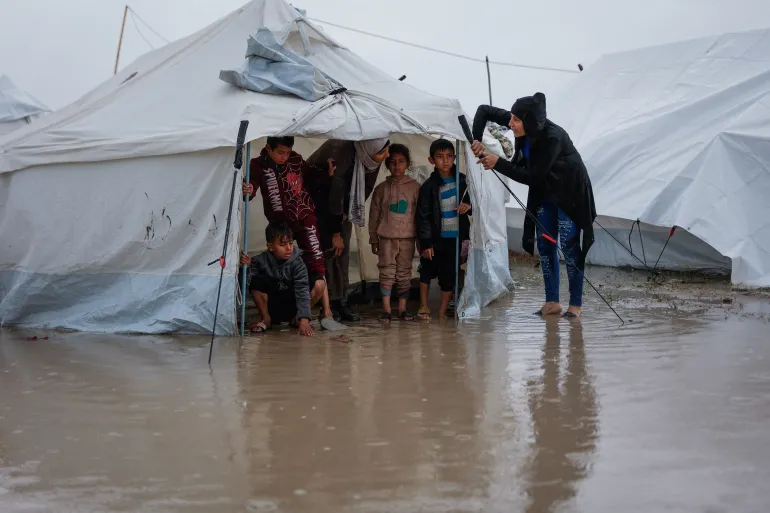
For families living beneath frayed tarpaulins and torn fabric, the initial seasonal downpours threaten to flood sleeping quarters, soak remaining blankets, and leave young children exposed to damp, freezing conditions overnight. Strong winter winds routinely tear away fragile canvas coverings, while impoverished households lack the basic resources to repair their makeshift shelters or purchase replacement nylon sheets. After repeated forcible displacements, the prospect of incoming winter storms has become a source of profound dread across displacement camps.
This severe crisis is not merely a logistical shortage of canvas tents; it is an engineered housing disaster targeting a population whose homes have been flattened, with all avenues for reconstruction blocked by the ongoing siege.
An Elderly Cancer Patient Left Defenseless Against the Cold
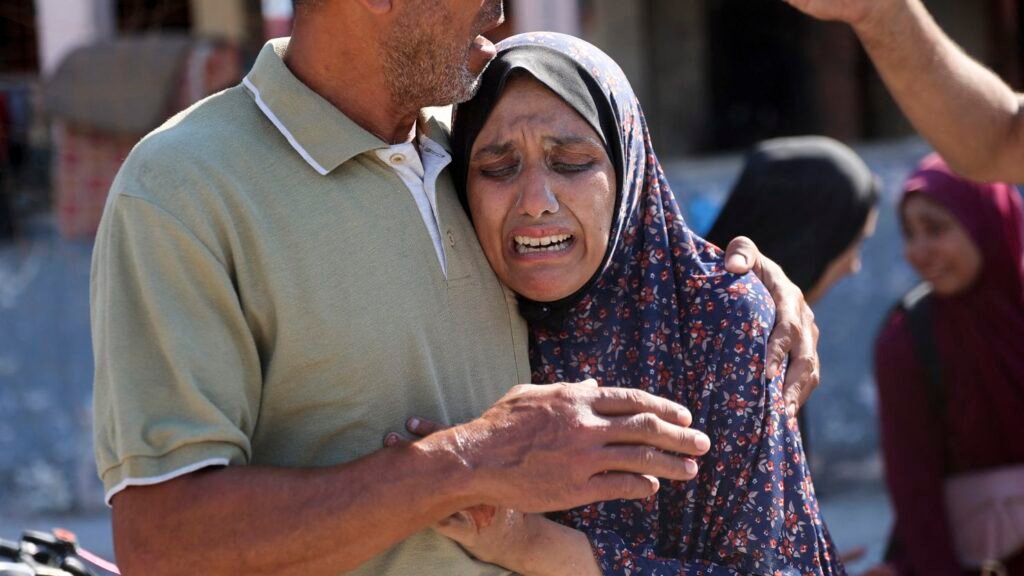
Inside a deteriorating tent, Saadia Jundi struggles to manage daily survival with worn-out blankets and thin plastic sheeting that offer no defense against driving rain and gale-force winds. Her family home in Gaza City’s eastern Shujaiya neighborhood was destroyed during Israeli air attacks, forcing her into repeated displacement alongside her two orphaned grandchildren.
Jundi is also battling cancer, making exposure to damp, freezing conditions an immediate threat to her life. The fragile tent serving as her family’s shelter provides neither the stability nor the sanitary conditions required for a critically ill patient recovering under siege.
Her request is modest: a secure structure where she and her grandchildren can stay warm, dry, and protected from winter storms. A prefabricated mobile home would offer a solid roof, essential privacy, and basic stability while the family waits for the right to return and rebuild their destroyed home.
For Jundi, the approaching winter is an immediate physical threat to a family already coping with severe illness, grief, and total loss. A leaking fabric tent offers no barrier against freezing temperatures, leaving her young grandchildren vulnerable to respiratory illness and cold nights on soaked bedding.
Her situation mirrors the reality of hundreds of thousands of displaced households across Gaza. Tents provided as temporary emergency shelter have become permanent living quarters, despite degrading after months of continuous sun exposure, storm damage, and repeated relocations.
Families Face Approaching Storms Without Basic Repair Supplies
Amer Khilla’s family faces the same hardship. After Israeli bombardment destroyed their home in northern Gaza’s Jabalia refugee camp, the family was forced to flee to an informal, overcrowded displacement camp west of Gaza City.
As heavy rains loom, Khilla fears storm run-off will flood their living area, soaking the family’s few remaining clothes and bedding. Nights intended for rest threaten to become prolonged struggles against freezing water and mud.
Khilla emphasizes that their worn fabric tent is completely incapable of withstanding winter winds and heavy rainfall. The family urgently needs wood beams and tarpaulins to reinforce the structure, alongside dry mattresses and thermal blankets. However, total financial exhaustion and the strict blockade on basic shelter imports leave them unable to secure basic repairs.
Like millions of displaced Palestinians, the family is forced to depend entirely on meager humanitarian aid. The massive gap between urgent survival needs and blocked relief imports leaves families defenseless ahead of severe weather.
Their predicament highlights a structural crisis in Gaza’s displacement centers: shelter materials wear down rapidly, yet Israeli import bans prevent families from replacing them. Each incoming storm threatens to turn fragile displacement camps into catastrophic humanitarian flood zones.
Israeli Blockade Restricts Mobile Homes and Critical Winter Aid
The shelter crisis is driven by Israeli restrictions on the entry of essential relief materials, including prefabricated caravans and mobile housing units designed to provide durable emergency shelter. Although the ceasefire that took effect on October 10, 2025, raised expectations that shelter supplies would enter freely, occupation authorities continue to block prefabricated housing units, construction supplies, and structural reinforcement materials from entering the Strip.
The destruction of residential sectors across Gaza has left vast numbers of Palestinians with no homes to return to. With long-term reconstruction blocked under siege, temporary mobile housing remains the only viable mechanism to protect families from winter mortality.
Beyond mobile homes, the population urgently requires replacement tents, heavy-duty tarpaulins, timber supports, fastening hardware, thermal mattresses, blankets, and winter clothing. Displaced communities also need elevated shelter arrangements to prevent catastrophic flooding, particularly for young children, elderly residents, and chronic medical patients.
Arbitrary import bans, combined with funding deficits and restricted aid passage, prevent international relief organizations from distributing winter supplies at scale. The window to prepare is closing rapidly as winter sets in, while impoverished families remain unable to afford basic market-rate repairs.
This enforcement creates a deadly gap between basic survival needs and available protection. For vulnerable families like Jundi’s, access to a durable mobile unit marks the difference between enduring winter in a failing tent and securing basic physical protection.
Two Million Palestinians Deprived of Adequate Winter Shelter
The International Organization for Migration (IOM) issued a stark warning during a United Nations briefing, confirming that approximately two million Palestinians in Gaza urgently require shelter assistance. Official winterization supplies currently available in the enclave are sufficient to cover a mere 17% of total estimated needs.
The UN agency further confirmed that over half of all temporary tents and makeshift shelters across Gaza are in poor or unusable condition, with vast displacement zones situated in high-risk flood basins.
These severe conditions expose millions to the hazards of previous winter seasons, when torrential rains and gale-force winds flooded thousands of tents, ruined remaining possessions, and destroyed fragile encampments. For families who have endured repeated forcible displacement, the destruction of their remaining tent strips away their last layer of physical security.
This shelter deficit is especially acute due to prolonged, forced displacement. Families cannot return to flattened towns, while ruined civil infrastructure prevents alternative housing arrangements. In overcrowded coastal camps situated in low-lying zones, even moderate rainfall causes immediate sewage overflows and severe flooding.
Addressing this crisis requires proactive structural relief before severe weather hits, including the unhindered import of winterization materials and heavy shelter units. Prefabricated mobile homes provide a critical bridge to keep families alive until reconstruction begins, but only if the blockade on housing materials is lifted.
For Gaza’s displaced population, winter storms are arriving far faster than life-saving aid. Saadia Jundi and her orphaned grandchildren should not be forced to face freezing temperatures beneath rotting canvas, nor should Amer Khilla’s family be left waiting for a flood to prove their tent is uninhabitable. After years of destruction, siege, and forced displacement, access to safe shelter is a fundamental human right, and restricting it subjects millions to preventable winter suffering.