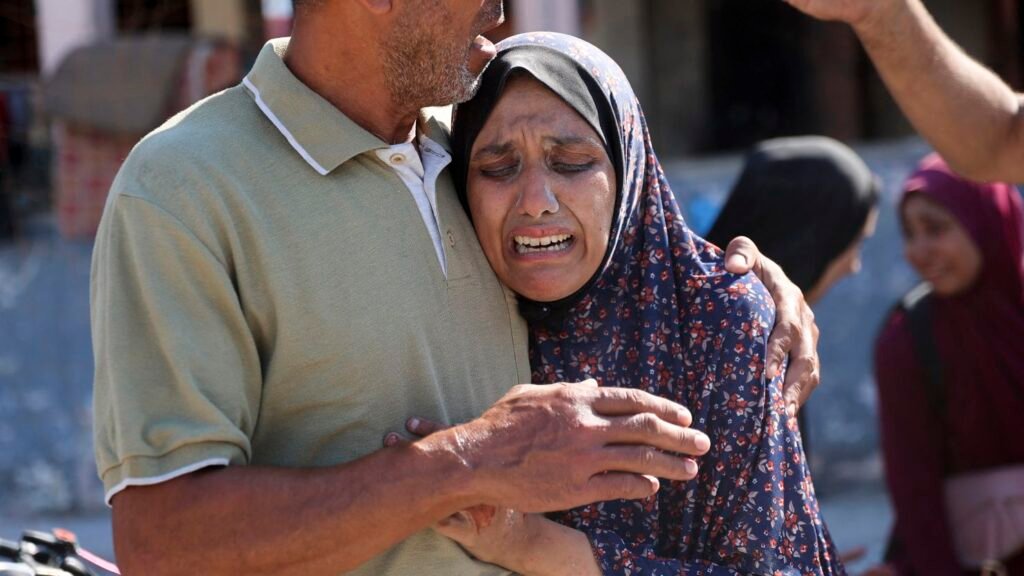
Gaza Herald — “We are not living at all here, and we cannot feel the scent of life anymore.” With these words, displaced Palestinian Omar Abu Hammad, from Bani Suheila, describes part of the suffering endured by thousands of people sheltering along the Khan Younis coastline in southern Gaza, where the smell of sewage flowing into the sea surrounds them day and night.
Abu Hammad says their struggle with sewage never stops. He also speaks of losing one of his sons around six months ago, amid what he describes as severe pollution caused by the discharge of wastewater into the sea.
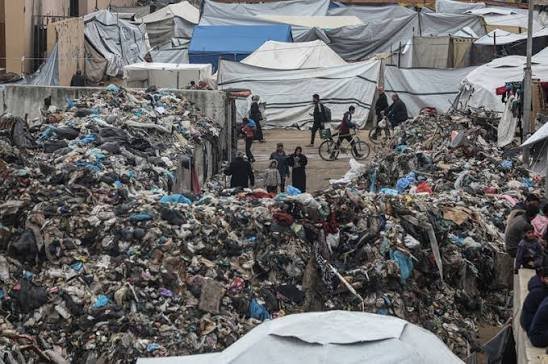
For displaced families, each morning begins with the smell of sewage rather than the sea breeze. Flies and mosquitoes spread around their shelters, while nighttime brings a continuous ordeal that deprives them of sleep and prevents them from sitting outside their tents with their children.
A Sea Turning Into a Source of Disease
Displaced Palestinian Salem Qashta, who came from Rafah, says his tent stands only about 50 meters from a sewage discharge point, making the area unfit for living.
He describes a heavy presence of flies and mosquitoes, alongside the foul odors, and says he prevents children from approaching the sea out of fear of disease and contamination.
The sewage discharge continues at night, forcing displaced families to use makeshift methods to reduce the smell inside their tents. The scene reflects the scale of the disaster unfolding around them.
Abu Hammad says the sea changes from blue to black because of the sewage, while insects and foul odors continue to spread around displacement sites. The beaches where Palestinians sought refuge have become another source of danger.
55,000 Cubic Meters of Sewage Discharged Daily
Gaza’s sewage crisis has reached unprecedented levels as the wastewater treatment system has largely collapsed, threatening the environment and public health while increasing the risks of marine and water contamination.
The Water Authority says around 55,000 cubic meters of sewage are discharged untreated every day. Of that amount, 40,000 cubic meters flow directly into the sea, while another 15,000 cubic meters reach the environment through soakaway pits and leaks in the networks.
The authority says all five main treatment plants in Gaza have stopped operating, while only 18 pumping stations are functioning partially out of approximately 74 that were operating before the crisis.
The proportion of the population served by sewage networks has fallen from more than 85 percent to around 45 percent. Treatment capacity has collapsed from 185,000 cubic meters per day before the crisis to zero at present, apart from ongoing rehabilitation work at the Sheikh Ajleen treatment plant.
A Disaster Expanding Behind Displaced Families’ Tents
Specialized authorities are carrying out emergency interventions to support pumping stations and provide fuel, alongside repairs to around 20 critical pumping stations and sewage networks and the treatment of approximately 900 environmentally and health-sensitive priority sites.
The response includes emergency suction and pumping operations using heavy equipment, as well as damage assessments covering 44 pumping stations and around 385 kilometers of sewage networks.
Rehabilitation plans focus on restarting the Sheikh Ajleen treatment plant in two phases. The first phase is expected to provide an initial capacity of around 22,000 cubic meters per day, with support from the International Committee of the Red Cross, before capacity is later increased to approximately 65,000 cubic meters per day.
Urgent needs include fuel, pumps, generators, spare parts, suction and cleaning trucks, and heavy equipment, alongside temporary sewage solutions for displacement sites.
The Water Authority warns that continued untreated sewage discharge will worsen marine and environmental pollution and threaten public health. It says restoring the sewage system and rehabilitating its infrastructure have become an urgent priority to protect the population and the environment.
As displaced families along the Khan Younis coast wait for the war to end and for the chance to return home, another disaster reaches them with every flow of sewage into the sea.
The smell follows them through the day and steals their sleep at night. The sea, which should have offered them a place to breathe, has become another witness to the harshness of life in Gaza.