Gaza Herald – Palestinian civil defense teams continue searching through the ruins of Gaza for the bodies of Palestinians who remain trapped beneath homes and buildings destroyed during Israel’s genocide, as a severe shortage of heavy machinery prevents rescuers from reaching thousands of victims.
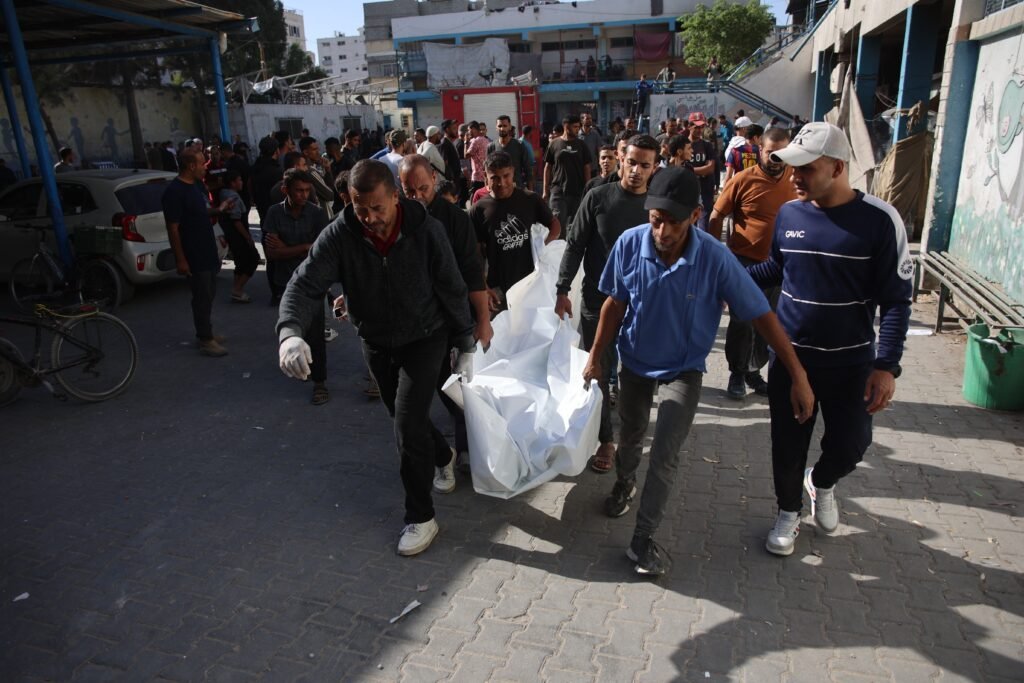
Civil defense crews have recovered 55 bodies and human remains from beneath the rubble of a building belonging to the Malaka family in the Zeitoun neighborhood east of Gaza City. The building had housed dozens of displaced Palestinians who had sought refuge there while fleeing Israeli bombardment.
Search operations at the site entered their third consecutive day, with civil defense officials estimating that more than 60 bodies may still be buried inside the destroyed building.
Mohammed Abu Dan, who oversees recovery operations for Gaza’s civil defense, said teams had recovered most of the bodies and remains so far. The victims are expected to be buried together in a collective funeral procession early next week, while crews continue searching for those still trapped beneath the ruins.
The operation offers a glimpse into a much larger tragedy across Gaza. Civil defense officials estimate that around 10,000 bodies remain buried beneath the rubble, though the figure is not a final count because many victims cannot be reached or officially registered.
Previous civil defense estimates indicated that more than 10,000 missing Palestinians remained beneath destroyed buildings, with their victims not included in the Health Ministry’s official statistics because their bodies never reached hospitals.
The recovery effort faces enormous logistical obstacles. Gaza’s civil defense teams lack the heavy machinery needed to move massive concrete slabs and mountains of debris, while specialized equipment required for large-scale recovery operations remains unavailable.
Rescuers are forced to work with extremely limited resources as they confront hundreds of tons of rubble. Excavators, bulldozers, trucks and other heavy equipment are urgently needed to lift collapsed structures, remove debris and reach areas where victims are believed to remain buried.
The passage of time has made the work even more difficult. Bodies trapped beneath rubble for prolonged periods often deteriorate and are eventually reduced to skeletal remains, forcing rescuers to carry out painstaking manual searches rather than relying on heavy machinery to quickly clear collapsed structures.
Recent civil defense data highlights the scale of the destruction to Gaza’s emergency-response capacity. The agency has lost roughly 85% of its equipment and is operating at only an estimated 5% to 7% of its prewar capacity. By the beginning of 2026, its teams had recovered only about 350 bodies from among the thousands believed to remain beneath the rubble.
Rescue workers also face constant danger while operating inside unstable and heavily damaged buildings. Dozens of civil defense personnel have been killed or wounded during search, rescue and recovery missions, yet their teams continue working in hazardous sites filled with unstable debris.
The current recovery effort is being carried out under a project providing 800 hours of work, in coordination with the International Committee of the Red Cross. Civil defense officials say the limited capacity remains nowhere near sufficient for the scale of the task facing Gaza.
The recovery of 55 bodies from a single building illustrates the magnitude of the crisis confronting the entire enclave. Behind thousands of destroyed buildings, the remains of missing Palestinians are still waiting to be found, while the lack of heavy machinery and specialized equipment prevents families from learning the fate of their loved ones.
Across Gaza, thousands of bodies remain buried beneath the victims, still waiting for a path out of their forced graves. Until the necessary equipment reaches the Strip, countless families will continue waiting for the remains of their loved ones to be recovered, identified, and finally laid to rest.