Gaza Herald – In Gaza, fire is no longer simply a means of baking bread; it has become a daily battle for survival. As soaring summer temperatures combine with the intense heat of wood-fired ovens, men and women displaced by war endure exhausting conditions to earn enough for a single meal.
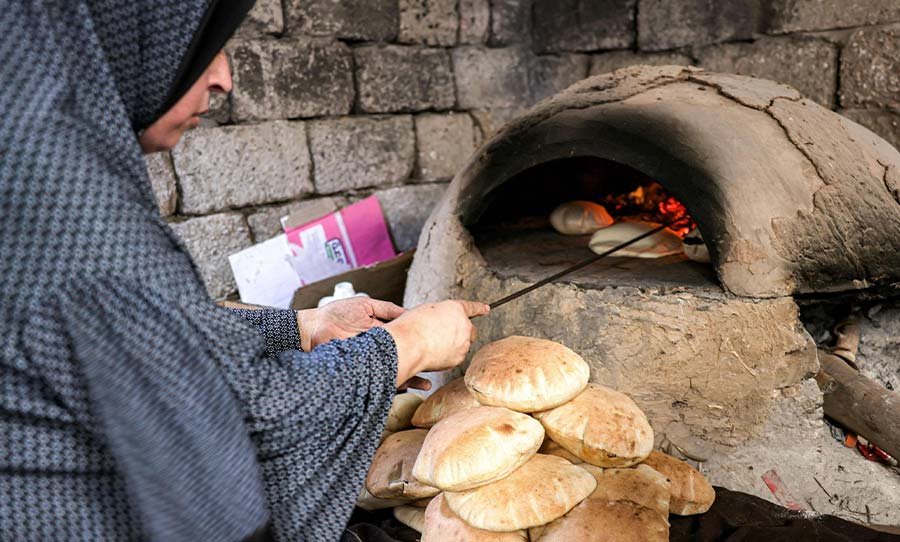
Across makeshift bakeries set up inside tents and along sidewalks near displacement camps, workers spend long hours tending ovens from dawn until sunset. Surrounded by smoke, ash, and suffocating heat, they produce bread for their communities while enduring physical exhaustion, respiratory problems, and meager wages that barely cover their families’ most basic needs.
According to estimates by the Palestinian Ministry of Labor, tens of thousands of women have become their households’ primary breadwinners since the Israeli genocide in Gaza began. With few employment opportunities available, many have entered physically demanding jobs they had never imagined doing, including working in traditional bakeries.
Among them is Umm Ahmed Abu Maghsib, 52, who begins work before sunrise at a small bakery in western Gaza City. Once a homemaker, she now spends hours moving loaves in and out of a wood-fired oven, her clothes blackened by soot and smoke.
“The war took my home and everything I owned,” she says. “This job is the only way I can feed my children.”
She returns to her tent every evening with burned hands, aching muscles, and a face covered in ash.
“But when I manage to buy bread or a little food for my children,” she says, “I feel that the suffering was not in vain.”
Months of exposure to smoke have taken a serious toll on her health. She now suffers from asthma attacks, breathing difficulties, chronic back pain, and joint problems caused by standing for long hours in extreme heat.
“Sometimes I reach the tent so exhausted that I can’t even wash my face because there’s no water,” she explains. “I fall asleep wearing the same clothes, with the smell of smoke still covering my body.”
Nearby, Khaled Al-Masri, 28, works at another bakery under similar conditions.
“Working inside these tents feels like standing inside a furnace,” he says. “The heat from the oven combines with the summer sun, making it difficult to breathe.”
Despite working from morning until evening, Khaled often eats only one meal a day.
“I go home with severe headaches,” he says. “But my family depends on me, so I have no choice.”
His wife, Samar, works alongside him, helping prepare dough and serve customers despite suffering from health problems that have worsened during the genocide.
She begins each day searching for water before heading to the bakery, then spends hours working before returning to care for their children.
“The war changed everything,” she says. “We no longer have time for ourselves, or even to take care of our health.”
Constant exposure to heat and smoke has damaged her skin and hair, while access to enough water for bathing has become a rare luxury.
For Reem Al-Najjar, 35, life has taken an equally unexpected turn.
Before the genocidal war, she dreamed of opening a small business. Instead, after her home was destroyed, she found herself baking bread over a wood-fired oven to support her family.
“Sometimes I bake food I can’t even afford to bring home to my daughters,” she says. “It hurts, but patience is the only option we have.”
She now suffers from deteriorating eyesight, chest pain, and persistent skin irritation caused by daily exposure to smoke and extreme temperatures.
Despite the physical strain and growing health risks, bakery workers continue showing up every day because their families have no other source of income.
In today’s Gaza, bakeries have become more than places where bread is made. They have become symbols of endurance, where survival is measured not only by the loaves coming out of the ovens but also by the resilience of those willing to stand in the fire so their families can eat.