
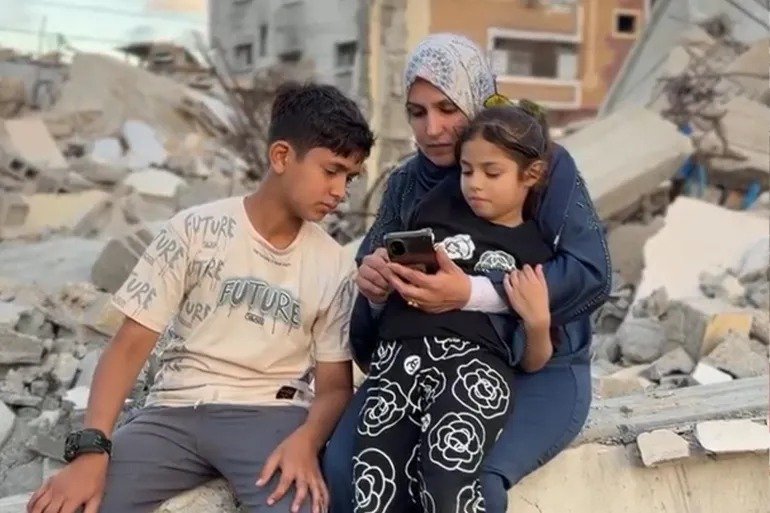
Gaza Herald – Two weeks ago, the war came knocking on Souad Matar’s door once again, this time in the form of sharp neurological pain, like electric shocks coursing through her head. The attacks began more than two and a half years after she sustained life-threatening injuries during the genocide.
The pain was more than a medical symptom; it awakened memories that have never left her. Memories of the day her husband, physician Dr. Mohammed Matar, was killed before her eyes, and three of their children lost their lives, while she and her two surviving children were pulled from beneath the rubble with injuries whose scars they still carry today.
Although they have gradually recovered from most of their physical wounds, the trauma of that day continues to haunt every moment of their lives.
A Knock at the Door
On the morning of December 21, 2023, life inside the family home in Gaza City’s Al-Saftawi neighborhood appeared ordinary.
Souad was baking bread while the couple’s five children, Malak (17), Yahya (14), Dima (11), Ahmed (9), and Fatima (5), were scattered around the house with their father, Dr. Mohammed Matar.
Suddenly, an unexpected knock interrupted the quiet morning. Dr. Mohammed went to answer the door, but only moments later he returned covered in blood after an Israeli occupation forces unit shot him from behind.
As he uttered his final prayers, their son Yahya told his mother that his father had pushed him away to shield him from the bullets before collapsing to the ground.
A Final Farewell Under Fire
Minutes later, Israeli tank shells struck the family home.
The children gathered around their wounded father, crying and begging their mother to take them outside, convinced they were about to die.
Souad tried to comfort them, but the sound of explosions drowned out her words as the house collapsed around them.
Before losing consciousness, Dr. Mohammed began dictating his final wishes to his wife. Moments later, he was killed alongside three of their children, Malak, Yahya, and Dima, while Souad and her surviving children, Ahmed and Fatima, suffered severe injuries.
A Miracle of Survival
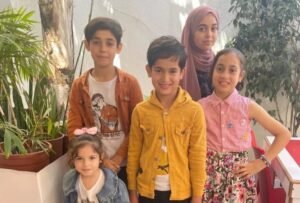 When Israeli soldiers stormed the home after the shelling, they found Souad unconscious beneath the debris. Believing she was killed, they left her behind.
Ahmed and Fatima were transferred to Soroka Medical Center in Beersheba before being handed over to the International Committee of the Red Cross, which later transferred them to Al-Aqsa Martyrs Hospital in central Gaza.
Because northern Gaza had been cut off from the central part of the Strip, the two children remained separated from their mother for three months.
Souad still struggles to explain how she survived.
She regained consciousness days later in the hospital and was later told by relatives and witnesses that she had somehow walked alone toward the destroyed family home despite suffering burns to her face, shrapnel lodged in her head, and fractures to her back and chest. A relative eventually recognized her and rushed her to the hospital.
She remembers nothing from those hours and describes her survival as nothing short of a miracle.
A Goodbye That Never Happened
When Souad finally regained full awareness, the greatest shock was not her injuries but the devastating truth awaiting her.
She had lost her husband and three of her children in a single attack and never had the chance to see them one last time or attend their funerals.
Her ordeal remains unfinished. The body of her 14-year-old son, Yahya, has never been recovered.
Although his remains have not been officially identified, Souad believes he was killed after relatives told her they found a skull and parts of a spinal column near the site of the attack, believed to belong to him.
Three months later, she was finally reunited with Ahmed and Fatima in central Gaza, embracing them for the first time since the attack.
One Small Wish
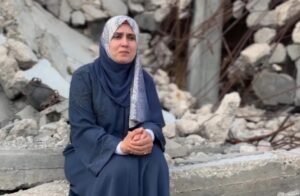 More than two years have passed since the tragedy, but time has done little to ease the pain.
Souad and her two surviving children are trying to rebuild their lives and recover from both physical injuries and psychological trauma, yet the war continues to shape every aspect of their daily existence.
Today, the grieving mother has only one wish: to see her three children in her dreams, to have them visit her, even for a few moments, and give her one final chance to hold them after being denied the opportunity to say goodbye.
As for the headaches that returned two weeks ago, she says they are not simply the return of an old injury, but a reminder that while wars may end on the battlefield, they continue to live inside those who survive, in memories that never fade and wounds that never truly heal.

