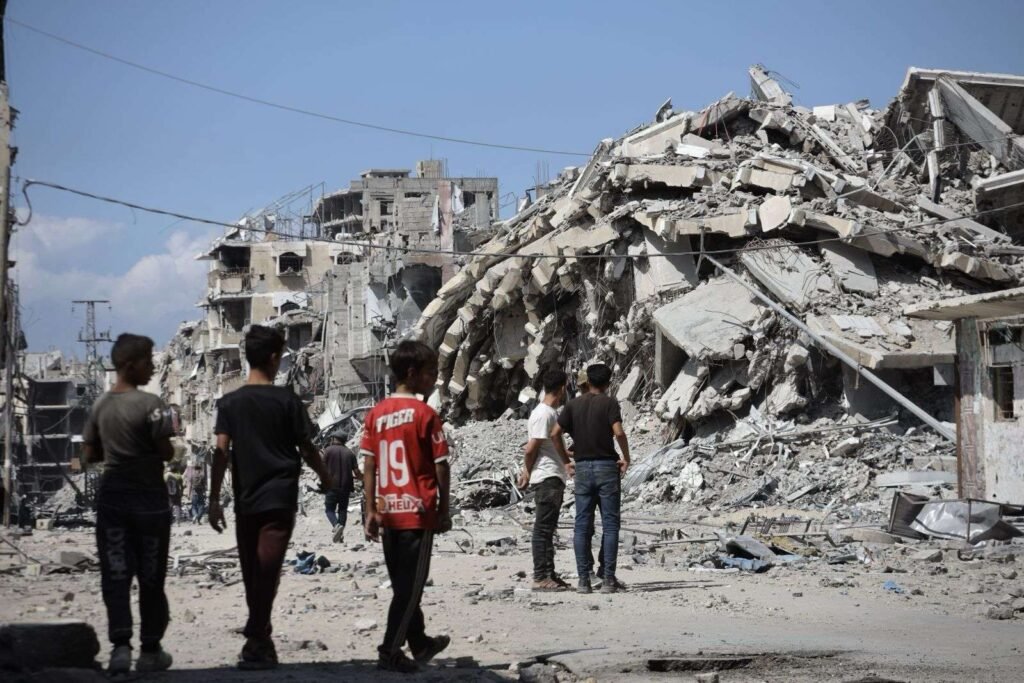
Gaza Herald – Across the devastated neighborhoods of the Gaza Strip, countless Palestinian families are not waiting for reconstruction—they are waiting to recover the remains of loved ones still buried beneath the ruins left by Israel’s military campaign.
For many, the search is not about rebuilding homes but about securing the dignity of a proper burial after months of uncertainty. Civil defense teams have resumed recovery operations with only minimal equipment, warning that thousands of victims remain trapped beneath collapsed buildings and that, without urgent international assistance, the process could take years.
A Child Waiting for His Family
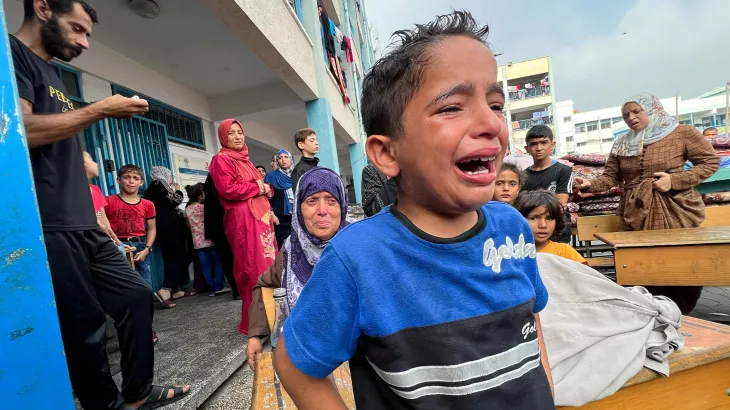
Twelve-year-old Mohammed Riyad Ghoboun stands beside the ruins of his family’s home in Gaza City’s Sabra neighborhood, hoping rescuers will recover the remains of relatives who have remained buried beneath the rubble for eight months.
Rather than dreaming of a new home, the young survivor says he simply wants his family members to receive a proper burial after months of waiting.
Nearby, a single excavator works through massive piles of debris in a task that rescue workers describe as overwhelming.
Thousands Still Missing Beneath the Rubble
According to Gaza Civil Defense, approximately 8,500 bodies and human remains are still believed to be trapped beneath destroyed buildings throughout the Gaza Strip.
Search operations resumed on Saturday with support from the International Committee of the Red Cross after repeated interruptions due to fuel shortages and a lack of heavy machinery.
The latest recovery effort focuses on eight missing members of the Ghoboun family, whose home was destroyed during an Israeli airstrike in October 2025.
Recovery Efforts Hampered by Lack of Equipment
Civil Defense spokesperson Mahmoud Basal said rescue operations are progressing at an extremely slow pace because teams lack the heavy machinery needed to safely remove massive amounts of concrete and debris.
He warned that continuing at the current pace could delay the recovery of the missing for years.
“We are carrying out this enormous mission with only one excavator, which could break down at any moment,” Basal said.
He appealed to the international community to provide excavators, heavy equipment, and specialized rescue machinery, saying that if adequate resources were available, recovery operations could be completed within approximately three months.
War Damage Overwhelmed Rescue Services
Civil defense capabilities were severely weakened during Israel’s military campaign.
Much of the agency’s equipment was damaged or destroyed, leaving rescue crews without the machinery needed to respond to the unprecedented scale of destruction across Gaza.
Officials say the limited resources available today are far from sufficient to deal with millions of tons of collapsed concrete covering residential neighborhoods.
Although the October 2025 ceasefire agreement reportedly included provisions allowing heavy machinery into Gaza, local authorities say Israel has continued preventing the entry of much of the equipment required for recovery operations.
A Young Survivor Still Waiting
Mohammed Ghoboun, who himself survived after being rescued from beneath the rubble, says the beginning of recovery operations has revived both hope and grief.
“I’ve been waiting for eight months,” he said. “I hope they can find my family’s bodies so they can finally be buried.”
He described living every day between anticipation and heartbreak while waiting for the recovery of his loved ones.
Parents Continue Searching for Their Children
For many families, the inability to recover the bodies of relatives has prolonged their suffering.
Yousef Al-Zaharna recalled the Israeli strike that destroyed his five-story home, where around 45 displaced Palestinians, mostly women and children, had been sheltering.
The attack killed several people instantly.
Three of Al-Zaharna’s sons were among those killed. While the remains of two were eventually recovered, his third son remains buried beneath the rubble.
“As a father, all I want is to recover even part of my son’s remains,” he said. “I simply want to bury him and have a grave I can visit.”
He described the emotional burden of waiting as nearly unbearable.
Millions of Tons of Debris Cover Gaza
United Nations estimates suggest that between 50 and 68 million metric tons of debris now blanket much of the Gaza Strip following the widespread destruction of homes, public buildings, and civilian infrastructure.
The enormous volume of rubble continues to complicate recovery efforts, leaving thousands of families waiting for answers while rescue workers struggle with inadequate equipment and limited resources.
Without significant international support and the entry of heavy machinery, officials warn that thousands of Palestinians may remain buried beneath Gaza’s ruins for years to come.