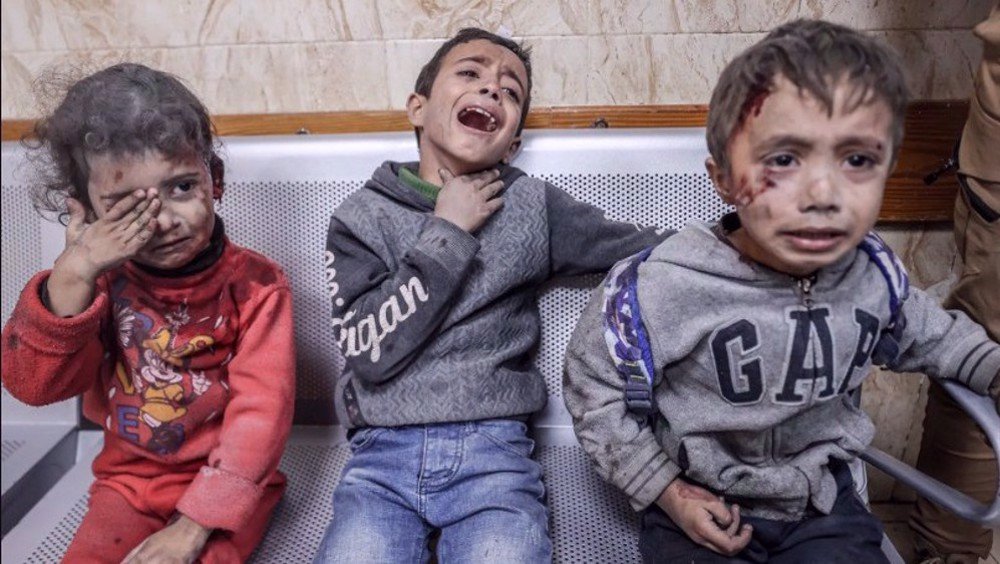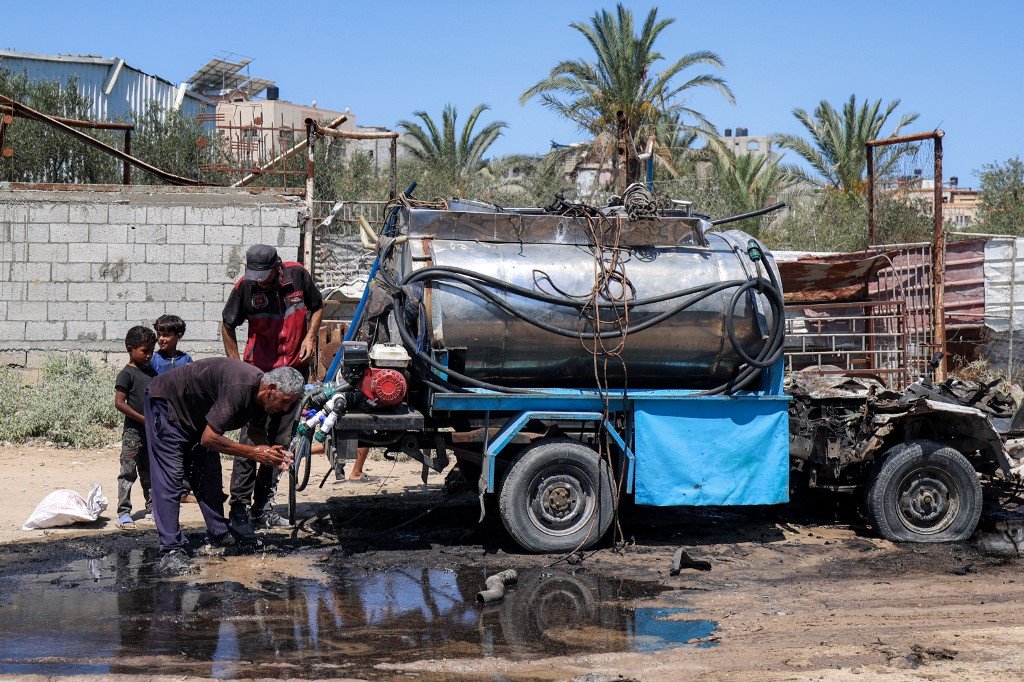
Gaza Herald – More than two million Palestinians in Gaza are facing a worsening shortage of drinking and household water, while failing sewage systems threaten to flood streets and displacement sites with contaminated wastewater, municipal officials warned Tuesday.
Alaa al-Batta, deputy head of Gaza’s Municipalities Union and mayor of Khan Younis, warned that the combination of water scarcity, extreme heat and the deterioration of basic services could trigger a major public-health and environmental disaster across the besieged Strip.
Municipal crews have continued trying to repair damaged water and sewage networks, clear roads, remove waste and manage the destruction left by Israel’s genocidal war on Gaza. But officials say the shortage of fuel, spare parts, machinery and other essential supplies has severely restricted their ability to keep those services operating.
Dozens of generators powering water wells and sewage treatment facilities are at risk of shutting down because of the lack of fuel needed to operate them.
Al-Batta said municipalities have received no diesel designated for rubble removal since March. Previously, only limited quantities had entered Gaza with support from international organizations, primarily for clearing rubble and reopening roads.
He also criticized the international community’s failure to ensure that municipalities receive the supplies needed to maintain essential services. Around 700 generators require lubricating oil, he said, while quantities entering Gaza have been sufficient for only about 40 generators.
The shortage has driven the price of the remaining oil in Gaza up by roughly 1,000%, further restricting the ability of municipalities to operate their generators.
Available generators are currently operating at no more than about 20% of capacity, forcing municipalities to prioritize drinking-water supplies and sewage collection while suspending much of their rubble-removal work because of fuel shortages.
Officials warn that if sewage pumping and treatment facilities stop operating, wastewater could overflow into streets and reach areas where displaced Palestinians are sheltering, increasing the risk of waterborne and infectious diseases.
Al-Batta called on the international community, the United Nations and mediators in Egypt, Türkiye and Qatar to press for the immediate entry of fuel, spare parts and equipment and to establish an urgent humanitarian corridor for municipal supplies.
He also called for protection for municipal technical crews working to keep Gaza’s basic services running.
The worsening water and sanitation crisis comes after years of destruction to Gaza’s civilian infrastructure. With fuel and maintenance supplies severely restricted, municipal authorities face mounting difficulties providing clean water, managing sewage and waste, and protecting displaced Palestinians from an increasingly dangerous public-health and environmental emergency.