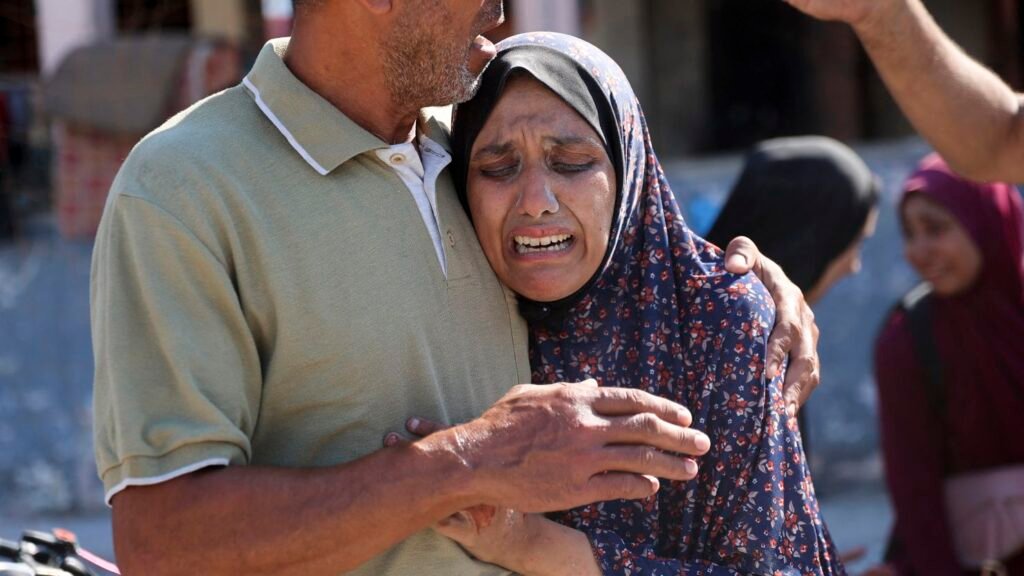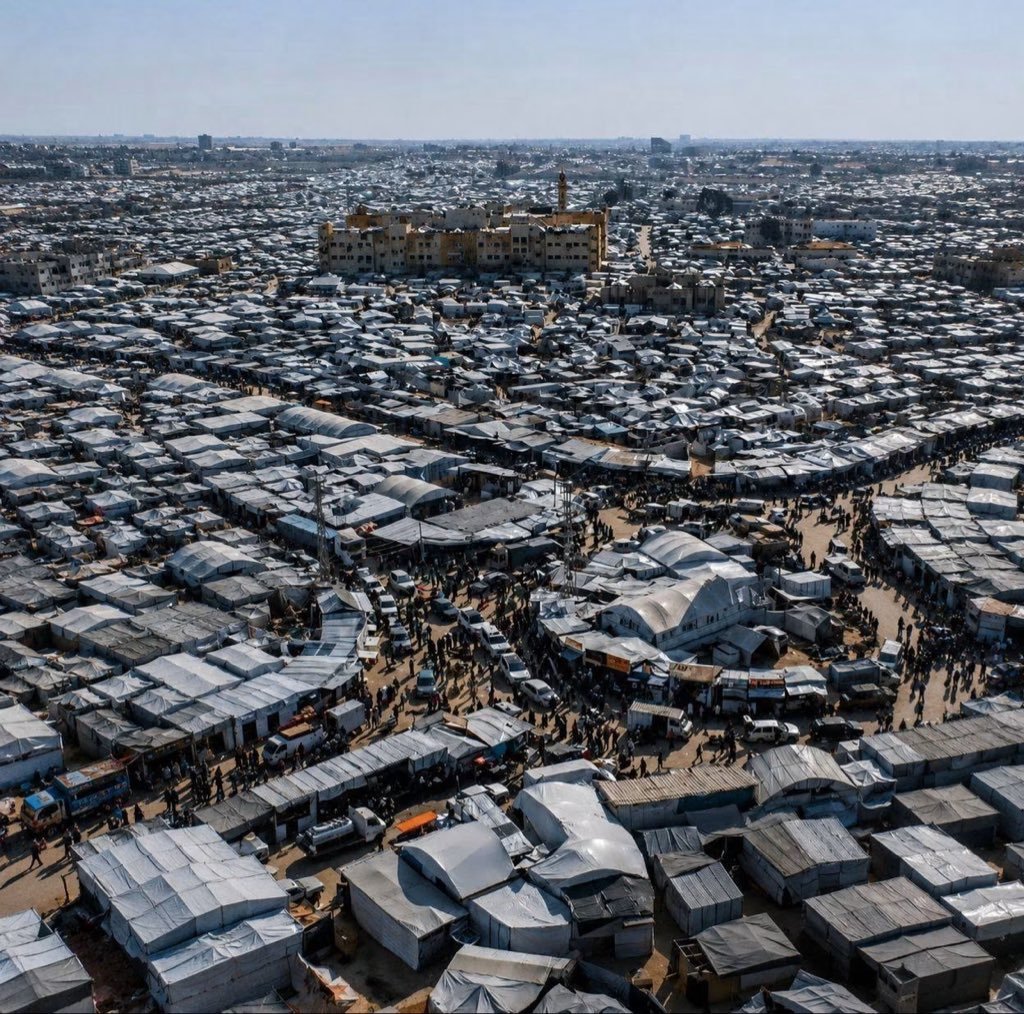
Gaza Herald – As another sweltering summer grips the Gaza Strip, hundreds of thousands of displaced Palestinians are struggling to survive under extreme temperatures with virtually no protection from the relentless heat. Forced into overcrowded tents after Israeli attacks destroyed their homes during the ongoing war, families are enduring suffocating conditions with no electricity, no reliable cooling, and little hope of relief.
Tents Become Heat Traps
For most displaced families, fragile shelters made of plastic sheeting and thin fabric have replaced the homes they lost during Israel’s military campaign. Under the blazing summer sun, these makeshift tents trap heat, offering little ventilation or shade while exposing residents to dangerous temperatures throughout the day.
The destruction of residential neighborhoods has also stripped away trees, buildings, and other sources of natural shade, leaving many families completely exposed to the scorching sun from morning until night.
Cooling Becomes an Impossible Luxury
With electricity largely unavailable after years of Israeli restrictions and the devastation of Gaza’s power infrastructure, even the simplest forms of cooling have become unattainable for most families.
Battery-powered fans remain one of the few available options, yet they have become increasingly scarce as restrictions continue to limit the entry of essential goods and equipment into the territory.
Even when available, the cost places them far beyond the reach of most Palestinians already struggling under widespread unemployment and economic collapse.
A battery-operated fan now sells for approximately $500, while the batteries required to operate it can cost around $1,000. Small solar panels, often the only alternative power source, may cost as much as $1,715, prices that are impossible for most displaced families to afford.
Health Risks Intensify
The extreme heat is compounding an already catastrophic humanitarian situation across Gaza.
Overcrowded displacement camps, severe shortages of clean water, poor sanitation, accumulated waste, and limited hygiene facilities have contributed to worsening public health conditions.
Medical workers report increasing cases of scabies, chickenpox, heat rashes, severe skin irritation, eczema, bacterial infections, and fungal diseases, particularly among children living in overcrowded tents.
Health professionals say many of these illnesses are directly linked to prolonged exposure to high temperatures, inadequate ventilation, limited access to clean water, and the inability of families to maintain basic hygiene or wash clothing regularly.
Humanitarian Crisis Deepens
Aid organizations warn that the summer heat is intensifying the suffering of Gaza’s displaced population, particularly children, older adults, and people with chronic illnesses.
Without greater access to electricity, shelter materials, cooling equipment, clean water, and sanitation services, humanitarian agencies say the extreme temperatures will continue to place thousands of vulnerable civilians at growing risk of dehydration, heat-related illnesses, and worsening health conditions.
For hundreds of thousands of displaced Palestinians, another Gaza summer has become not merely a season of intense heat, but yet another daily struggle for survival.