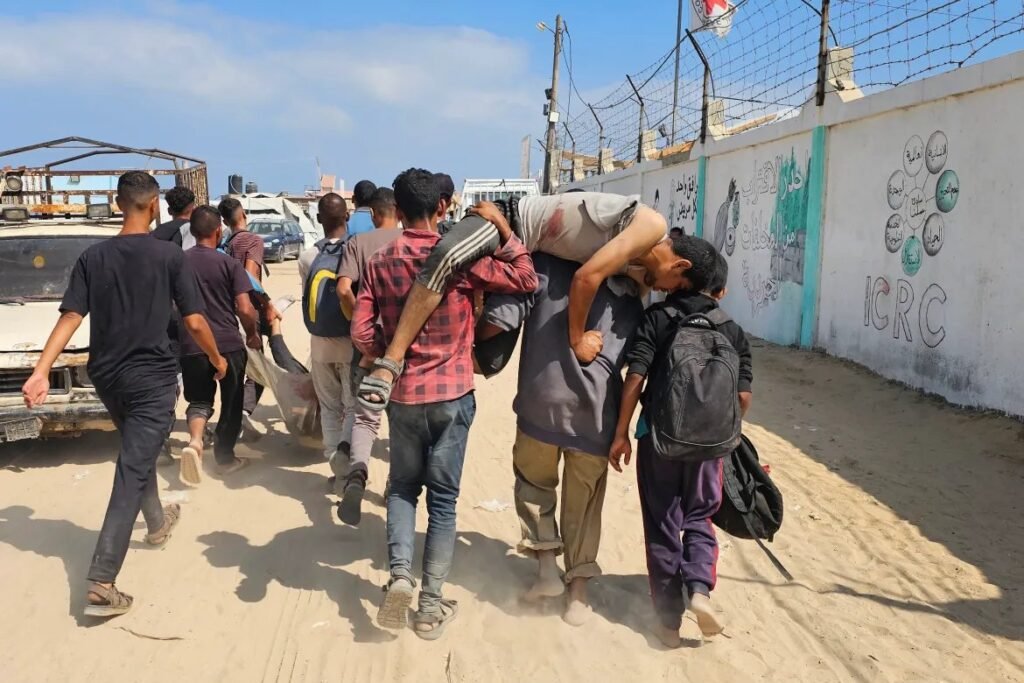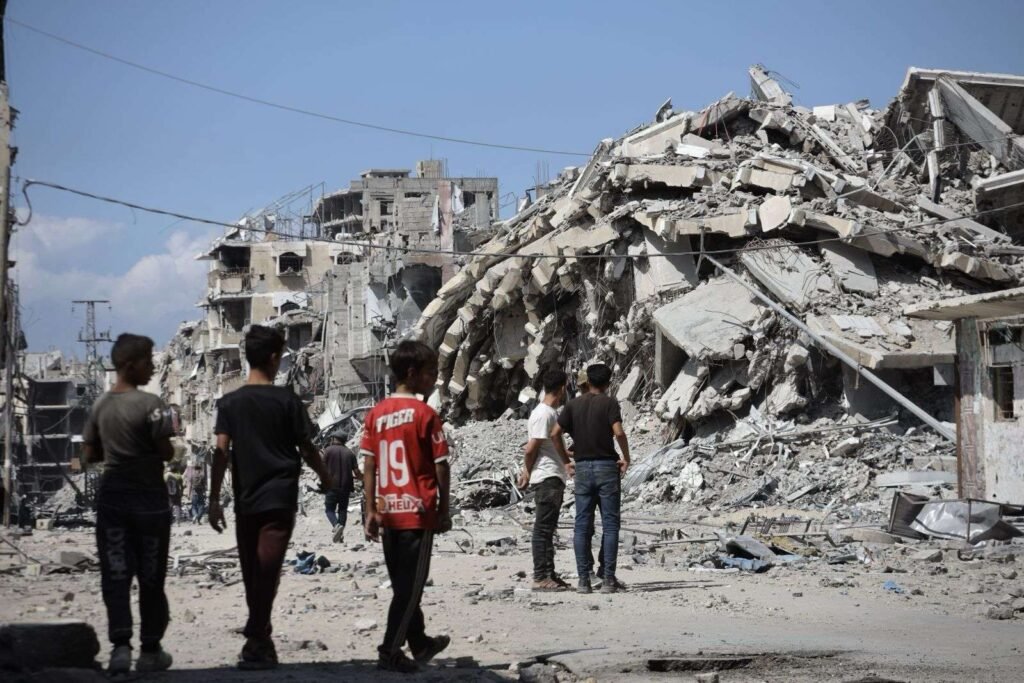
Gaza Herald _ A newly released United Nations report has shed further light on the devastating impact of Israel’s military campaign on Palestinian children, documenting widespread killings, severe injuries, psychological trauma, and conditions that have placed an entire generation at risk.
Released as the world marked the International Day in Support of Victims of Torture, the report highlights the scale of suffering endured by Palestinian children in Gaza and the occupied Palestinian territories, describing patterns of harm that extend beyond direct attacks to include the destruction of essential systems needed for children’s survival.
According to the UN findings, at least 20,179 Palestinian children have been killed and 44,143 injured since October 7, 2023. Among the youngest victims, nearly 6,500 children under the age of six were killed in Gaza, including around 1,000 infants under one year old.
The report has intensified international scrutiny over Israel’s conduct in Gaza, with experts warning that the impact on children goes far beyond battlefield casualties and reflects the destruction of the basic conditions required for a population to survive and recover.
A Report Focused on the Suffering of Children
Luigi Daniele, an associate professor of international law at the University of Molise in Italy, said the UN report carries particular significance because it is the first major investigation specifically focused on the mass victimization of Palestinian children.
“This is the first report specifically dedicated to the mass victimization of Palestinian children by Israel,” Daniele said.
He highlighted the scale of infant deaths in Gaza, noting that nearly 1,000 children under one year old have been killed during the war, a figure he described as exceptionally high compared with other recent conflicts.
The UN Independent International Commission of Inquiry documented what it described as a repeated pattern of children being injured and killed through the use of precision weapons.
Daniele urged readers to approach the testimonies collected by the commission with caution due to their disturbing nature, saying the evidence demonstrates that Palestinian children were “deliberately targeted.”
Evidence of Precision Attacks on Children
The report challenges claims that child deaths were only unavoidable consequences of urban warfare.
It cites testimonies from medical workers, including American Jewish doctors who worked in Gaza, who described treating large numbers of children from the same areas suffering from highly precise gunshot wounds in similar parts of the body.
According to these doctors, the injuries appeared inconsistent with random battlefield incidents and raised concerns about deliberate targeting.
The report documents how children have suffered not only from airstrikes and military operations but also from the collapse of healthcare, education, food systems, and basic living conditions.
Psychological Destruction and “Societal Torture”
The UN findings also examine the psychological suffering experienced by children who have survived the violence.
Children in Gaza have been forced to live among destroyed homes, displacement camps, disease outbreaks, hunger, and extreme insecurity. The report describes conditions in which even infants have suffered from dangerous environments inside overcrowded shelters.
Daniele described these circumstances as a form of “societal torture,” arguing that the destruction extends beyond individual victims and affects the collective future of Palestinians.
“Genocide is not the destruction of every single member of a victim group,” he said. “It is the destruction of the collective existence of that group.”
He added that psychological suffering and long-term trauma can become tools that continue the destruction of a population even beyond direct violence.
International Law and the Fight Against Torture
The International Day in Support of Victims of Torture commemorates the adoption of the UN Convention Against Torture, which entered into force on June 26, 1987.
The convention prohibits torture under all circumstances and requires governments to prevent abuse, investigate allegations, and provide justice for victims.
However, human rights experts have repeatedly warned that torture remains widespread around the world despite international legal protections.
Lessons From Syria and Guantanamo
The report comes amid broader global discussions about accountability for torture and abuse.
In Syria, the former Assad government’s alleged systematic use of torture against detainees became one of the most documented cases of state violence in recent decades.
The release of the so-called Caesar photographs, smuggled out of Syria in 2013, documented thousands of deaths inside government detention facilities, with many victims showing signs of starvation, severe abuse, and torture.
Meanwhile, the detention facility at Guantanamo Bay has faced decades of criticism from UN bodies and human rights experts over indefinite detention, harsh interrogation methods, and the imprisonment of individuals without trial.
UN officials have previously stated that some practices used at the facility amounted to torture or cruel, inhuman, and degrading treatment.
A Global Call for Accountability
The suffering of Palestinian children has become a central issue in international debates over accountability, human rights, and the protection of civilians during war.
The UN report adds to growing calls for governments and international institutions to investigate alleged violations, protect children in conflict zones, and ensure that those responsible for serious abuses face legal consequences.
For thousands of Palestinian children in Gaza, the consequences of the war extend far beyond the loss of life, leaving behind physical injuries, psychological scars, disrupted childhoods, and an uncertain future.