Gaza Herald – For the third consecutive summer, hundreds of thousands of displaced Palestinians across Gaza continue to endure harsh living conditions without adequate shelter, trapped between widespread destruction, repeated displacement, and the absence of reconstruction efforts.
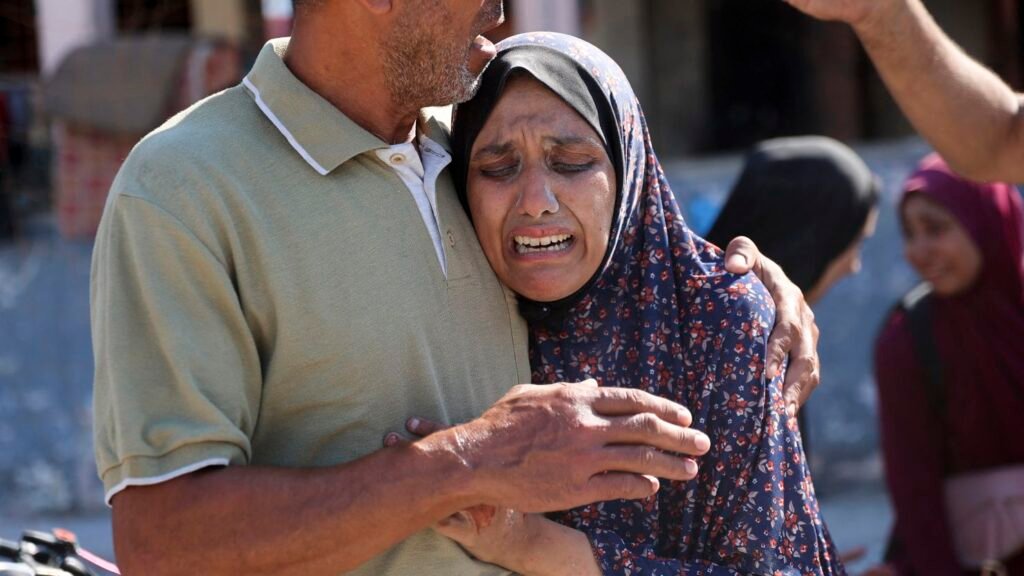
Inside a partially damaged structure in Gaza City, Rana Musleh struggles to care for her seven children, including triplets, while living beneath a fragile roof that threatens to collapse at any moment. Having been displaced multiple times since the outbreak of the war, she has no realistic prospect of returning to her home in Beit Hanoun, an area that remains inaccessible due to ongoing Israeli military control.
The small shelter where Rana and her children now live offers little protection from the dangers surrounding them. Just days ago, a large piece of concrete fell dangerously close to her children while they were playing.
“God protected them,” she says quietly, describing her constant fear that the remaining structure could collapse completely.
Rana’s story reflects the reality facing countless displaced families throughout Gaza. Although a ceasefire has technically been in place since October 2025, restrictions on the entry of reconstruction materials and shelter supplies continue to prevent families from rebuilding their lives. Large areas of the Gaza Strip remain inaccessible, while much of the territory’s housing infrastructure has been destroyed or severely damaged.
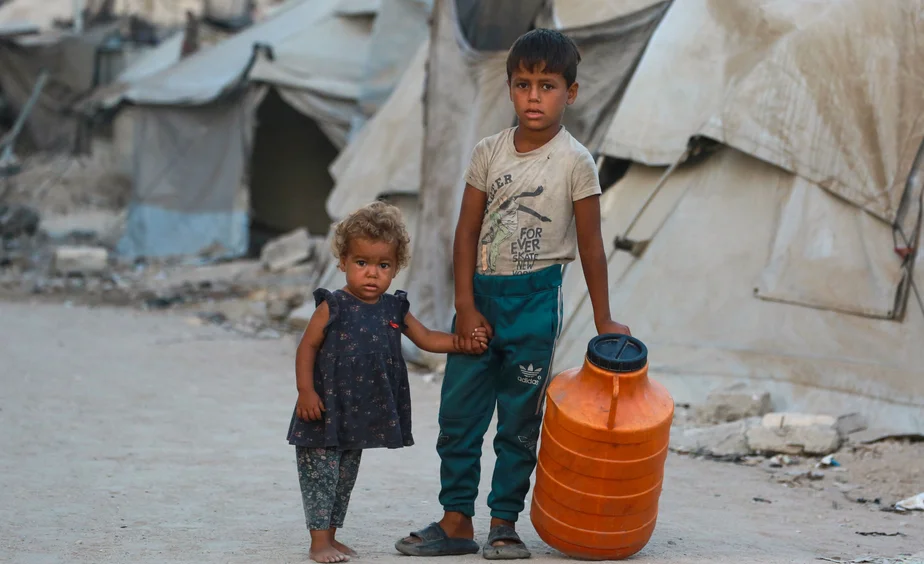
For Rana, securing even the most basic form of shelter remains an ongoing struggle. Her family relies on torn fabric and worn tarpaulins to create privacy and protection. At the same time, rodents and insects have become a daily source of distress in overcrowded and damaged displacement sites.
One night, she recalls, she believed one of her children had rested against her shoulder while she slept. She was horrified to discover it was a rat. Since then, she has covered herself with blankets despite the intense summer heat, simply to feel safer.
“Our conditions are unbearable,” she says.
Elsewhere in Gaza City, Eid Al-Nahhal, 44, lives with seven family members inside a makeshift metal structure no larger than three square meters. Displaced from Beit Lahia during the first year of the war, he now survives in cramped conditions that offer little comfort or dignity.
His damaged home stands only a short distance from areas under Israeli military control, preventing him from returning despite his desire to rebuild some sense of normality.
“I want to go back,” he says. “I want to be surrounded by my neighbors and the people who once lived beside me. That alone would be enough.”
Years of repeated displacement have left Al-Nahhal physically and emotionally exhausted. Since the beginning of the conflict, he has moved between Rafah, Khan Younis, Gaza City, and numerous displacement sites. Each move brought new hardship, while humanitarian assistance remained limited.
Obtaining a tent itself became a challenge, he explains, and declining income has made it impossible to secure alternative shelter. He says no international organization has provided meaningful assistance to his family.
His suffering extends beyond displacement. In October 2024, his eldest daughter, her husband, and their children were killed when an Israeli airstrike struck a six-story residential building in southern Gaza. The loss continues to weigh heavily on him.
Across Gaza, families face a daily struggle to obtain drinking water, food, sanitation, and protection from extreme weather. Most of the territory’s population now lives in overcrowded tents, damaged buildings, or improvised shelters along the narrow coastal strip.
After nearly two years of war, large sections of Gaza remain in ruins. Critical infrastructure has been devastated, and reconstruction efforts have stalled due to restrictions on the entry of essential materials. Humanitarian agencies continue to warn that shelter remains one of the most urgent needs facing the population.
According to local authorities, aid deliveries remain far below required levels, leaving hundreds of thousands of displaced people without adequate housing or support. As another summer unfolds, families across Gaza face rising temperatures, deteriorating living conditions, and growing uncertainty about when, or if, they will ever be able to return home.
For many, the third summer of displacement has become another chapter in an ongoing struggle for safety, stability, and the basic right to live with dignity.