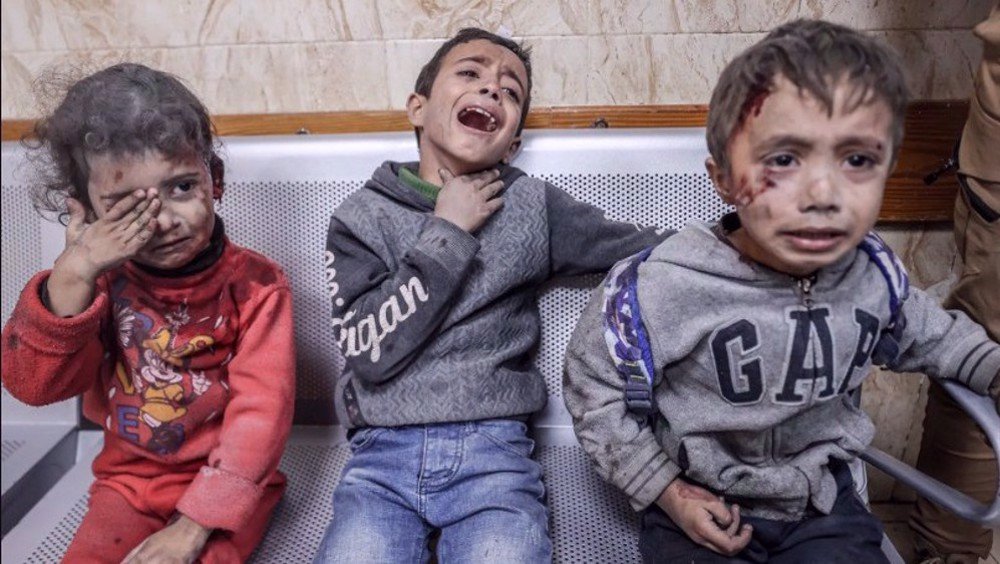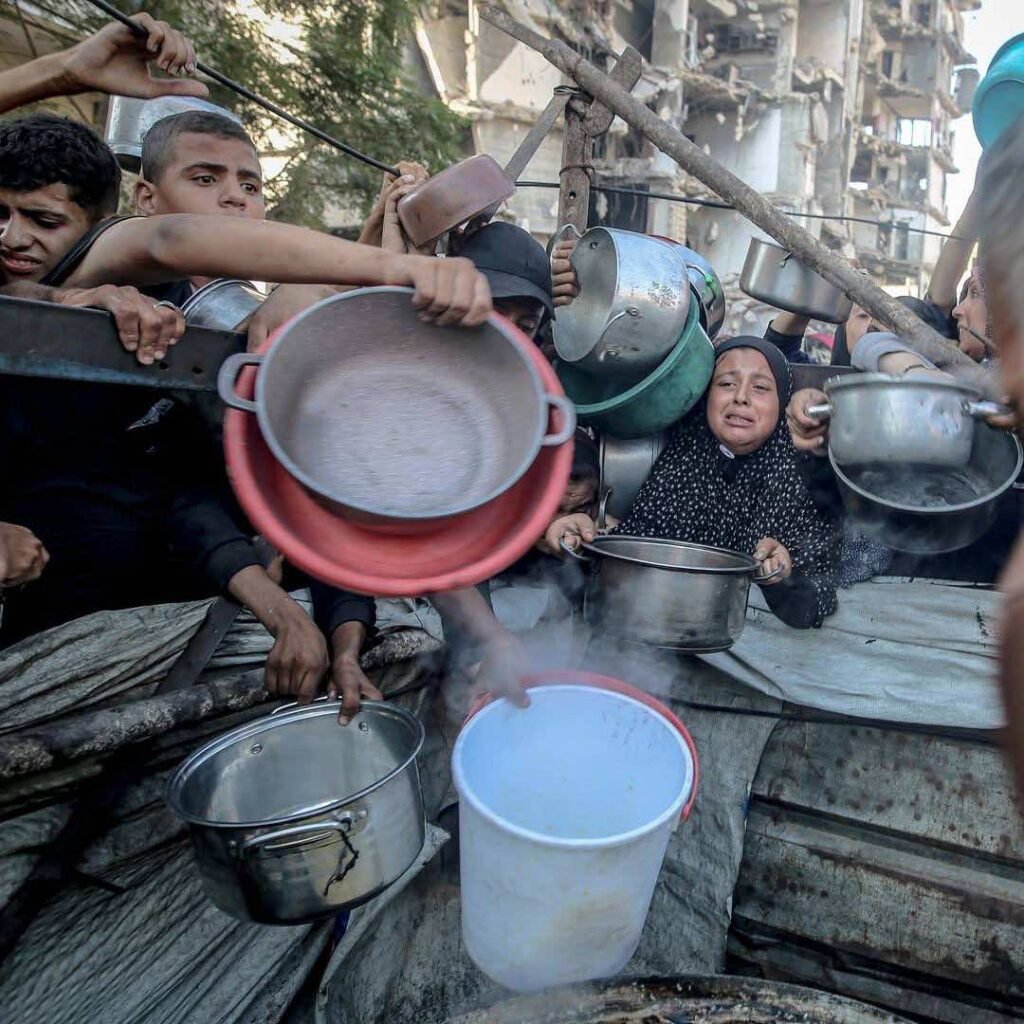
Gaza Herald – As summer temperatures soar across the Gaza Strip, access to clean water has become one of the most urgent challenges facing Palestinians, turning a basic human necessity into a daily struggle for survival.
Across the enclave, long queues form around water trucks and distribution points as families spend hours searching for enough water to drink, cook, and maintain basic hygiene. For hundreds of thousands of displaced Palestinians living in overcrowded camps and makeshift shelters, securing water has become an exhausting part of everyday life.
Umm Adi Mahna, a displaced mother of three living west of Gaza City, says she often waits for hours under the scorching sun hoping to fill a few containers before supplies run out.
“The crisis is no longer just about thirst,” she explains. “We struggle to bathe, wash clothes, and maintain basic cleanliness. Every drop of water has become precious.”
In Al-Shati refugee camp, Ashraf Miqdad begins his day before sunrise, preparing empty containers and setting out in search of water for his family of six. He says available supplies have steadily declined while demand continues to rise.
The situation is no less difficult in Deir al-Balah, where residents describe a worsening water shortage as water tankers arrive irregularly or fail to reach some areas altogether. Many families fear being forced to use unsafe water sources, raising concerns about dehydration and waterborne diseases, particularly among children and the elderly.
International organizations have warned that Gaza’s water crisis is rapidly deepening. Humanitarian assessments indicate that a vast majority of households face water insecurity, while many struggle to access even the minimum amount of water required for daily survival.
The crisis is rooted in the extensive destruction of water and sanitation infrastructure during the ongoing Israeli war. Wells, desalination facilities, pumping stations, and sewage networks have sustained widespread damage, severely reducing water production and limiting distribution capacity across the territory.
Infrastructure damage has also led to significant water losses through broken pipelines and damaged networks, further reducing the amount of water reaching communities already facing extreme shortages.
Public health experts warn that the combination of limited access to clean water, deteriorating sanitation services, and mounting waste accumulation creates conditions that could fuel outbreaks of infectious and waterborne diseases in densely populated displacement camps.
As temperatures continue to rise, municipalities and service providers face mounting obstacles, including shortages of fuel, chlorine, spare parts, and equipment necessary to operate and repair critical water facilities. Humanitarian agencies warn that without urgent intervention and the entry of essential supplies, Gaza’s water crisis could evolve into an even larger public health disaster.
For many Palestinians in Gaza today, water is no longer a guaranteed basic right. It has become a scarce resource, one that requires long hours, physical exhaustion, and constant uncertainty to obtain, a daily battle for survival in a territory already overwhelmed by war and displacement.