
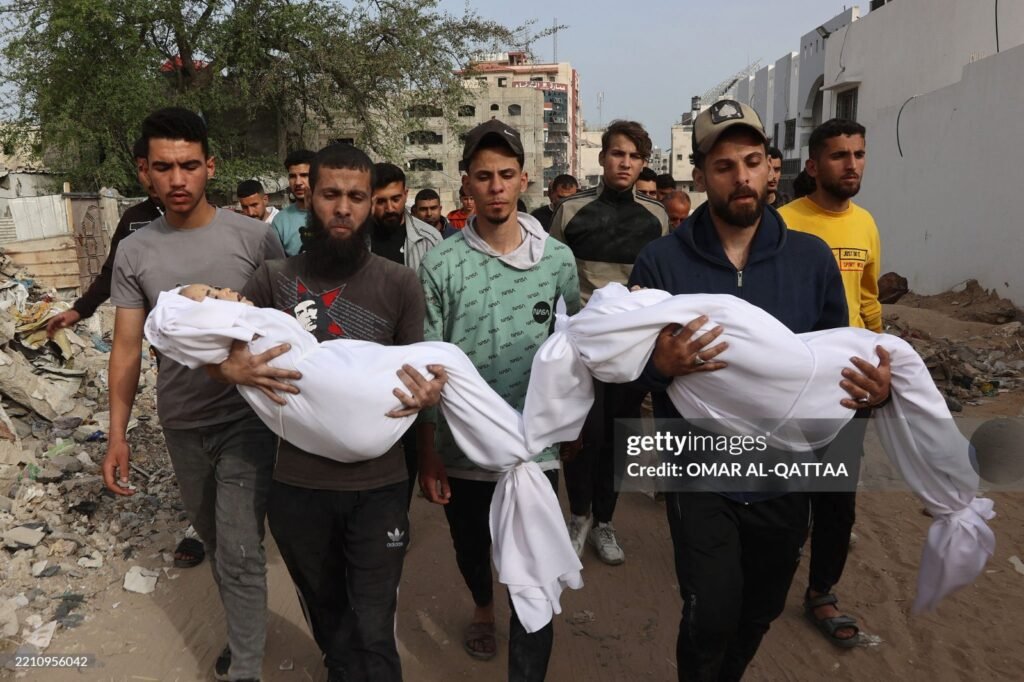
Gaza Herald_The International Committee of the Red Cross (ICRC) has warned that thousands of Palestinians believed to be buried beneath the rubble across Gaza may never be identified, as prolonged delays in recovery operations continue to complicate efforts to locate and identify human remains.
According to the ICRC, the passage of time is making identification increasingly difficult, particularly as bodies remain trapped under collapsed buildings and debris. Pat Griffiths, the organization’s spokesperson in Jerusalem, said that prolonged exposure beneath the rubble can lead to advanced decomposition, significantly reducing the chances of establishing victims’ identities.
Griffiths explained that as human remains deteriorate, forensic specialists lose access to critical evidence that could assist in confirming identities. He noted that key indicators such as fingerprints, dental records, personal belongings, and other identifying features can be lost over time due to environmental conditions and the gradual breakdown of remains.
61.5 million tonnes of debris cover the territory
The warning comes as Gaza continues to face the aftermath of nearly two years of war. United Nations data indicates that approximately 61.5 million tonnes of debris now cover the territory, with roughly three-quarters of Gaza’s buildings either destroyed or severely damaged.
Residents have also voiced concerns that military bulldozers operating in areas controlled by Israeli forces may be disturbing sites where bodies remain buried, potentially complicating future recovery efforts and making it more difficult for families to locate missing relatives.
Palestinian authorities report that nearly 73,000 people have been killed in Israeli military operations since October 2023, including fatalities recorded after the ceasefire that took effect in October 2025.
Earlier this year, the Palestinian Civil Defence estimated that around 8,000 bodies remained trapped beneath rubble throughout Gaza despite ongoing search efforts. Officials also reported that more than 3,000 people remain unaccounted for, with uncertainty surrounding whether they are deceased, alive, or being held in Israeli detention.
The scale of destruction has created unprecedented challenges for recovery teams. The UN Environment Programme has stated that the volume of debris across Gaza is approximately twenty times greater than the combined total generated by previous conflicts in the territory since 2008.
Efforts to recover bodies have been further hindered by a shortage of heavy equipment. Rescue workers have largely been forced to rely on manual tools, including shovels, pickaxes, wheelbarrows, and hand digging, due to restrictions on the entry of excavation machinery and other essential equipment.
The ICRC stressed that search and recovery teams require unrestricted access to locations where human remains are believed to be buried. The organization has repeatedly called for the entry of heavy machinery into Gaza, arguing that such equipment is essential for both humanitarian recovery efforts and the dignified identification of the dead.
The Red Cross said it continues to press relevant authorities to permit the delivery of excavation and recovery equipment, warning that further delays could leave countless families without answers about the fate of their loved ones.

