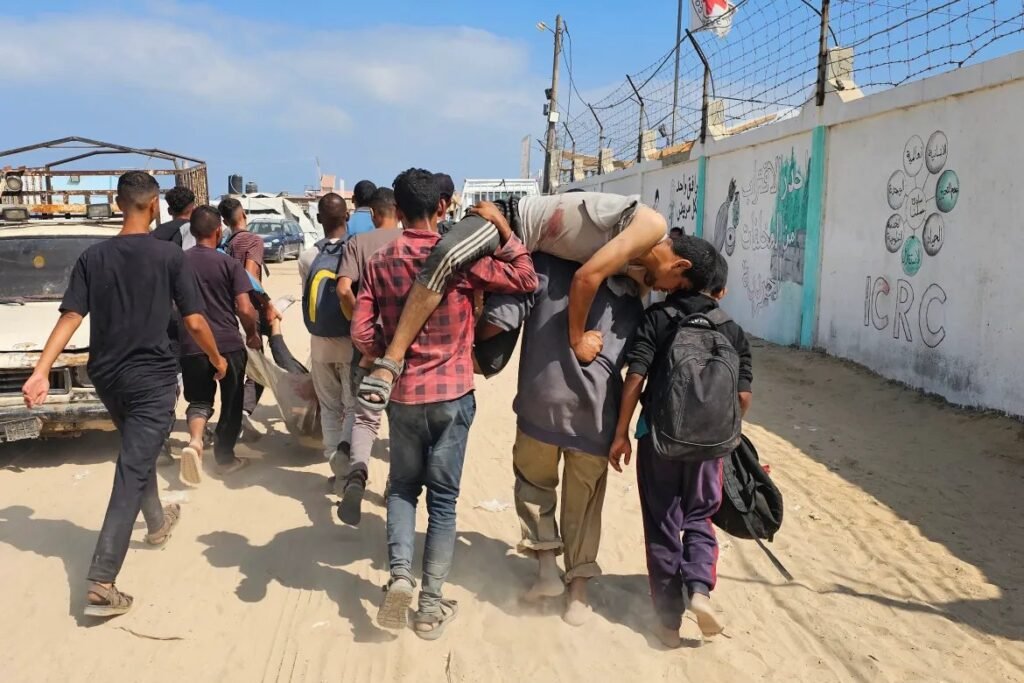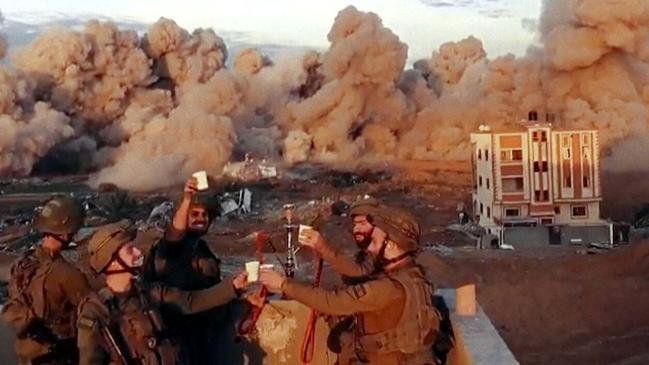
Gaza Herald _ The devastating consequences of Israel’s genocidal war on the Gaza Strip extend far beyond the mounting death toll, widespread injuries, and the flattening of homes and civilian infrastructure.
An equally alarming catastrophe is unfolding beneath the rubble and across the besieged territory’s devastated landscape, where toxic environmental contamination, the destruction of vital water resources, and the systematic erasure of agricultural land threaten the very foundations of Palestinian survival. This relentless onslaught is leaving behind a legacy of pollution, weaponized food insecurity, and ecological degradation that will endanger generations to come.
Recent investigations published by the British newspapers The Guardian and The Independent shed light on two closely connected dimensions of this man-made disaster. One documents the extensive contamination of Gaza’s soil, water, and air resulting from relentless Israeli bombardment and the deliberate collapse of essential infrastructure. The other examines the wholesale destruction of fertile farmland and ancient olive groves, exposing the profound economic, nutritional, and cultural losses inflicted on the Palestinian people.
Drawing on scientific research, institutional data, and expert testimonies, these reports illustrate how the Israeli assault has gone far beyond physical structures to dismantle the environmental and agricultural conditions upon which life in Gaza depends. Access to clean water, safe food, fertile soil, and a livable environment has been systematically undermined, raising grave concerns about the Strip’s capacity to sustain life even after the bombardment ceases.
Toxic Contamination Threatens Gaza’s Future for Decades
In an investigation titled “Israel’s Destruction of Gaza Has Created a Toxic Wasteland,” The Guardian reported findings from a joint study conducted by Oxfam and the Conflict and Environment Observatory, documenting the severe environmental contamination caused by Israel’s military onslaught across the Strip.
The research identifies widespread pollution poisoning water supplies, agricultural soil, and the atmosphere, with hazardous substances including heavy metals, explosive residues, asbestos released from demolished buildings, untreated sewage, and massive accumulations of solid waste.
The long-term persistence of these contaminants makes the crisis especially lethal. Toxic substances enter the human body through multiple exposure routes—breathing polluted air, consuming contaminated food and water, and daily contact with poisoned soil and demolition debris. Consequently, Israel’s environmental destruction imposes severe health risks that will afflict Palestinians long after the strikes end.
The report quoted Oxfam International Executive Director Amitabh Behar warning that the destruction and contamination have shattered the environmental conditions needed to protect human life, leaving Palestinians exposed to hazardous substances in virtually every aspect of their daily survival. Behar also emphasized that children and pregnant women face acute dangers due to their heightened vulnerability to toxic exposure.
For families already enduring the trauma of repeated forced displacement, the toll is catastrophic. Hundreds of thousands of Palestinians have been forced to shelter beside demolished buildings, overflowing waste, and areas stripped of sanitation or basic services. Their constant exposure to environmental hazards compounds the loss of homes, healthcare, and basic necessities, while the ongoing blockade leaves them with nowhere safe to turn.
61 Million Metric Tons of Rubble: A Growing Source of Environmental Hazards
The sheer scale of Gaza’s environmental emergency becomes unmistakable when examining the staggering volume of debris generated by the systematic leveling of residential neighborhoods and public infrastructure.
According to the United Nations Environment Programme (UNEP), Israel’s bombardment has produced more than 61 million metric tons of rubble across the Gaza Strip. Beyond blocking roads and obstructing recovery, this debris is laced with hazardous materials that threaten public health and the surrounding ecosystem.
The rubble contains asbestos, heavy metals, remnants of Israeli munitions, and other toxic construction materials. Clearing and processing this wreckage therefore requires specialized assessments and hazardous-waste protocols rather than ordinary debris removal.
The environmental crisis has been further deepened by the targeted destruction of sewage networks and wastewater treatment facilities. As a result, raw sewage pours into the Mediterranean Sea and seeps into underground aquifers, while mountains of uncollected waste fuel the spread of rodents, insects, and disease-carrying pests throughout overcrowded displacement camps.
The study underscores the immense difficulty of remediating this contamination, as hazardous pollutants are scattered across flattened urban neighborhoods, farmland, water systems, and soil. The widespread presence of unexploded Israeli ordnance creates an additional deadly barrier, preventing safe access to vast areas and stalling environmental assessment and rehabilitation.
Lama Abdul Samad, an Oxfam water and sanitation specialist and co-author of the report, explained that restoring Gaza’s environment will be exceptionally difficult because toxic contamination stems from countless sources spread across a wide area.
The magnitude of this devastation means that reconstruction cannot be limited to clearing rubble and rebuilding structures. It will require comprehensive soil and groundwater testing, the safe disposal of hazardous waste, continuous environmental monitoring, and the specialized clearance of unexploded munitions, heavy metals, and organic pollutants. Without these measures, newly rebuilt homes and infrastructure would remain surrounded by a poisoned landscape that continues to threaten Palestinian health and survival.
The Destruction of Olive Groves: Erasing a Legacy Rooted in Palestinian Land
Beyond toxic contamination, the deliberate erasure of Gaza’s agricultural landscape represents a profound assault on Palestinian heritage and self-sufficiency.
In an investigation titled “Israel Has Almost Wiped Out Gaza’s Ancient Olive Trees,” The Independent published an account by Gaza-based journalist Ezzedine Abu Aisha documenting the systematic bulldozing of olive groves and farmland across the Strip.
The investigation details widespread Israeli bulldozing operations that have uprooted centuries-old olive trees, trees that served as vital sources of food and livelihood while embodying deep cultural, historical, and ancestral significance for Palestinian families.
Data from Gaza’s Ministry of Agriculture cited in the investigation reveal that land dedicated to olive cultivation has shrunk by approximately 90%, plummeting from nearly 50,000 dunums before the genocidal war to around 5,000 dunums during the 2026 agricultural season.
The destruction of the trees themselves has been equally devastating. Approximately 1.85 million olive trees have been uprooted or destroyed, leaving only around 150,000 of the two million trees that stood before the onslaught, a staggering loss of roughly 92.5% of Gaza’s olive tree population.
These figures represent far more than the collapse of an economic sector. Olive cultivation has long been inseparable from Palestinian identity, family heritage, and an unbroken bond between generations and their homeland. For thousands of households, olive trees provided sustenance, income, and a living connection to ancestral traditions passed down over centuries.
This erasure has also crippled local production. Annual olive yields have fallen from approximately 40,000 metric tons to just 5,000 metric tons, while olive oil production has dropped from around 5,000 metric tons to roughly 700 metric tons. This severe deficit in local supply further deepens Gaza’s food insecurity and undermines economic resilience.
The investigation also notes that olive groves once accounted for approximately 60% of the Strip’s total orchard area, underscoring the central role these trees played in Gaza’s agricultural life.
Israeli Pretexts and the Transformation of Palestinian Land
The Israeli occupation has attempted to justify its uprooting of vegetation and bulldozing of farmland under security pretexts, claiming that clearing the land improves troop visibility and helps locate tunnel entrances or rocket-launching sites. In its investigation, The Independent quoted an Israeli military official claiming that stripping vegetation and leveling agricultural land were meant to improve visibility for occupation forces.
However, the report also presented testimonies from Israeli soldiers documented by the organization Breaking the Silence, describing sweeping operations to flatten thriving orchards and convert cultivated Palestinian land into barren military buffer zones following ground invasions.
These testimonies expose the true scale of agricultural erasure and the deliberate, long-term transformation of Gaza’s landscape. Uprooting ancient trees and bulldozing fertile soil do not merely destroy a single season’s harvest; they strip the land of its agricultural capacity and sever the livelihoods historically sustained by it.
The destruction of centuries-old olive trees is particularly devastating because replacing them takes generations. Unlike seasonal crops, olive trees require years to take root and regain productive capacity. Agricultural researcher Nizar al-Wahidi explained that newly planted olive trees generally take between five and nine years to bear their first fruit, while reaching peak yield requires decades of dedicated care, pruning, and irrigation.
Even if destroyed groves are eventually replanted, the sector cannot recover within a short timeframe. Rehabilitation will depend on sustained investment, unrestricted access to water and agricultural supplies, and decades of cultivation, meaning the consequences of Israel’s agricultural destruction will burden an entire generation.
Destroyed Wells and Olive Oil Mills Deepen the Agricultural Collapse
The uprooting of olive groves cannot be separated from the systematic destruction of the broader agricultural infrastructure that makes farming and production possible. Water wells, irrigation networks, agricultural facilities, and olive presses are essential to sustaining productive land, and their targeted destruction has crippled Palestinian farmers’ ability to restore damaged fields or plant new groves.
According to figures from the United Nations Food and Agriculture Organization (FAO), approximately 86.7% of agricultural wells in Gaza have been destroyed. Of the 2,261 wells that operated before the war, only 301 remain intact, and farmers can access just 195. This loss creates a severe barrier to agricultural recovery, especially for newly planted olive saplings that require consistent irrigation during their early years.
The destruction of processing facilities has compounded the collapse. According to Ministry of Agriculture figures cited in the investigation, the number of functioning olive oil mills has plunged from approximately 40 to just seven. Meanwhile, the number of farmers working in the olive sector has dropped from around 20,000 to approximately 100.
The combined destruction of farmland, ancient trees, water wells, agricultural labor, and olive presses has dismantled the entire olive production chain. Reviving this vital sector will therefore require far more than replanting trees; it will demand the full restoration of the infrastructure, water access, and economic networks that sustain Palestinian agriculture.
Future Generations Face the Environmental and Agricultural Legacy of Genocide
The findings documented by The Guardian and The Independent expose interconnected dimensions of the catastrophe inflicted on Gaza. Toxic environmental contamination threatens the safety of water, soil, and food, while the systematic destruction of farmland and ancient olive groves undermines local sustenance, economic independence, and a heritage deeply rooted in Palestinian identity.
These consequences will not end with the generation currently enduring the onslaught. Palestinian children growing up in Gaza risk inheriting a landscape burdened by toxic pollutants, shattered water systems, depleted farmland, and severely restricted opportunities for food production and livelihood.
This reality makes environmental remediation an indispensable pillar of any meaningful reconstruction effort. Rebuilding homes, schools, hospitals, and roads will mean little if the soil remains poisoned, water aquifers remain unsafe, and farmland cannot sustain life. True recovery must include rehabilitating sewage and water networks, safely clearing and disposing of hazardous rubble, testing and restoring contaminated soil, and protecting remaining natural ecosystems.
At the same time, rebuilding Gaza’s agricultural sector demands comprehensive, long-term support for Palestinian farmers, including replanting uprooted olive groves, restoring destroyed water wells, rebuilding olive oil mills, and ensuring unrestricted access to the equipment and supplies needed to revive local food production.
The devastation documented in these British investigations reveals a genocidal campaign whose impact reaches across every dimension of Palestinian existence. Beyond the immense loss of human life and the leveling of entire cities, the destruction has targeted the soil that nourishes crops, the water that sustains communities, and the ancient trees that anchor generations to their land.
Gaza is confronting an existential catastrophe that cannot be measured solely through demolished buildings or immediate casualty counts. Its natural environment has been poisoned, its agricultural heritage systematically uprooted, and its capacity to sustain future generations placed under severe threat. For Palestinians, rebuilding Gaza means far more than reconstructing physical structures; it means reclaiming and restoring the fundamental conditions that make life possible: clean water, uncontaminated soil, fertile farmland, food sovereignty, and a safe homeland where communities can live and thrive in dignity. Without confronting the environmental and agricultural destruction wrought by this war, reconstruction risks raising new buildings atop damaged foundations of Palestinian survival.