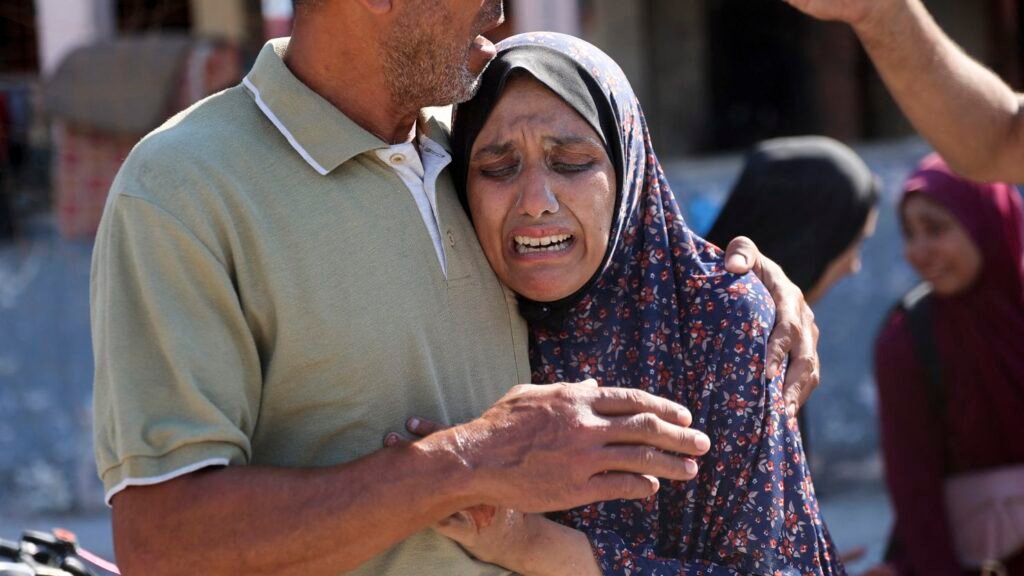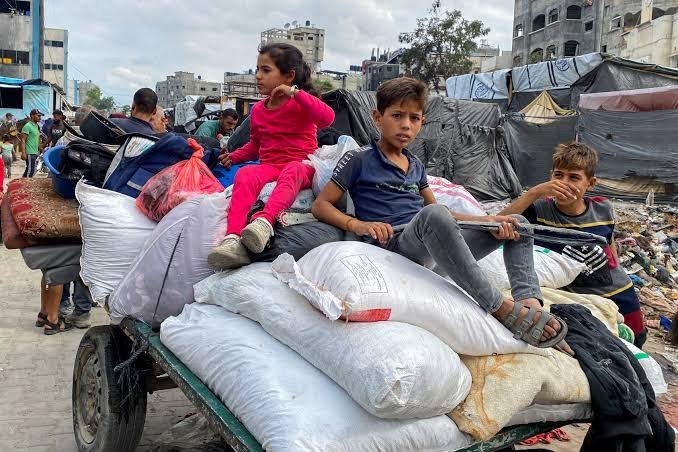
Gaza Herald — Israel has threatened to launch another major military offensive across the besieged Gaza Strip that could force roughly one million Palestinians southward, raising alarm over a fresh wave of mass displacement and destruction as Israel pushes plans to keep military control over most of the territory.
Israeli Defense Minister Israel Katz issued the warning on Thursday, asserting that Israeli occupation forces already control around 70 percent of Gaza and outlining plans to expand military operations into remaining areas. He stated that Palestinians would be ordered to evacuate ahead of an offensive modeled on earlier assaults in Rafah and Beit Hanoun.
Katz issued an ultimatum demanding that Hamas surrender its weapons under US President Donald Trump’s plan or face disarmament through renewed military operations by Israeli occupation forces, while threatening continued assassinations of Hamas leaders, including political bureau chief Khalil al-Hayya, who is outside the occupied Palestinian territory. The warning points toward another large-scale campaign that would raze more neighborhoods, uproot hundreds of thousands of residents, and further block recovery and reconstruction.
Plans to Hold 70 Percent of Gaza Under Military Control
Katz stated that zones currently under Israeli military control include the Philadelphi Corridor along the Egyptian border, which Israel intends to hold under the pretext of curbing weapons smuggling and limiting Hamas’s ability to rebuild military capacity.
Dismissing Hamas’s ongoing presence across the remaining 30 percent of Gaza, he vowed that Israeli occupation forces will keep targeting its members and leadership. A day earlier, Katz had laid out a policy pursued with Prime Minister Benjamin Netanyahu to retain an Israeli-controlled security zone covering roughly 70 percent of the Strip, cleared of Palestinian residents and homes.
Such an arrangement would keep most of Gaza under direct military occupation, confining Palestinians to a fraction of their land and barring displaced families from returning to vast areas where their homes once stood. Katz also disclosed that Israel has prepared arrangements for Palestinians seeking to leave Gaza permanently, asserting that organizational mechanisms are already in place without offering operational details, deepening fears across a population already battered by bombardment, repeated displacement, ruined infrastructure, and blockade restrictions on essential supplies.
Military Plans Clash With Trump’s Gaza Roadmap
Katz’s remarks expose widening friction between Israel’s military agenda and the postwar framework promoted by US President Donald Trump for Gaza’s administration. That roadmap—linked to Trump’s Board of Peace and UN Security Council Resolution 2803- envisions a transitional civilian administration, phased withdrawal of Israeli occupation forces, and deployment of an international stabilization force to oversee security.
Israel’s latest threats point in the opposite direction: rather than withdrawing and permitting civilian return, Israeli leaders are pressing for prolonged military control over most of Gaza, depopulating large zones, and launching another offensive.
According to media reports, Jared Kushner, one of the chief architects of Trump’s Gaza plan, has pressed Netanyahu to honor commitments under the proposal, avoid further military operations, and enable deployment of international forces, including plans to train Palestinian police officers in Egypt. Other senior figures linked to the Board of Peace have reportedly weighed abandoning the initiative and returning responsibility for Gaza to the United Nations amid disputes over Israeli aid restrictions, stalled transitional steps, and blocked shelter supplies, underscoring the gulf between international blueprints and Israel’s push for permanent military control.
One Million Face Displacement as Exile Fears Mount
Katz’s invocation of past offensives in Rafah and Beit Hanoun has heightened dread over what expanding the assault into remaining areas would bring. Both cities suffered devastation during earlier military campaigns, leaving residential districts in ruins, families displaced repeatedly, and vast zones uninhabitable.
A fresh offensive into remaining areas could compel roughly one million Palestinians to flee south once again, piling new displacement onto a population already exhausted by evacuation orders and destroyed homes. Renewing threats against al-Hayya and senior figures, Katz also referenced the killing of several Palestinians, including Khaled Abu Nada—whom he described as overseeing economic and education portfolios in Gaza- after Abu Nada, Gaza’s deputy minister of Higher Education, was killed alongside his wife in a strike by Israeli occupation forces on their residential apartment in Deir al-Balah on Thursday.
Although Israeli officials frame these plans around security and disarming Hamas, the measures outlined by Katz keep Palestinians barred from large tracts of their territory, entrench military occupation, and prepare for further mass displacement, while pairing threats of renewed assault with arrangements for permanent departure that fuel fears of forced exile rather than temporary evacuation. For families uprooted time and again, the clash between international promises of withdrawal and reconstruction on one hand, and Israeli plans for territorial control and mass displacement on the other, leaves their right to remain on their land and rebuild Gaza under severe threat.