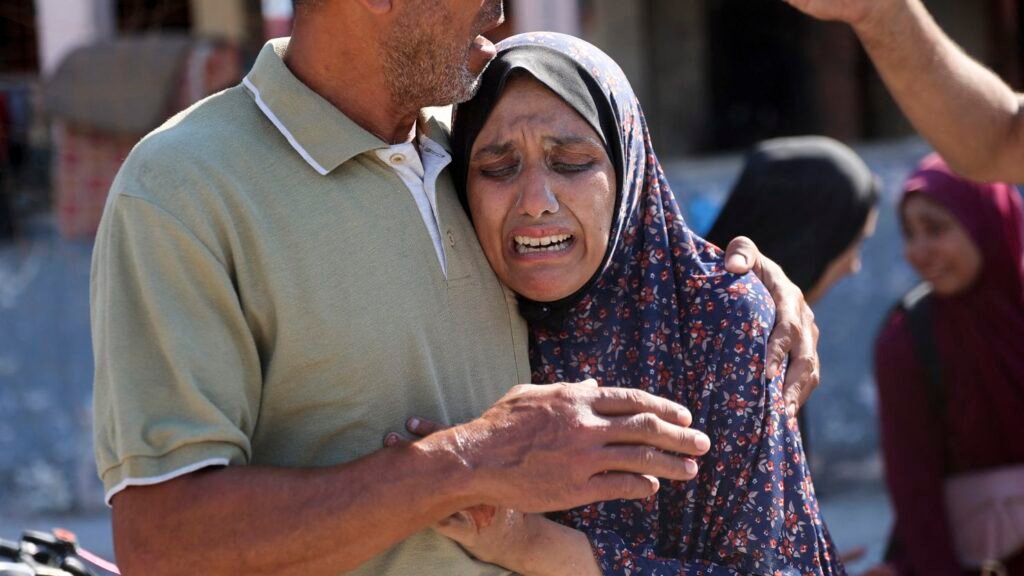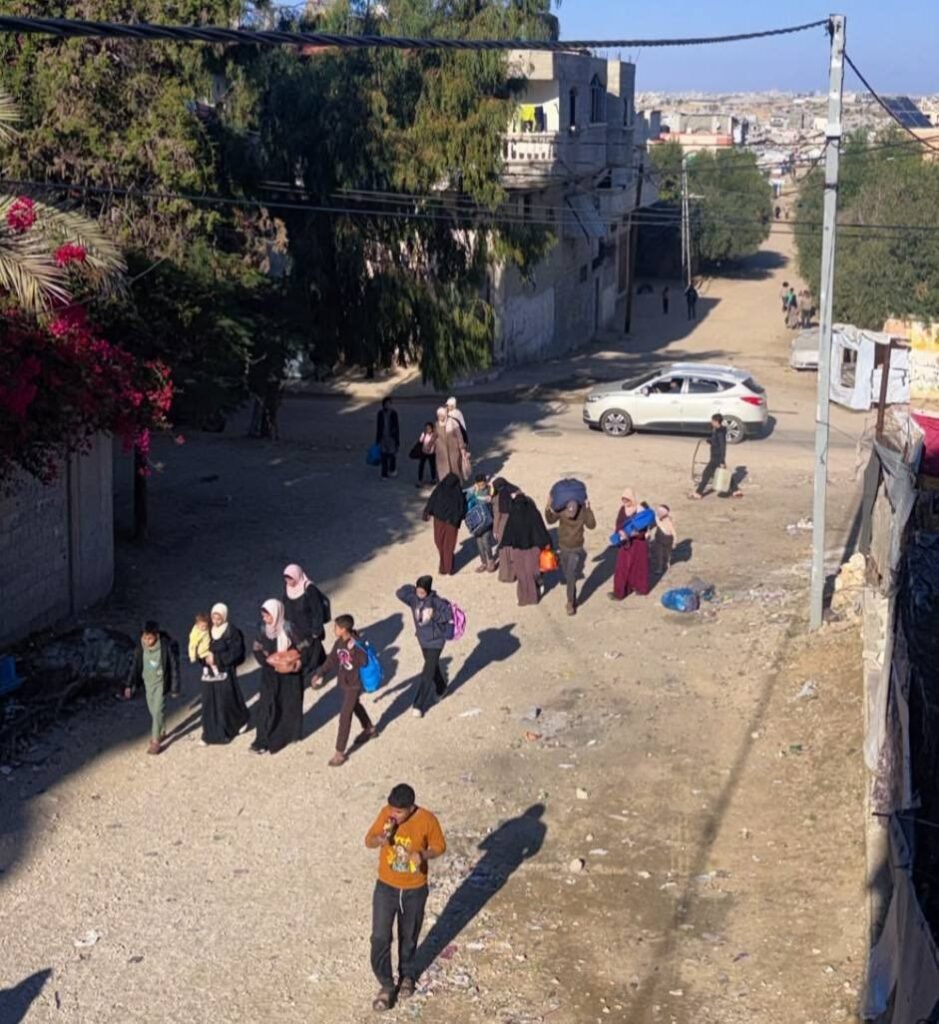
Gaza Herald — Thousands of Palestinian families have been forced to flee their homes and shelters in central Gaza after Israeli occupation forces launched a new ground operation near the Bureij and Nuseirat refugee camps on Wednesday, November 18, triggering another wave of displacement in a territory already devastated by war, destruction, and a deepening humanitarian crisis.
The Israeli military announced a limited ground operation around Salah al-Din Road, targeting three residential blocks northwest of the Bureij refugee camp and northeast of the Nuseirat refugee camp.
The advance, reportedly the first operation of its kind in the area since the October 2025 ceasefire agreement, has heightened fears of renewed military escalation and further displacement.
Palestinian news outlets reported that residents began evacuating their homes as Israeli military movements intensified.
The Quds News Network documented families fleeing areas of central Gaza, while the Palestinian Information Center reported that tens of thousands of families had been displaced again, with many forced to seek refuge in the streets because of the lack of safe shelters.
The scale of the displacement has not been independently verified.
Families Forced Into the Streets as Israeli Forces Advance
The latest military operation has placed additional pressure on Palestinian families who have already endured repeated displacement, the destruction of their homes, and severe shortages of basic necessities.
Many residents of central Gaza have spent months moving between damaged buildings, overcrowded shelters, and makeshift tents, with few safe alternatives remaining.
The renewed Israeli advance has forced families to search once again for somewhere to stay, even as much of the territory’s housing and civilian infrastructure remains destroyed or severely damaged.
For displaced Palestinians, leaving an area under threat does not guarantee safety.
Shelter capacity is severely limited, humanitarian resources are overstretched, and thousands of families remain exposed to harsh weather conditions without adequate protection.
The reported disruption of movement along Salah al-Din Road has further intensified concerns about the ability of civilians to evacuate safely and reach essential services.
The road is one of Gaza’s principal north-south routes, making access especially important for displaced families, emergency vehicles, and humanitarian operations.
Gaza Social Development Ministry Demands Immediate Protection
Gaza’s Ministry of Social Development issued an urgent warning about the consequences of the Israeli military operation in the central governorate.
The ministry called for immediate international protection for displacement centers and Palestinians sheltering across the Gaza Strip.
It urged the United Nations to intervene without delay to stop attacks on civilian areas and prevent further harm to displaced families.
The ministry also demanded the immediate reopening of the Salah al-Din corridor and the establishment of safe passage routes to ensure that civilians can move without being exposed to military attacks.
Its appeal reflects growing concern that renewed ground operations could endanger displacement centers and force already vulnerable families into further uncertainty.
The ministry’s demands underscore the urgent need to protect civilians, maintain access to humanitarian assistance, and prevent additional displacement.
New Ground Operation Raises Questions Over Gaza Ceasefire
The Israeli advance has also raised serious questions about the implementation and durability of the ceasefire agreement reached approximately 11 months ago.
Although the Israeli military described the operation as limited, its movement into residential areas and the resulting displacement have renewed concerns that military activity is continuing despite the ceasefire arrangements.
The operation risks further undermining civilian confidence in the agreement, particularly among Palestinians who had hoped the ceasefire would allow them to remain in their communities and begin rebuilding their lives.
A ceasefire intended to protect civilians faces a fundamental test when military operations continue to threaten residential neighborhoods and force families to flee.
The latest developments have intensified calls for mediators and international guarantors to clarify how the operation complies with the agreement and what measures are being taken to prevent further escalation.
Board of Peace Faces Questions Over Its Role
The renewed displacement also places attention on the responsibilities of the international Board of Peace associated with U.S. President Donald Trump’s Gaza initiative.
The board has been presented as part of an international framework intended to support stability, governance, and recovery in the territory.
The latest Israeli military operation raises questions about the framework’s ability to protect civilians, support implementation of the ceasefire, and prevent renewed displacement.
Whether the board has formally addressed the operation or taken steps to seek clarification from Israel was not established in the available reporting.
Its response is particularly significant as Palestinians continue to face military activity, widespread housing destruction, and obstacles to humanitarian recovery.
The situation also raises broader questions about the responsibilities of ceasefire mediators and international parties involved in overseeing Gaza’s postwar arrangements.
International Silence Risks Leaving Displaced Families Unprotected
The renewed military operation comes at a time when Gaza’s humanitarian conditions remain exceptionally fragile.
Large areas of the territory have been reduced to rubble, while displaced families continue to struggle with inadequate shelter, shortages of essential supplies, and limited access to healthcare and basic services.
Another major displacement wave threatens to overwhelm already strained humanitarian operations and expose more civilians, including children, older people, and people with disabilities, to dangerous living conditions.
The absence of a clear and effective international response could leave Palestinian civilians facing further military operations without meaningful protection.
Humanitarian organizations and international mediators face renewed pressure to ensure safe civilian movement, protect displacement centers, and prevent additional restrictions on essential routes.
For Palestinians in central Gaza, the latest operation has revived the fear and uncertainty of earlier stages of the war.
Families who have already lost homes, relatives, and livelihoods are once again being forced to leave, with no guarantee that the places they reach will be safer.
As Israeli forces advance near Bureij and Nuseirat, the immediate humanitarian priority remains the protection of civilians, the restoration of safe passage along Salah al-Din Road, and urgent access to shelter and essential assistance.
Without effective enforcement of the ceasefire and meaningful protection for displaced Palestinians, the latest operation threatens to deepen a cycle of repeated displacement in a territory where safe places have become increasingly difficult to find.