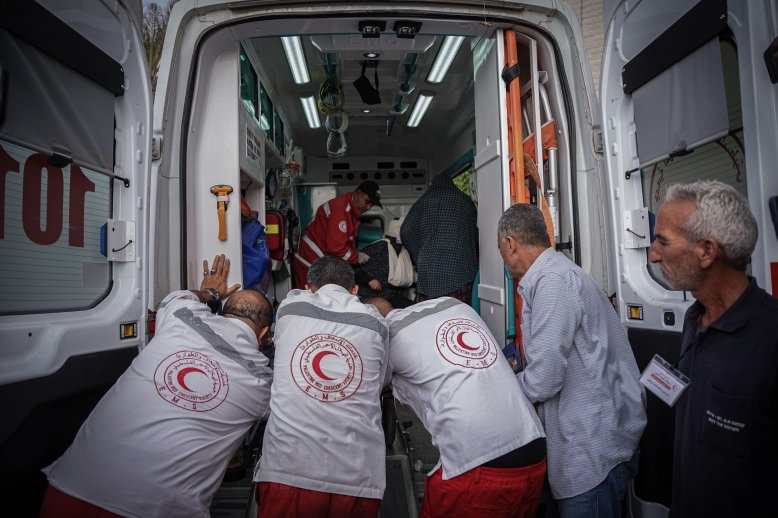
DaysofPal — At least 1,700 Palestinian healthcare workers have been killed by Israeli forces during the genocidal war on Gaza, the Gaza Nurses Union said, demanding urgent international action to protect medical personnel and uncover the fate of colleagues who remain missing.
The union warned that Gaza’s doctors and nurses continue to risk their lives to save patients despite Israeli attacks on medical facilities, severe shortages of essential supplies, and restrictions that have pushed the territory’s healthcare system toward collapse.
Its appeal comes less than a week after an Israeli airstrike hit the surgical building at Nasser Medical Complex in Khan Younis, killing six Palestinians, including a surgeon and a child.
Healthcare Workers Killed as Hospitals Come Under Attack
The Gaza Nurses Union said 1,700 members of Gaza’s medical and nursing workforce had been killed by Israeli forces during the war.
It called on the international community to fulfill its responsibilities by protecting healthcare workers and taking immediate steps to determine the fate of missing medical personnel.
Despite the danger, Palestinian doctors and nurses continue treating the wounded and caring for critically ill patients amid ongoing attacks and a severe lack of medical resources.
The union described Israeli restrictions on Gaza’s healthcare system as a comprehensive siege, warning that more than 21,000 patients urgently requiring treatment outside the territory remain at risk.
It demanded an immediate end to attacks on medical facilities and international assistance to rebuild hospitals devastated by the war.
Israeli Strike on Nasser Hospital Disrupts Lifesaving Services
The November 12 Israeli strike on Nasser Medical Complex exposed the devastating consequences of attacks on Gaza’s remaining hospitals.
According to Doctors Without Borders (MSF), Nasser is the main referral hospital for emergency, surgical, and specialized medical care in southern Gaza, serving approximately 1.3 million people.
The strike killed six Palestinians, including a surgeon and a child, and severely disrupted essential medical services.
MSF reported that the hospital’s emergency department, radiology unit, laboratory, and operating rooms were rendered inoperable following the attack.
Medical teams were forced to move surgical procedures to another building, where they operated on three wounded people, including two doctors.
The disruption placed further pressure on an already overwhelmed healthcare system, leaving patients and medical workers facing increasingly dangerous conditions.
Transport Crisis Threatens Operating Rooms and Intensive Care Units
Beyond direct attacks on hospitals, Gaza’s healthcare workers are struggling to reach their workplaces.
The Palestinian Ministry of Health warned that disruptions to transportation for doctors, nurses, and medical technicians threaten to paralyze operating rooms and intensive care units.
The ministry said the suspension of transportation services used by medical personnel could prevent hospitals from maintaining essential operations, even at facilities that remain open to patients.
The warning highlights how Gaza’s healthcare crisis extends beyond damaged buildings and shortages of equipment to the basic ability of medical teams to reach patients in need.
More Than 21,000 Patients Await Treatment Outside Gaza
For Palestinians whose conditions cannot be treated inside Gaza, medical evacuation remains a critical lifeline.
The Gaza Health Ministry estimates that approximately 21,000 patients and wounded people are awaiting treatment abroad.
At the evacuation rate used in its assessment, the ministry warned that clearing the waiting list could take approximately four years.
Figures from the U.N. Office for the Coordination of Humanitarian Affairs (OCHA) illustrate the limited pace of medical evacuations.
Between October 28 and November 3, only 149 patients, including 46 children, were able to leave Gaza for treatment through the Rafah and Kerem Shalom crossings.
The figures underscore the widening gap between the urgent medical needs of Palestinians and the limited opportunities available to obtain treatment outside the territory.
As Gaza’s healthcare workers continue to care for patients under extraordinary conditions, the Nurses Union is demanding international protection, accountability for attacks on medical personnel, and urgent action to determine the fate of those still missing.
Its appeal comes as Gaza’s remaining hospitals struggle to survive, with thousands of patients awaiting treatment and medical teams facing mounting threats to their lives and their ability to provide care.