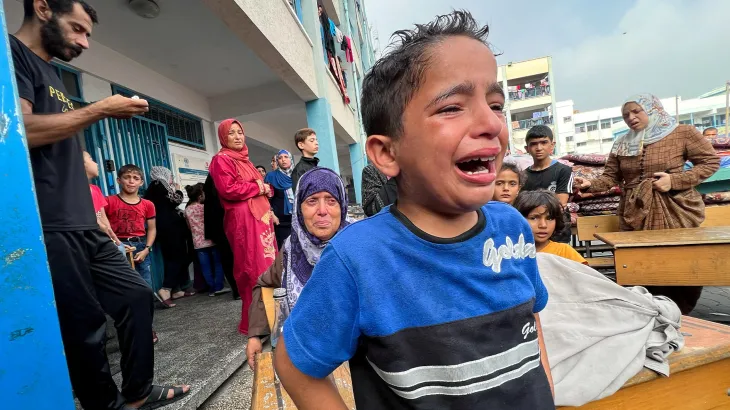
Gaza Herald — For hundreds of thousands of Palestinian children across the besieged Gaza Strip, winter has arrived not as a seasonal change, but as an acute threat to their survival. Torrential rainfall is inundating overcrowded displacement camps, tattered tents are failing to keep out freezing winds, and collapsing sanitation networks are accelerating infectious disease outbreaks among children already weakened by prolonged war, malnutrition, and forced displacement.
Inside makeshift shelters that offer virtually no protection from the elements, infants and young children sleep on soaked mattresses, wear damp clothing, and endure prolonged exposure to plummeting temperatures. Floodwaters have ruined families’ few remaining blankets and winter clothes. At the same tim Israeli blockade restrictions on heating supplies, shelter materials, and medicines leave parents defenseless as ordinary winter weather turns into a man-made pediatric public health emergency.
Flooded Tents Leave Over Half a Million Children Exposed
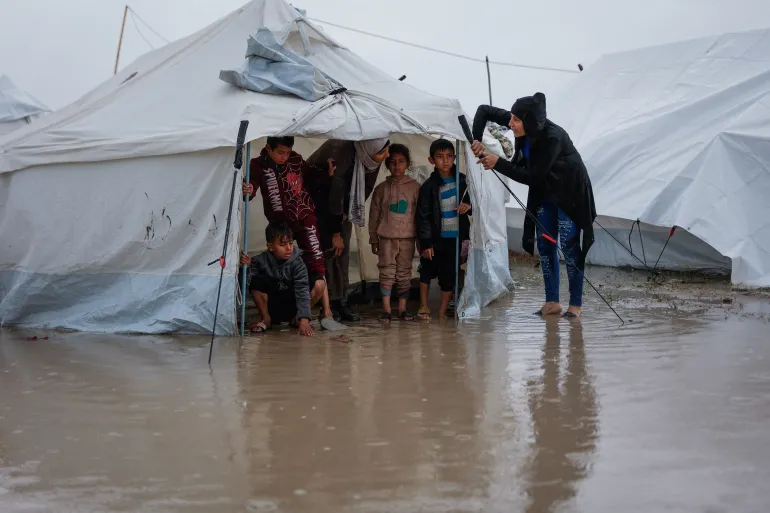
Recent winter storms have exposed the extreme fragility of Gaza’s displacement encampments, where rainwater pours through torn canvas coverings and turns dirt floors into mud. The International Committee of the Red Cross (ICRC) has warned that camp conditions are becoming increasingly unsustainable as worsening weather collides with acute humanitarian deprivation.
The scale of the pediatric shelter crisis is underscored by assessments from Save the Children, which warned on November 8 that more than half a million Palestinian children are confronting their fourth winter in Gaza inside worn-out tents or damaged structures unable to withstand rain and cold. During the season’s first major winter storm, floodwaters inundated approximately 70,000 tents in a single day, driving families out into the rain as temperatures threatened to drop toward 5°C (41°F). With no dry bedding or safe heating fuel, desperate parents have resorted to burning garbage to keep their children warm, exposing young lungs to toxic smoke.
Data from the Palestinian Shelter Cluster reinforces the severity of this emergency, documenting that approximately 1.2 million displaced Palestinians, including more than 560,000 children, are trapped in critical or catastrophic shelter conditions with no safe housing alternative following Israel’s widespread destruction of residential neighborhoods.
Surge in Respiratory and Waterborne Illnesses Threatens Young Lives
Beyond hypothermia and physical exposure, overcrowding, poor ventilation, and shattered sanitation infrastructure are fueling rapid disease transmission among children. The World Health Organization (WHO) reported that acute respiratory infections in Gaza have surged by approximately 33,000 cases compared with the same period last year, accounting for roughly 11 percent of all medical consultations.
WHO officials linked this sharp spike directly to tightly packed, damp living spaces and warned that ongoing flooding and falling temperatures will drive further waves of respiratory and waterborne illnesses. Because Israeli bombardment destroyed municipal drainage and sewage networks, rainwater routinely mixes with raw sewage around family tents, exposing children to contaminated floodwaters while severe medicine shortages cripple remaining clinics’ ability to treat sick infants.
Meanwhile, UNICEF warned on November 9 that among the 1.7 million displaced Palestinians living in tents or damaged buildings, roughly 950,000 reside in flood-prone zones, including approximately 400,000 in high-risk locations, nearly half of whom are children facing heightened dangers of structural collapse, flooding, and failing water services.
Israeli Blockade Traps 150,000 Tents Outside Sealed Borders
Despite the life-threatening conditions confronting Gaza’s children, massive quantities of urgently needed shelter supplies remain stranded just outside the territory. According to the UN Office for the Coordination of Humanitarian Affairs (OCHA), more than 150,000 weather-resistant tents purchased by humanitarian agencies and UN member states remain blocked, awaiting Israeli entry clearance, even as families inside Gaza lack blankets, thermal clothing, and heating equipment.
This engineered bottleneck demonstrates that Gaza’s winter catastrophe is not merely a natural disaster caused by seasonal storms, but the direct consequence of Israel’s systematic destruction of homes and municipal infrastructure combined with ongoing blockade restrictions obstructing life-saving relief. Every day that shelter materials and medical supplies are held at closed crossings leaves hundreds of thousands of Palestinian children exposed to preventable illness, freezing temperatures, and lethal neglect. Unless Israeli authorities are compelled to lift restrictions and permit the immediate entry of tents, heating supplies, and medicines at scale,