Gaza Herald — The fragile ceasefire in the besieged Gaza Strip faces imminent collapse as binding obligations remain unfulfilled, military assaults by Israeli occupation forces persist, and humanitarian conditions deteriorate rapidly, according to a new assessment by the Board of Peace submitted to the United Nations Security Council.
The report warns that without immediate, concrete enforcement of the agreement, the entire political framework could unravel, leaving no viable mechanism for Israeli military withdrawal, Palestinian civil governance, or large-scale reconstruction.
The assessment underscores the widening chasm between formal diplomatic commitments and the brutal reality endured daily by over two million Palestinians across Gaza. While the truce was ostensibly designed to halt Israel’s genocidal war and initiate recovery, deliberate delays and unfulfilled Israeli obligations have paralyzed substantive progress. “The distance between what has been agreed and what is happening on the ground nonetheless remains the principal risk to the process,” the report states.
Unfulfilled Obligations and Ongoing Israeli Attacks Undermine the Truce
While formally calling on both Israel and Hamas to fulfill their commitments and urging the Security Council to exert decisive diplomatic leverage, the report comes against the backdrop of relentless Israeli military strikes and suffocating blockade restrictions that continue to devastate Gaza’s civilian population.
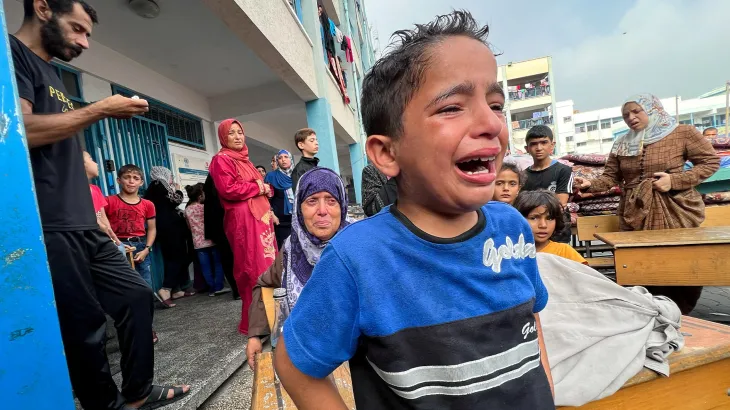
The Board of Peace cautioned that displaced Palestinians face “another winter in tents and rubble,” as ongoing Israeli restrictions on relief supplies and heavy equipment, compounded by international funding shortfalls, continue to paralyze emergency winter preparations.
The board demanded an immediate surge in the entry of weather-resistant shelter materials and winter supplies, alongside urgent Israeli clearance for critical infrastructure equipment, including water pumps, power generators, and heavy machinery required to drain floodwaters and rehabilitate shattered municipal networks.
Israeli Refusal to Authorize Civilian Police Stalls Transitional Governance
A primary obstacle documented in the report is the continued paralysis of the technocratic Palestinian administration designated to manage civil affairs in Gaza during the transitional phase. The civilian body has yet to deploy inside the territory due directly to the Israeli government’s refusal to issue necessary authorizations governing the training, deployment, and return of Palestinian civilian police.
“The absence of decisions by the government of Israel on the necessary conditions and arrangements for the training, deployment and return of civilian police to Gaza continues to impede full implementation of the Comprehensive Plan,” the report states, urging Israel to issue the required approvals without further delay.
This deliberate Israeli obstruction has simultaneously stalled plans to deploy an international stabilization force, a key component tied to full Israeli troop withdrawal, security arrangements, and the launch of territory-wide reconstruction. Without basic civil administration and policing mechanisms in place, the transition from a nominal ceasefire to recovery remains frozen.
Six Months of Paralysis Threaten Complete Collapse of the Road Map
The new assessment echoes stark warnings delivered to the Security Council six months earlier, in May, by the board’s director-general, former United Nations Middle East envoy Nickolay Mladenov, who reported that implementation had stalled over disputes surrounding the disarmament of Hamas. Half a year later, those foundational impasses remain unresolved, while ongoing Israeli military operations across Gaza further undermine prospects for advancing the road map.
“A ceasefire that delivers nothing visible cannot be sustained indefinitely,” the report warns, cautioning that a collapse would leave no fallback framework, no transitional administration ready to operate, and no conditions capable of supporting reconstruction. Rejecting pretexts used to justify indefinite delays, the board stressed that concrete implementation is indispensable to securing Israeli military withdrawal and meaningful rebuilding.
Palestinian Self-Determination Must Anchor Any Political Horizon
Beyond immediate administrative and security mechanisms, the report affirms that genuine Palestinian self-determination and independent statehood must remain the ultimate political objective of the process, warning against unilateral Israeli measures designed to foreclose a credible political horizon or entrench permanent fragmentation.
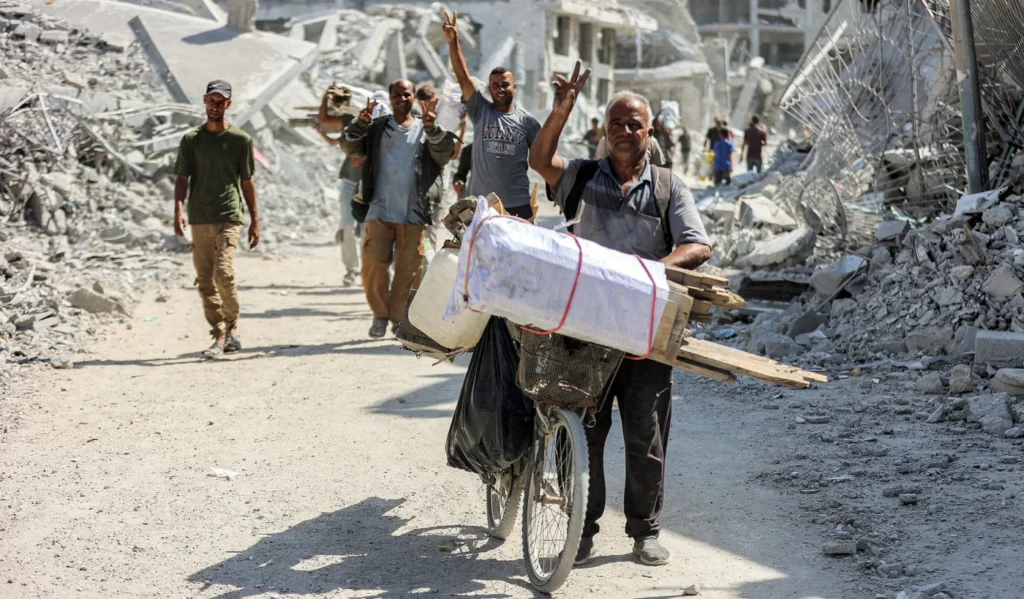
The warning arrives as Gaza’s population continues to bear the crushing weight of widespread destruction, forced displacement, flooded encampments, and severe blockade restrictions. For Palestinians in Gaza, the viability of a ceasefire cannot be measured merely by a reduction in full-scale bombardment; it must deliver real protection from Israeli fire, unrestricted humanitarian access, the restoration of essential services, and an end to military occupation.
Until binding commitments translate into tangible relief and Israeli withdrawal, Gaza remains trapped in an unsustainable limbo where reconstruction and Palestinian self-determination are kept deliberately out of reach.