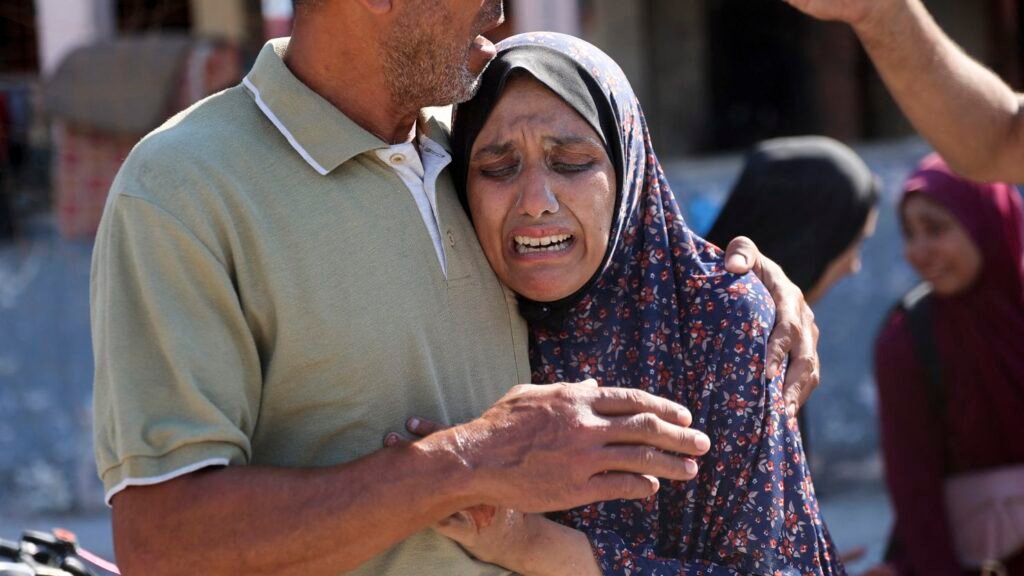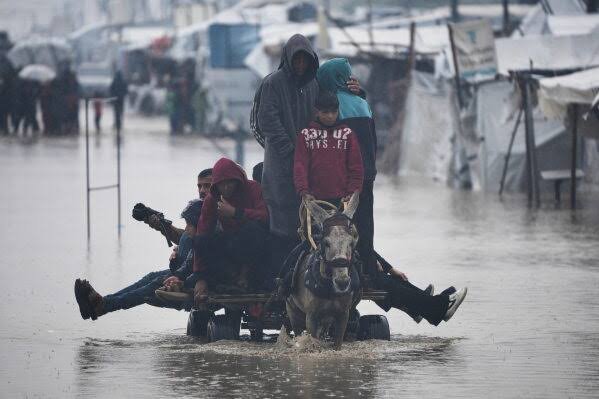
Gaza Herald _Nearly 1.5 million displaced Palestinians across the Gaza Strip face life-threatening conditions as the 2026–2027 winter season approaches, bringing severe rainfall, catastrophic flooding, and building collapses.
The Gaza Winter Emergency Committee has issued urgent warnings that approximately 950,000 displaced people are currently sheltering in low-lying areas, coastal zones, and drainage basins classified as medium to high flood risks. With 95 percent of civic infrastructure severely damaged, makeshift displacement camps are ill-prepared to withstand heavy weather, leaving vulnerable families exposed to harsh seasonal elements without adequate shelter.
Thousands of Makeshift Tents Facing Immediate Relocation and Inundation
Emergency officials report that roughly 7,800 tents erected in active flood paths require immediate relocation to prevent mass inundation. Across the enclave, humanitarian agencies estimate an urgent deficit of 200,000 weather-resistant tents needed to replace worn, makeshift shelters. In Khan Younis alone, over 1,000 displaced families across six informal encampments face imminent flooding as heavy rains approach. According to assessments by the United Nations Office for the Coordination of Humanitarian Affairs (OCHA), current winterization supplies in stock can only provide partial support to 18 percent of the 294,250 families requiring winter shelter assistance.
Fractured Structures Threaten Tens of Thousands Living in Damaged Buildings
Desperate for protection against wind and rain, thousands of displaced residents have taken refuge inside unstable buildings previously damaged by military strikes. The Winter Emergency Committee estimates that 2,000 occupied structures are at high risk of structural failure, while OCHA field surveys document over 2,300 unsafe buildings housing approximately 44,000 residents. Soaking rains compromise weakened concrete foundations, cracked walls, and exposed ceilings, dramatically increasing the danger of partial or total collapse on families trapped inside.
Decimated Civil Defense and Municipal Equipment Halts Emergency Response
Gaza’s municipal and civil authorities enter the winter season with severely crippled emergency response capabilities. Assessments reveal that 70 percent of essential municipal machinery and 90 percent of rescue equipment belonging to the Palestinian Civil Defense have been destroyed. Municipal crews lack the heavy excavators, water pumps, fuel, and replacement parts needed to clear blocked drainage channels, extract accumulated rainwater, or respond to structural collapses, leaving local communities completely vulnerable to seasonal storms.
Severe Health Risks Threaten Young Children and Vulnerable Populations
Prolonged exposure to cold, damp conditions poses severe health risks to infants, elderly residents, and individuals with chronic illnesses living in unheated, uninsulated tents. UNICEF’s winterization report warns that over 1.76 million people across the Strip reside in overcrowded, substandard shelters, recalling the previous winter season when hypothermia claimed the lives of at least 11 young children. Compounded by malnutrition and a collapsed healthcare grid, exposure to winter storms threatens to escalate preventable respiratory infections and severe cold-weather illnesses.
Blockades and Supply Shortages Intercept Critical Winterization Aid
Humanitarian operations face severe obstacles due to continuing blockades on the entry of essential shelter materials, heavy machinery, and emergency fuel. Organizations like the Norwegian Refugee Council report that available supply pipelines can assist only 52,000 families out of the nearly 294,250 households in desperate need of winter assistance. Without immediate international intervention to allow weatherproofing materials, drainage equipment, and heavy civil machinery into the enclave, the approaching winter threatens to turn ongoing displacement into a catastrophic humanitarian emergency.