Gaza Herald — Vegetables and fresh fruits are rapidly vanishing from market stalls across the Gaza Strip as continuous Israeli border restrictions, systematic blockades, and targeted violations of ceasefires severely cripple incoming humanitarian and commercial food supplies.
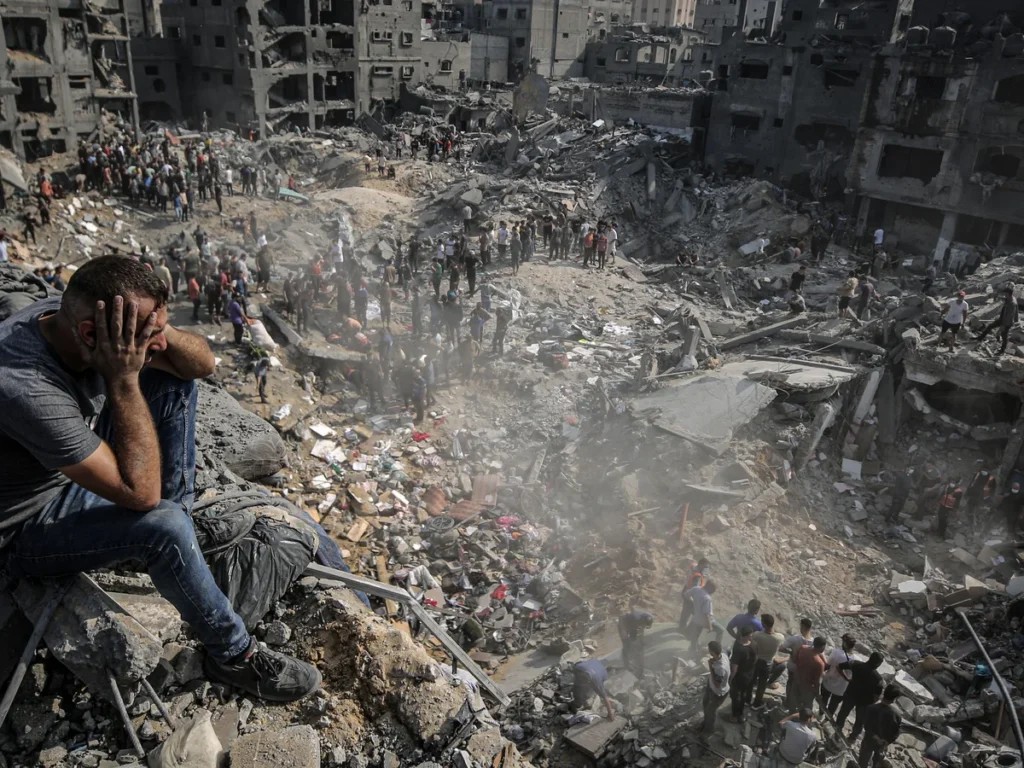
With prices soaring to unprecedented levels, displaced families face severe starvation risks, threatening to trigger a deepening hunger catastrophe across the enclave. In markets throughout Khan Younis and southern Gaza, once-vibrant produce stalls stand nearly bare, leaving displaced Palestinians searching for basic food items confronted by astronomical price spikes that far exceed their depleted purchasing power and exposing the extreme fragility of Gaza’s food system after years of continuous bombardment, siege, and mass displacement.
Local merchants attribute the sudden collapse of produce availability directly to Israel’s tightly controlled border restrictions and arbitrarily enforced crossing closures, which prevent commercial trucks from replenishing depleted stocks. Munir al-Faqawi, a produce vendor in Khan Younis, explained that the small shipments previously allowed through border checkpoints were exhausted within days, leaving markets empty.
He noted that families can no longer afford to buy vegetables by standard weights, forcing parents to buy single pieces of produce, such as a single onion or tomato, just to provide their children with a minimal taste of fresh food.
Basic staples have rapidly transformed into unaffordable luxuries across the territory. The price of onions has surged from 5 shekels to over 20 shekels per kilogram. At the same time, a standard bag of flour, the primary staple for basic survival, has skyrocketed from 70 shekels to over 150 shekels in less than a week.
Essential fresh items like apples, bananas, and tomatoes have completely disappeared from commercial distribution, forcing households to rely almost exclusively on minimal dry rations. Salwa Bakr, a displaced mother in Khan Younis, warned that families are being pushed directly back into the acute hunger conditions experienced during earlier stages of the war, as the inability to afford flour, produce, or meat makes it impossible to provide children with a life-sustaining diet.
The severe shortage of fresh produce across Gaza aligns with catastrophic international assessments on food security. According to the Integrated Food Security Phase Classification (IPC) analysis published in July 2026, more than 1.2 million Palestinians, representing 59 percent of Gaza’s population, faced acute food insecurity at Crisis levels or worse between mid-April and June.
The IPC projects this figure will rise to over 1.4 million people, or about 67 percent of the population, by the end of 2026, with over 212,000 individuals facing Emergency levels of hunger. Supplementary United Nations screenings conducted in September 2026 among 31,443 young children identified 899 cases of acute malnutrition, including 99 suffering from severe wasting, directly reflecting the total elimination of fresh, micronutrient-rich foods from daily diets.
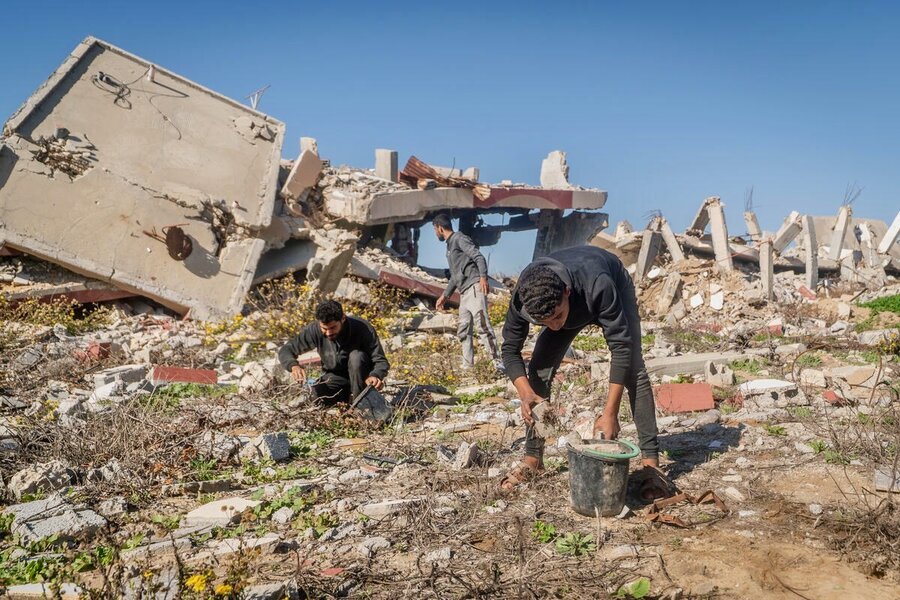
Furthermore, local agricultural capacity has been virtually annihilated by military incursions, land bulldozing, and strict security buffer zones that prevent farmers from accessing Gaza’s remaining arable land. Local merchants report that while minimal quantities of items like eggplant or parsley periodically reach stall tables, local yields cover only a small fraction of daily nutritional requirements. Without sustained commercial imports, the complete reopening of border crossings, and the immediate lifting of Israeli blockade protocols, the total absence of fresh produce serves as a clear precursor to widespread starvation and severe, chronic health failures across the Gaza Strip.