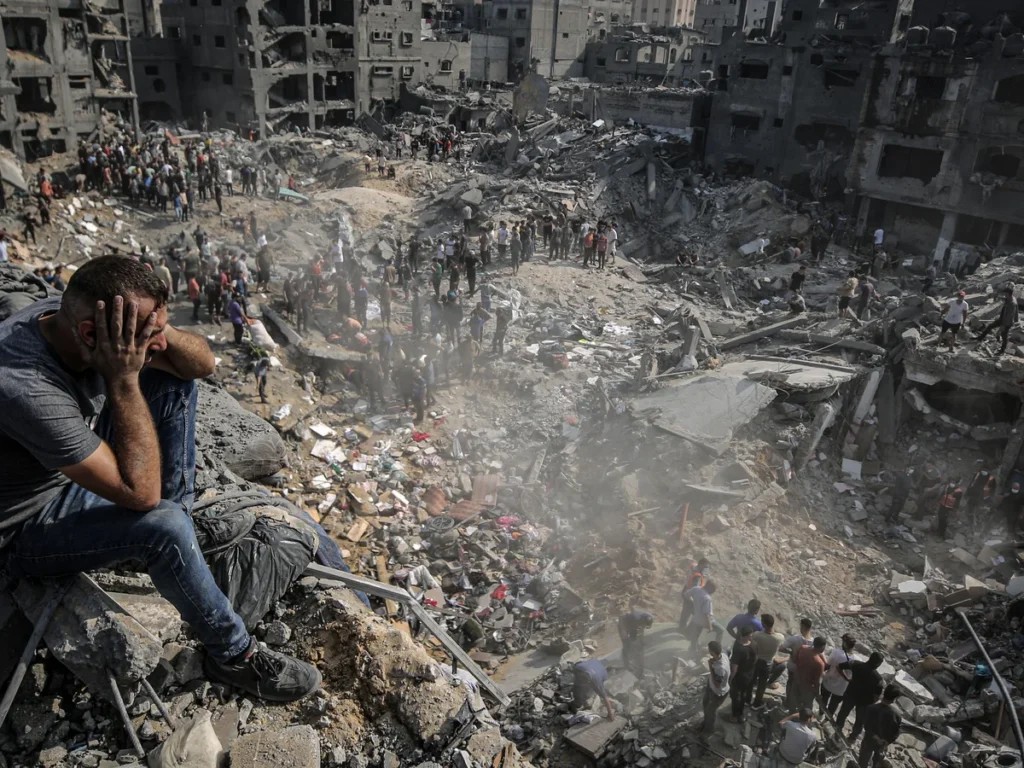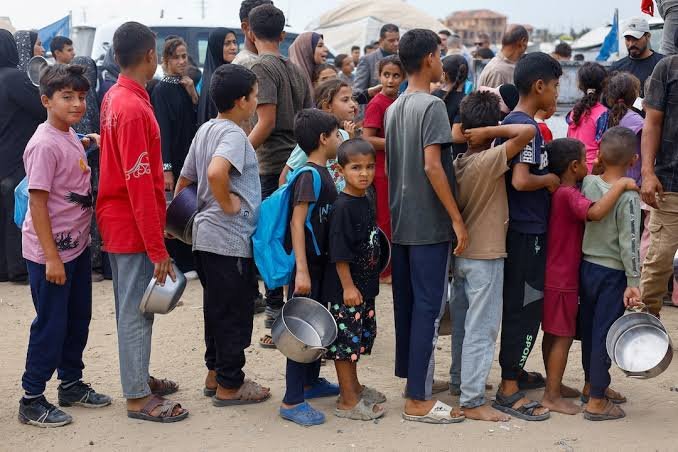
Gaza Herald — For displaced Palestinians in Gaza, humanitarian aid is not an extra source of support but a lifeline in a territory where homes have been destroyed, livelihoods wiped out, and access to necessities remains severely limited. Yet just as hundreds of thousands of families continue to depend on food parcels, hot meals, flour, and cash assistance to survive, reductions in aid are deepening fears of renewed hunger. For elderly people, sick residents, and families with no reliable source of income, the cuts raise a desperate question: how are they supposed to survive when the assistance they depend on is shrinking?
Facing chronic illness, mass displacement, and continuous Israeli siege, 70-year-old Palestinian Mahmoud Abu Tawaheen describes humanitarian aid as the only thread keeping his family alive amid the ongoing genocidal war in the Gaza Strip. Sheltering under a worn plastic tent while managing severe health issues, Abu Tawaheen has depended on sparse rations of rice, lentils, and flour to keep his family fed.
However, recent decision-making by international relief entities has made even these basic staples nearly impossible to obtain as food assistance is drastically scaled back across the enclave. Abu Tawaheen questioned how he is supposed to survive as a sick 70-year-old man living in a tent with no job, emphasizing that the civilian population’s need for humanitarian aid is an ongoing matter of life and death.
Abu Tawaheen’s plight reflects a growing disaster affecting hundreds of thousands of displaced Palestinians who have lost their homes and livelihoods and remain entirely dependent on humanitarian assistance. Um Yasser, another displaced resident, noted that food parcels were already grossly insufficient, with families forced to wait months between distributions only to now face complete removal from aid registries.
She demanded an immediate reversal of reduction policies by the World Food Programme (WFP), warning that slashing aid during a continuous siege guarantees a return to catastrophic famine. For households living in tents with no income, food parcels and cash assistance determine whether families can obtain necessities, and without regular support, households are forced to stretch limited supplies or rely on community kitchens that are themselves under severe operational pressure.
Mass Demonstrations Target WFP Headquarters in Gaza
In response to the scaling back of life-sustaining relief, Palestinian national and Islamic factions organized mass protests outside the WFP headquarters in Gaza to condemn the sudden removal of approximately 500,000 Palestinians from food and cash assistance programs. The WFP attributed the cuts to severe global funding shortfalls, reducing daily hot meal distributions from community kitchens from 250,000 down to 150,000, while simultaneously curtailing flour, food parcel, and financial assistance allocations.
A displaced father from Rafah emphasized that stripping half a million people of food support has triggered widespread panic among families who have lost all livelihoods under the bombardment, while resident Mohammed Diab urged relief organizations to reconsider the reductions and respond to the needs of impoverished households facing a complete absence of employment opportunities.
Mohammed Saleha, coordinator-general of the Palestinian NGO Network (PNGO), warned of catastrophic immediate consequences, emphasizing that over 90 percent of Gaza’s population relies on humanitarian assistance for basic survival. Saleha pointed out that approximately 1.6 million Palestinians depend on WFP programs, meaning the removal of over 500,000 people from aid lists occurs precisely as non-governmental organizations face severe funding deficits and Israeli occupation forces continue to strangle supply lines at border crossings. While PNGO has held emergency sessions with WFP leadership to secure auxiliary funding and restore beneficiary lists, the combined pressure of donor shortfalls and Israeli military restrictions on entry permits has severely crippled relief operations.
Critical Shortage of Essential Aid Trucks
Saleha confirmed that only 150 to 200 trucks are currently permitted into Gaza each day, a small fraction of the 600 daily trucks required to meet baseline survival needs, ensuring that aid reductions will directly accelerate mass hunger across displacement camps. For displaced Palestinians who have lost their homes, employment, and possessions, humanitarian aid remains an indispensable necessity rather than a temporary supplement.
As older residents, children, and the sick bear the brunt of these overlapping crises, civil society leaders stress that until employment, housing, and essential services are restored, scaling back aid leaves vulnerable Palestinians with no viable means to feed their families.