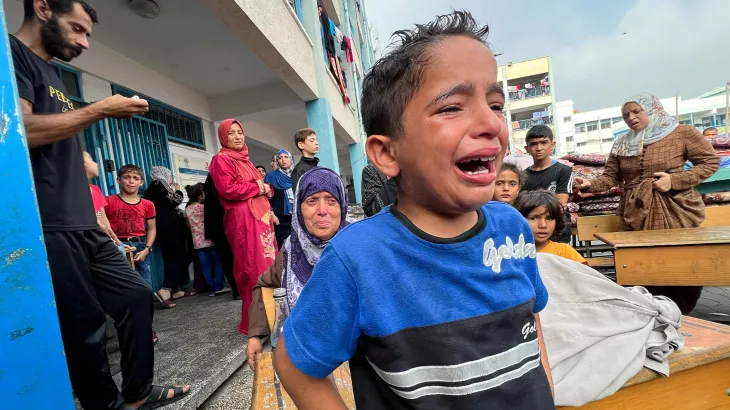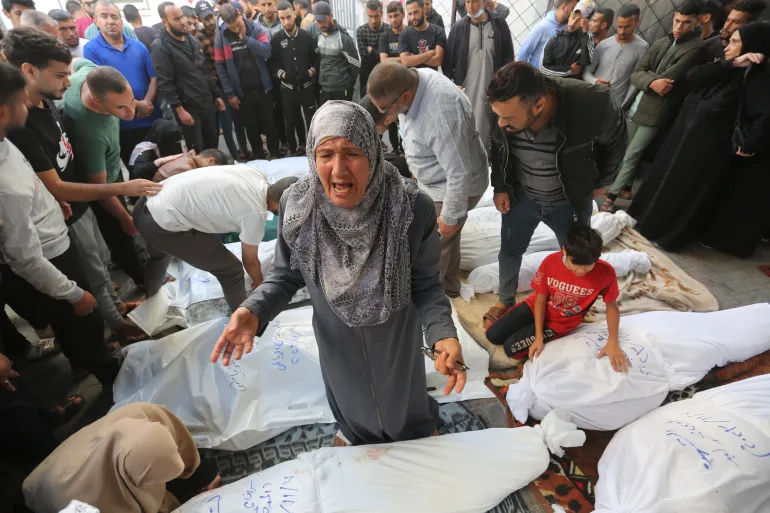
Gaza Herald — When Nahida Anton and her daughter Samar were gunned down inside the courtyard of Gaza’s Holy Family Church in December 2023, Israeli military authorities pledged an internal inquiry. By September 2025, the file remained open, and today, nearly three years after the fatal shooting, the official response remains unchanged: “under review.” Their killings are emblematic of a systemic pattern across the occupied territories and regional conflict zones.
Out of 254 documented incidents where Israeli forces pledged internal reviews into unlawful killings or severe injuries, a comprehensive audit revealed zero published outcomes on official military portals. Of 300 total cases evaluated, spanning Gaza, the occupied West Bank, Lebanon, and military detention centers between October 2023 and August 2026, only 28 yielded publicly identifiable conclusions, leaving nearly 85 percent of tracked cases shrouded in total obscurity, with more than 200 involving at least one recorded fatality.
Defiance of UN Directives and Blockade on Independent Scrutiny
This internal opacity persists in direct defiance of international legal orders and basic principles of judicial transparency. On May 24, 2024, the International Court of Justice issued a binding order commanding Israel to grant unimpeded access to Gaza for UN-mandated fact-finding missions investigating genocide.
Despite this directive, the UN Independent International Commission of Inquiry recorded in its June 2026 report that Israeli authorities completely ignored 13 formal requests for information and territorial access sent since October 2023, leaving international investigators systematically stonewalled by the state under scrutiny. Simultaneously, an absolute blockade remains imposed on independent foreign journalism, preventing international reporters from conducting independent verification while local Palestinian journalists document the destruction at immense personal risk.
High-Profile Massacres Shielded Behind “Under Review” Status
The human cost of these perpetual internal reviews is illustrated across hundreds of documented massacres where military self-investigations have failed to deliver accountability. In August 2024, Israeli airstrikes hit the Al-Tabaeen educational complex in Gaza City while displaced families sheltered for morning prayers, killing at least 93 Palestinians, including six women and 11 children; military officials claimed the target was a command post and placed the case under continuous internal review.
Similarly, following the April 2024 targeted drone strike that killed seven international World Central Kitchen workers, military prosecutors announced in August 2026 that no criminal charges would be filed, dismissing the incident as a mistake. World Central Kitchen strongly rejected that finding, saying its marked convoy operated in an agreed-upon deconfliction zone and calling the internal review a deliberate attempt to shield commanders from accountability.
Furthermore, military prosecutors formally declined to initiate criminal proceedings into two separate attacks on Médecins Sans Frontières staff and family members in Gaza City and Khan Younis, prompting the organization to assert that military self-reviews cannot provide genuine justice.
Decades of Institutionalized Impunity and Delay Tactics
This strategy of prolonged delay and institutional inaction predates the current conflict by many years. Historical analyses of 664 referrals to the military’s fact-finding mechanism following the 2014 Gaza war, the 2018 Great March of Return, and the May 2021 assault revealed that 542 cases were closed without a criminal investigation, yielding only a single indictment. Broader data covering soldier offenses against Palestinians between 2016 and 2024 shows that out of 2,427 formal complaints, only 23 resulted in indictments, a prosecution rate of less than one percent. Human rights analysts emphasize that these extreme delays are strategically utilized to erode public interest, allow physical evidence to degrade, and shield perpetrators from legal consequences. On September 7, 2026, UN Special Rapporteur Francesca Albanese warned that mass rubble clearance operations across Gaza risk destroying key forensic evidence and obstructing the recovery of human remains, further compounding the challenge of securing international legal accountability.
The Imperative for International Judicial Mechanisms
The fundamental failure lies in treating internal military announcements as if they were the delivery of justice. Genuine accountability requires unhindered entry for independent UN investigators, the preservation of forensic evidence, transparent public findings, and impartial criminal prosecutions under international supervision. Until these international standards are enforced, permitting an occupying force to mark its own homework, victims’ families are trapped in an endless cycle of delayed answers and institutionalized impunity.