Gaza Herald – Fifteen Palestinian villages located northwest of occupied Jerusalem are confronting escalating restrictions driven by the separation barrier, military checkpoints, and settlement expansion. Residents fear increasing geographic isolation from their broader Palestinian surroundings.
According to Quds News Network, Israeli pressures on these communities are intensifying. The measures restrict movement and redraw the area’s contours, limiting connections to Jerusalem and other West Bank cities.
The affected villages include Budu, Qatanna, Beit Surik, Beit Iksa, Nabi Samwil, Al-Jib, and Bir Nabala. This region holds strategic geographic importance linking Jerusalem with the Ramallah and al-Bireh governorate.
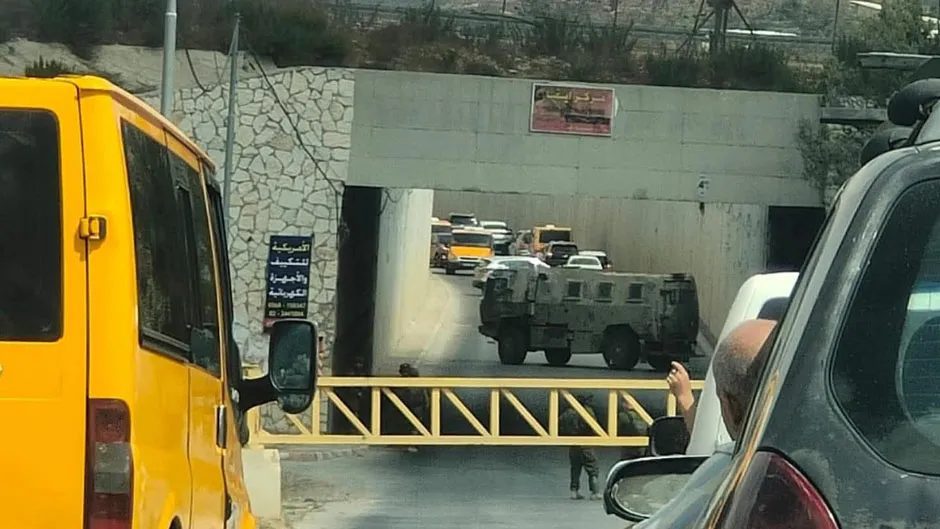
However, this connectivity faces growing challenges. The separation barrier, military checkpoints, and road closures impose daily constraints on residents, severely limiting their freedom of movement within the area.
Residents do not need to travel far to feel the impact of these policies. Accessing Jerusalem or neighboring villages often requires taking longer routes, while barriers and closures hinder students, employees, and patients.
These obstacles make reaching educational institutions, healthcare facilities, and workplaces significantly more difficult for the local population, disrupting daily routines and essential services.
The impact extends to surrounding agricultural lands, where areas face risks of isolation and confiscation. Farmers struggle to access and utilize their plots, threatening their livelihoods and ability to maintain income sources.
For families dependent on agriculture, the issue involves more than lost time and effort. It directly affects their capacity to preserve their economic stability and continue working on their land amidst these restrictions.
These challenges intersect with limitations on construction and urban expansion. Palestinian structures face demolition under the pretext of lacking permits, while planning restrictions limit the villages’ ability to expand according to residents’ needs.
This situation leaves locals with limited options amid population growth and shrinking available building spaces, complicating efforts to accommodate housing demands in the affected communities.
Settlement expansion and settler attacks add further pressure, particularly near agricultural lands and settlement sites. These developments raise concerns among residents regarding property safety and access to their lands.
The effects of isolation extend beyond economic and service sectors, impacting social relations between villagers and residents of Jerusalem and other West Bank areas through restricted family visits and community interaction.
Difficulties in movement complicate access to basic services and needs, especially for groups requiring frequent travel, thereby weakening social cohesion across the region.
Concerns persist that continued barriers, closures, and settlement growth will deepen the separation between Jerusalem and its Palestinian periphery, reducing geographic interaction between settlements.
These repercussions affect not only the present but also the future of these villages, including their ability to retain land, achieve urban development, and maintain ties with their Palestinian environment.
Amid movement restrictions and pressures on land and housing, residents face ongoing challenges to maintain stability as fears grow over the implications of Israeli measures on Palestinian presence in the area surrounding the occupied city.
This report was produced in the Gaza Herald newsroom.