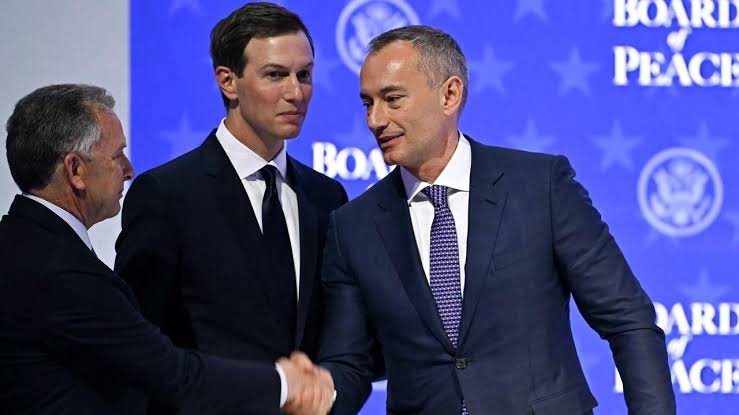
Gaza Herald _A major CNN investigation has exposed deep corruption at the intersection of U.S. foreign policy and the Israeli war machine, detailing how Jared Kushner, son-in-law to President Donald Trump, has been pocketing massive profits from the very companies supplying weapons for Israel’s genocidal war in Gaza, all while acting as a primary American peace envoy to the region.
While positioning himself as a key negotiator in international efforts surrounding Gaza, Kushner has simultaneously served as the leading shareholder in Phoenix Financial, a Tel Aviv-based investment conglomerate pouring hundreds of millions of dollars directly into Israel’s defense industry. By serving as an unsalaried, unofficial “volunteer envoy” rather than taking a formal administration post, Kushner strategically bypassed federal ethics rules and financial disclosure requirements, allowing him to operate an unprecedented conflict of interest: shaping diplomatic policy while his private equity firm, Affinity Partners, reaps millions from the ongoing destruction of Palestinian lives.
According to Israeli financial records, Phoenix Financial holds extensive investments in Elbit Systems, Israel’s premier weapons manufacturer, as well as at least eight other military suppliers that provide the occupation forces with attack drones, warships, armored demolition machinery, artillery shell fuses, and tank components. As Israel’s genocidal war in Gaza intensified, demand for these military supplies skyrocketed, driving up stock values and handing Kushner’s firm staggering financial windfalls. In July alone, Affinity Partners sold off a portion of its Phoenix holdings for $340 million, yielding more than five times its original purchase price, while maintaining a 7.4 percent stake worth over $1 billion.
Rather than hiding these blood-money profits, Kushner has publicly defended financial gain as a legitimate path toward political outcomes, callously boasting on a podcast that Middle Eastern investors were realizing the economic benefits of “going through these wars.” Ethics experts and congressional critics have fiercely condemned the arrangement, pointing out that an individual shaping U.S. foreign policy in a war zone should never be allowed to profit from the expansion of that war.
Despite efforts by White House spokespeople and Kushner’s legal team to downplay his involvement, the financial paper trail demonstrates a direct pipeline between the continuation of Israel’s military assault and the compounding wealth of one of Washington’s most influential diplomatic actors.