Gaza Herald — Nearly a year after the implementation of a formal ceasefire agreement, the Israeli occupation military is quietly cementing a permanent territorial takeover of the Gaza Strip. Rather than facilitating civilian return or humanitarian recovery, the truce is being weaponized as a low-visibility mechanism to expand military perimeters, erect permanent forward outposts, and systematically raze remaining residential neighborhoods.
On-the-ground developments and satellite investigations demonstrate that temporary operational lines are evolving into a long-term architecture of military occupation, permanently shrinking the land accessible to Gaza’s population.
The Extension of the “Yellow Line” and Systematic Erasure
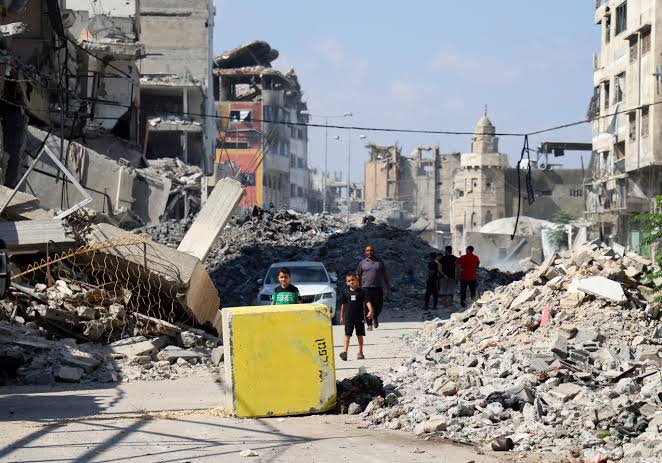
An investigation by The New York Times reveals that the Israeli military has constructed at least 12 forward outposts surrounding the designated “Yellow Line”, six of which were erected well after the ceasefire took effect. Satellite imagery demonstrates that these bases, complete with newly paved access roads and earthen berms, are built directly upon the bulldozed ruins of Palestinian homes and agricultural properties.
In central Gaza alone, more than 100 structures south of Deir al-Balah were systematically demolished between late August and early September 2026 under the cover of the truce. By continually shifting military barriers westward, the occupation forces are converting residential neighborhoods into fortified, off-limit zones, driving hundreds of thousands of displaced Palestinians into increasingly suffocating, overcrowded enclaves.
Controlled Zones and the Destruction of Food Sovereignty
Beyond the expanding Yellow Line, the military has established a restricted “Orange Zone,” forcing residents and international aid organizations to obtain military clearance simply to navigate their own communities. This expanding buffer grid has dealt a catastrophic blow to Gaza’s agricultural sector. By severing access to prime farmland beyond the Yellow Line, Israel has stripped local farmers of their livelihoods and destroyed the enclave’s remaining food production capacity. As Gisha Director Tania Hary noted, isolating agricultural land amid broken sanitation infrastructure directly fuels disease and famine, compounding Gaza’s total dependence on restricted international aid.
Lethal Enforcement Along Artificial Perimeters
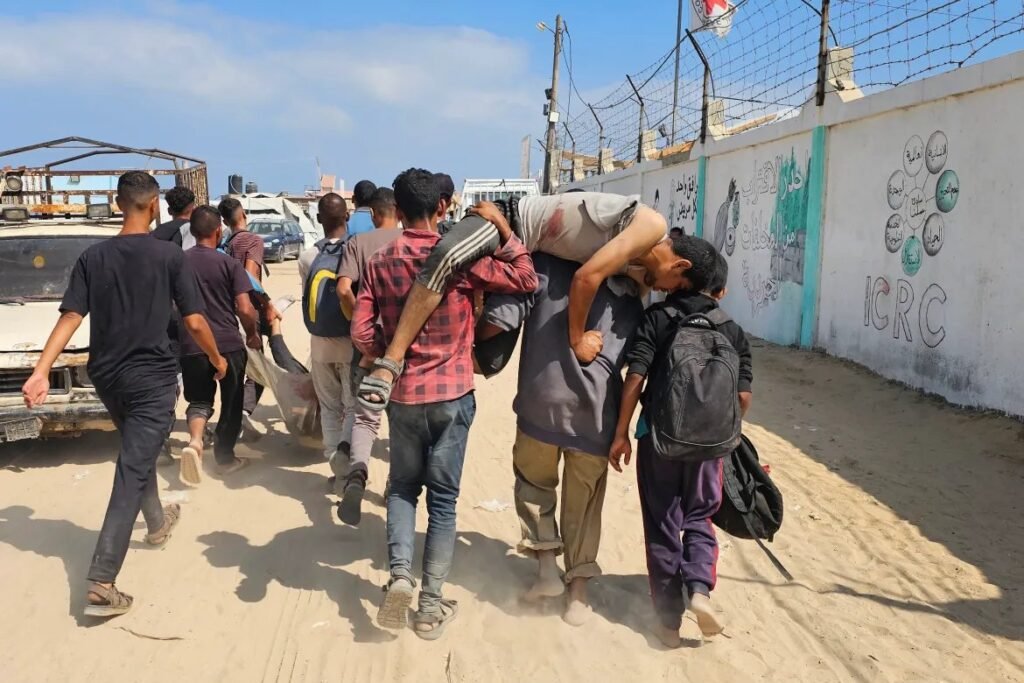
The enforcement of these expanding military zones carries a lethal cost for civilians attempting to inspect their property or secure vital resources. According to the United Nations Human Rights Office, at least 196 Palestinians, including 18 women and 43 children, have been killed by Israeli forces near the Yellow Line since the ceasefire began.
The deadly nature of this regime was underscored in April 2026, when two UNICEF truck drivers were killed near a water collection point in the al-Mansoura area within the Orange Zone. These deliberate strikes demonstrate that even official humanitarian missions operate under constant threat of deadly military force.
Subordinating International Governance to Occupation Realities
While the Biden-Trump transition framework and U.S. officials continue to debate the deployment of an international stabilization force on the outskirts of Rafah, the project remains stalled pending Israeli approval. This administrative delay highlights a fundamental reality: international security proposals are being subordinated to Israel’s unilateral territorial expansion.
Prime Minister Benjamin Netanyahu’s directive instructing the military to exercise operational control over up to 70 percent of the Strip mirrors the settler-expansion models long utilized in the occupied West Bank. Rather than serving as a bridge toward reconstruction, the ceasefire has functioned as an umbrella under which Israel is systematically annexing Palestinian land, preventing civilian return, and entrenching a permanent military takeover.