Gaza Herald— Standing before world leaders at the United Nations General Assembly, US President Donald Trump presented Gaza as one of his administration’s diplomatic successes, declaring that Washington had “ended the war in Gaza” and saved thousands of lives.
On the ground in Gaza, however, Israeli bloody attacks have not ended.
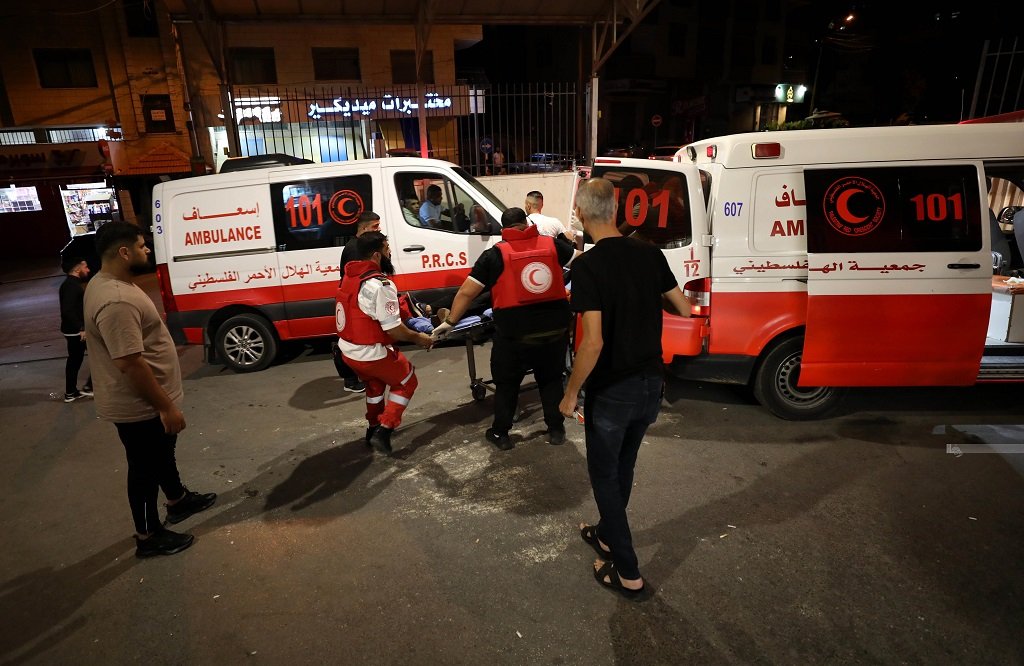
Nearly a year after the US-brokered ceasefire took effect, Palestinians continue to be killed by Israeli airstrikes, drones, tank fire and shootings, exposing a widening gap between the language of peace promoted in international forums and the reality Palestinians continue to experience across the enclave.
Trump told the General Assembly that when he addressed the UN a year earlier, the Gaza genocide was still raging and Israeli hostages remained in captivity. He said diplomatic steps taken on the sidelines of that gathering eventually changed the situation and led to the end of the war.
“A few weeks later, we ended the war in Gaza, saving untold thousands of lives,” Trump declared.
Yet the ceasefire did not bring an end to Palestinian deaths from Israeli military action. Israeli strikes have continued throughout 2026, including during the days immediately preceding Trump’s UN speech.
On September 19, Israeli airstrikes killed at least three Palestinians in Gaza, according to health officials cited by Reuters. Two days later, further Israeli attacks killed Palestinians across the enclave, including an 11-year-old boy who was shot in al-Mawasi, an area where large numbers of displaced families are sheltering.
Then, on September 22 — the same day Trump addressed the General Assembly — an Israeli strike hit a café in Gaza City, killing two Palestinians and wounding others.
For Palestinians, these incidents make the declaration that the war has “ended” difficult to reconcile with daily reality.
A Ceasefire That Has Not Ended the Killing
The contradiction is not merely semantic. A ceasefire is supposed to substantially halt hostilities and protect civilians, but Palestinians in Gaza continue to face Israeli military attacks almost a year after the agreement was announced.
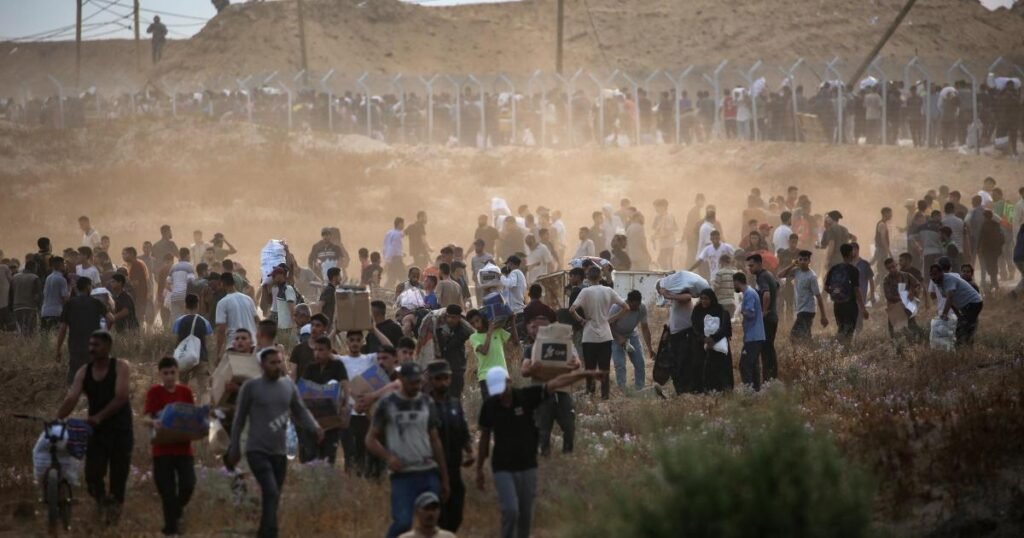
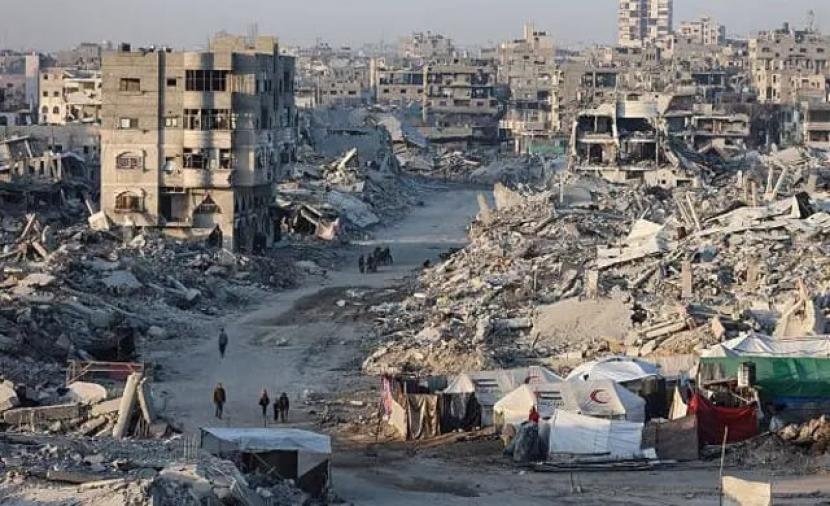
Gaza health authorities say more than 1,390 Palestinians have been killed and thousands wounded since the ceasefire took effect in October 2025. Israeli forces also continue to maintain control over large parts of the Gaza Strip, while reconstruction remains severely constrained and much of the population lives in tents, overcrowded shelters or buildings already damaged by previous Israeli attacks.
The result is a Gaza suspended somewhere between war and peace: the massive bombardment that characterised earlier phases of Israel’s assault has diminished, but Palestinians continue to be killed while the conditions created by nearly three years of destruction remain largely intact.
This reality challenges attempts to present the ceasefire itself as the end of the conflict. For families still losing relatives to Israeli attacks, the distinction between a formally declared ceasefire and an ended war is not academic.
Macron Challenges Trump’s Version of Gaza
Trump’s portrayal did not go unchallenged at the United Nations.
French President Emmanuel Macron directly criticised the presentation of Gaza’s ceasefire as a completed diplomatic success, arguing that humanitarian access had failed to match the promises made when the agreement was announced.
His intervention highlighted a broader problem surrounding international discussion of Gaza: diplomatic agreements are often measured by their announcement rather than by whether they actually transform Palestinian life on the ground.
A ceasefire may exist on paper, but if civilians continue to be killed, territory remains under military control, humanitarian access remains constrained and reconstruction cannot meaningfully begin, declarations of peace risk obscuring rather than describing reality.
Gaza Between the Language of Peace and Reality of War
Trump’s UN speech therefore raises a larger question: What does it mean to say that a war has ended when one side continues to kill people on the other side?
For Washington, the ceasefire can be presented as evidence that American diplomacy succeeded where previous negotiations failed. For Palestinians in Gaza, however, peace cannot simply mean a reduction in the frequency of Israeli attacks.
It must mean safety.
It must mean that a child can walk through al-Mawasi without being shot, that Palestinians can sit in a Gaza City café without fearing an airstrike, that displaced families can return to their land, and that homes, hospitals and schools can finally be rebuilt.
None of this diminishes the significance of a ceasefire that reduced the enormous scale of killing seen during the preceding war. But reducing the killing is not the same as ending it, and a political agreement cannot be treated as completed peace while civilians continue to die from military attacks.
The danger of Trump’s declaration is therefore not simply that it exaggerates an American diplomatic achievement. It risks normalising everything that has happened since the supposed end of the war by placing Palestinian deaths outside the narrative of an ongoing conflict.
The international community should judge the Gaza ceasefire not by speeches delivered in New York but by conditions in Gaza itself.
Nearly a year after Washington declared diplomatic success, Palestinians are still burying people killed by Israeli attacks, families remain displaced, reconstruction remains stalled and much of Gaza remains devastated.
Trump told the United Nations that America ended the Gaza war.
For Palestinians still living under Israeli fire, the evidence on the ground tells a very different story.