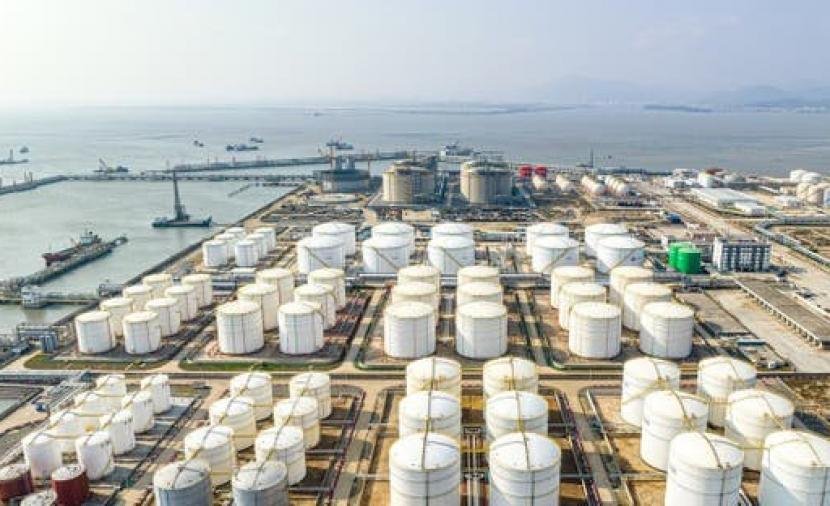
Gaza Herald – China has reshaped its position in the global energy market over recent years by reducing reliance on oil in several sectors while building large reserves and expanding refining capabilities. According to a report published by The New York Times, Beijing is investing heavily in coal, solar power, batteries, and electric vehicles alongside traditional energy infrastructure.
The report indicates that China reduced its crude oil imports by 23 percent in the first six months of the conflict with Iran compared to the same period last year. This decrease was facilitated by existing stockpiles and enhanced refining capacities which allowed the country to manage supply disruptions more effectively than in previous decades.
Chinese refineries have also scaled back the conversion of crude into gasoline, diesel, and other fuel types. This adjustment coincides with a decline in local oil demand driven by the rapid expansion of electric car usage. Electric vehicles now account for approximately 14 percent of passenger cars in the country, significantly altering consumption patterns.
Beijing now possesses a diverse set of tools to handle energy market volatility. These include substantial oil reserves, advanced refining abilities, control over fuel exports, alternative energy sources, and lower domestic demand. These factors collectively provide the nation with greater leverage in global markets.
The analysis suggests this transition grants China increasing influence over the oil market from the demand side. Historically, influence in this sector was closely tied to producing nations and their ability to control production levels. China’s strategy shifts this dynamic by prioritizing demand management and internal resilience.
The New York Times report emphasizes that these structural changes allow China to navigate geopolitical tensions and market fluctuations with reduced vulnerability. By diversifying its energy portfolio and boosting domestic production capabilities, the country has minimized its exposure to external shocks that typically affect import-dependent economies.
This strategic pivot reflects a broader effort to secure long-term energy stability. The integration of renewable technologies with traditional fossil fuel management creates a hybrid system that can adapt to changing global conditions. Such flexibility is crucial in maintaining economic growth amidst international uncertainties.
The findings underscore a significant evolution in China’s energy policy. Rather than merely reacting to market prices, the nation is actively shaping its energy landscape through investment and regulation. This approach aims to ensure sustainable development while mitigating risks associated with global oil price volatility.
This report was produced in the Gaza Herald newsroom.