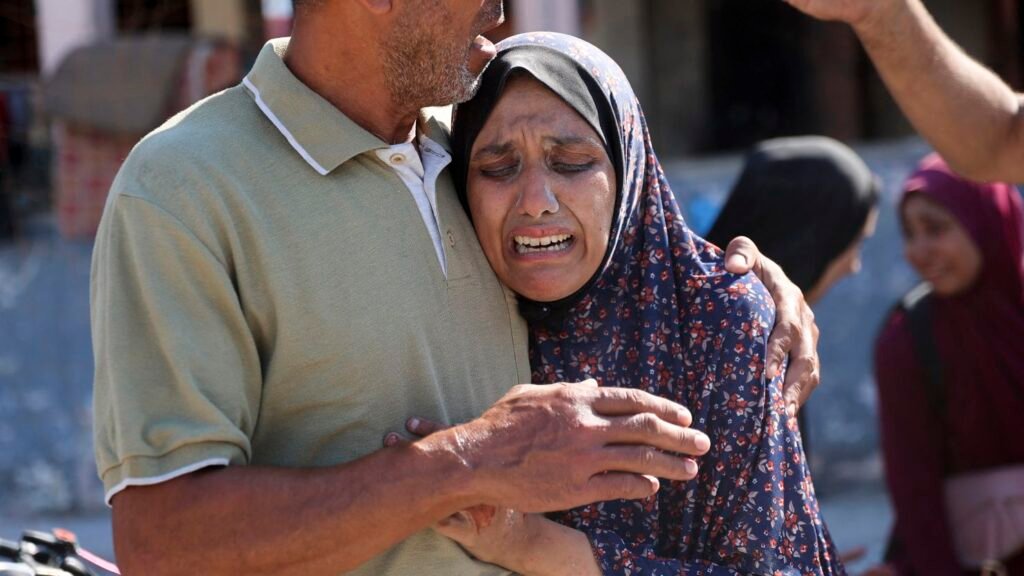
Gaza Herald — For displaced Palestinians living in tents across Gaza City, each morning begins with the same struggle: finding enough food and water to survive while trying to keep deteriorating shelters standing.
Every day, Walid carries a small cooking pot and joins a long line at a community kitchen in one of Gaza City’s displacement camps, waiting for a meal alongside hundreds of other families forced from their homes.
“We are living in tents, and we have nowhere else to go,” Walid said. “We don’t have a place where we can get meat or chicken, so we have to rely on the community kitchen. Every day they bring us rice. We are exhausted. Every day we run to the kitchen, we run to get water. We are tired. Every day is the same thing.”
For Hassan and his family, displaced in another camp in western Gaza City, food is only part of the struggle. Maintaining adequate shelter and replacing basic supplies have become another daily battle.
The tents are increasingly difficult to maintain as strong winds tear through their fragile fabric, leaving families with few options for protection.
“There is no alternative,” Hassan said. “The tent gets damaged and torn. You have to hold it together and tie it down. Especially with the wind, you find the tents being ripped apart. We cannot get another tent.”
Gaza’s Shelter Crisis Deepens
The experiences of Walid and Hassan reflect a much wider humanitarian crisis. A recent Shelter Cluster assessment found that approximately 1.98 million Palestinians, or 94% of Gaza’s population, require shelter and basic household assistance, while nearly two-thirds of households are living in tents or makeshift shelters.
Many of these temporary shelters were never designed for long-term use and have deteriorated after months of exposure to Gaza’s weather conditions. Humanitarian agencies say restrictions on the entry of shelter materials and equipment, combined with severe funding shortages, have left assistance far below the level required.
The shortages extend beyond tents. Tarpaulins, repair materials and essential household items remain insufficient, leaving displaced families struggling to sleep, cook, wash, store food and water, and protect their children from changing weather conditions.
For families such as Walid’s and Hassan’s, the humanitarian crisis is measured not only in statistics but in the repetitive struggle that defines each day: lining up for food, searching for water and repairing a tent that may tear apart again with the next strong wind.
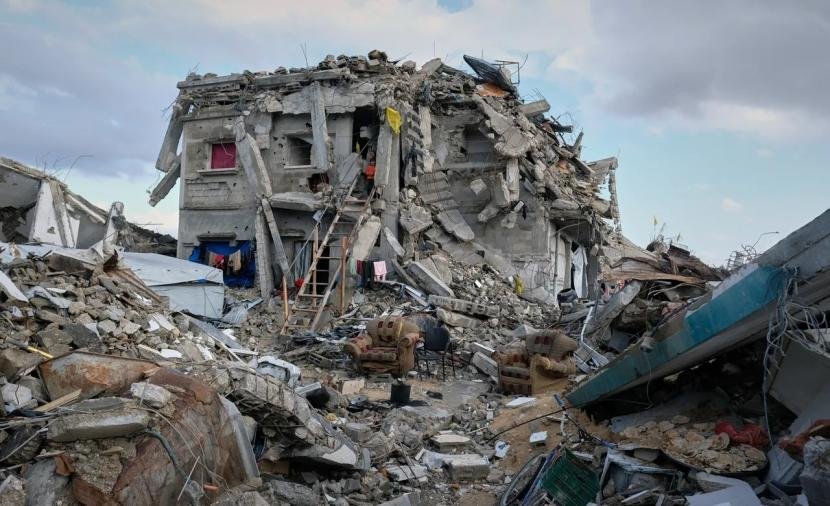
After years of displacement and destruction, survival remains the daily reality for Gaza’s families, while adequate food, shelter and the possibility of rebuilding their lives remain out of reach.