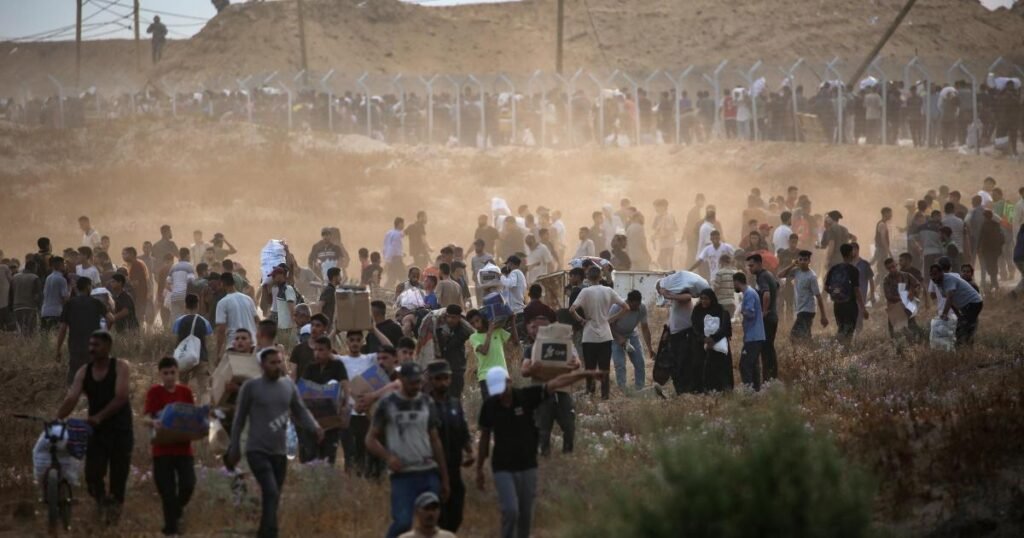
Gaza Herald— Across central Gaza, the occupation is systematically shrinking the boundaries of Palestinian life. Verdant agricultural fields that nourished generations, sustained local economies, and served as sacred family sanctuaries have been systematically bulldozed or annexed into high-risk military zones.
For families in the al-Maghazi refugee camp, the relentless push of Israel’s “Yellow Line” has transformed heritage farmland into a scene of perpetual terror. Land that anchored community identity for decades is now effectively stolen, while the encroaching military markers threaten total ethnic displacement.
One resident from the western edge of al-Maghazi has watched this destruction unfold firsthand. His family’s plot, less than a kilometer from home, was once home to 55 ancient olive trees, 10 palm trees, and five fig trees. Today, heavy machinery and relentless shelling have turned it into a desolate, lethal wasteland.
A Community Torn Apart by Bombardment
Before the genocide escalated, the resident recalled a lively, peaceful neighborhood. The historic Salah al-Din highway buzzed with daily life, framed by thriving green orchards.
That reality was shattered in November 2023.
On November 6, while he was teaching his younger siblings English, a violent strike decimated the neighboring building. The severe blast shattered their home and critically injured his 16-year-old sister, Rola.
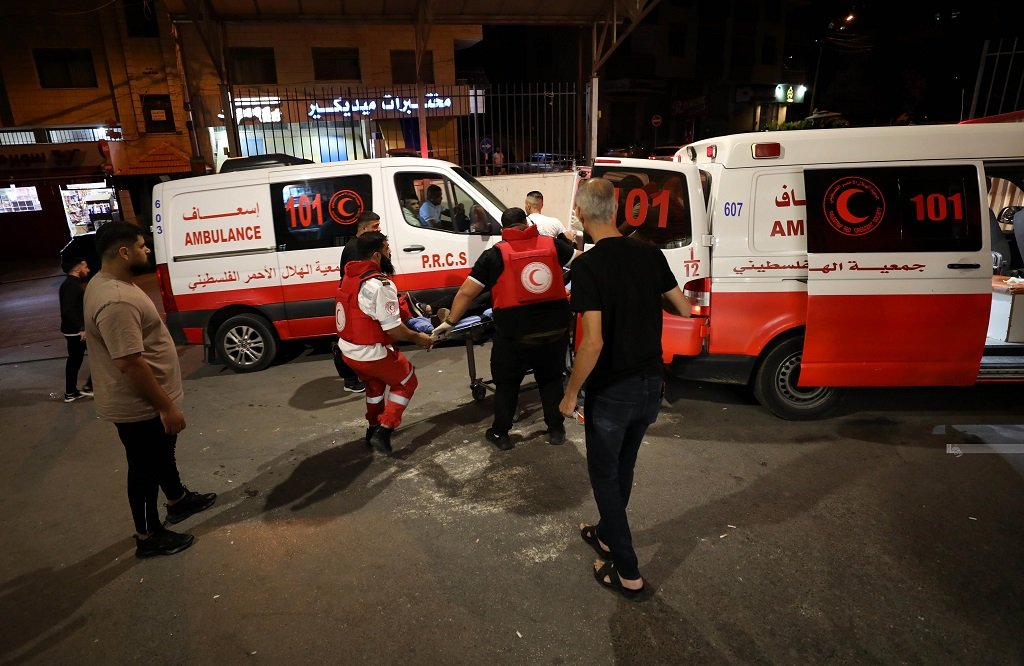
Desperate to save her life, he wrapped her hemorrhaging arm with his own shirt. The medical infrastructure was already collapsing under siege; two passing ambulances were overflowing with casualties before a third managed to squeeze her in.
Returning home that night, he found heroic Civil Defense teams digging through concrete with bare hands. Trapped beneath the rubble of targeted homes, scores of his neighbors had already suffocated to death.
The assault only intensified over the following months, methodically flattening surrounding residential blocks and reducing al-Maghazi to concrete dust.
Surviving in the Ruins
After three weeks of forced displacement, the family returned to what remained of their home.
The structure was severely damaged and rendered barely human-habitable. The ceiling was caving in, three rooms were completely demolished, and the blast wave had blown out every door and window.
Targeted blockades meant zero construction materials could enter Gaza.
The family improvised to survive: shredded plastic sheets and frayed blankets were tacked up against the harsh winter rains and swarms of insects. Together, the siblings cleared heavy concrete debris using a rusted shovel and their bare hands, managing to secure a single room for shelter and patch a lone water pipe.
The Land as a Resistance Lifeline
As Israel’s deliberate starvation tactics took hold, the family’s farm became a vital lifeline.
During peak starvation periods, when the family was forced to survive on water mixed with salt, the short trek to their land yielded wild greens and remaining olives, the difference between life and death.
Yet, before the devastation, the grove was the beating heart of their culture. Every October, the olive harvest brought friends and neighbors together to sing, joke, and plant hopes for the future. The land was not merely property; it was an anchor of Palestinian identity (sumud).
Systematic Destruction of Palestinian Land
Weeks before the October 2025 ceasefire, Israeli bulldozers flanked by armor invaded the family’s plot, uprooting trees that had taken decades to mature and laying waste to the surrounding countryside.
A local tree trimmer barely escaped with his life as tanks rolled directly through the groves. When the family returned following the military’s brief pullback, they found their ancestral trees obliterated.
Though they dreamed of replanting and restoring their soil, the military occupation made access lethal. Their property sat a mere 200 meters from the military’s designated “Yellow Line.”
Encroaching Military Annexation
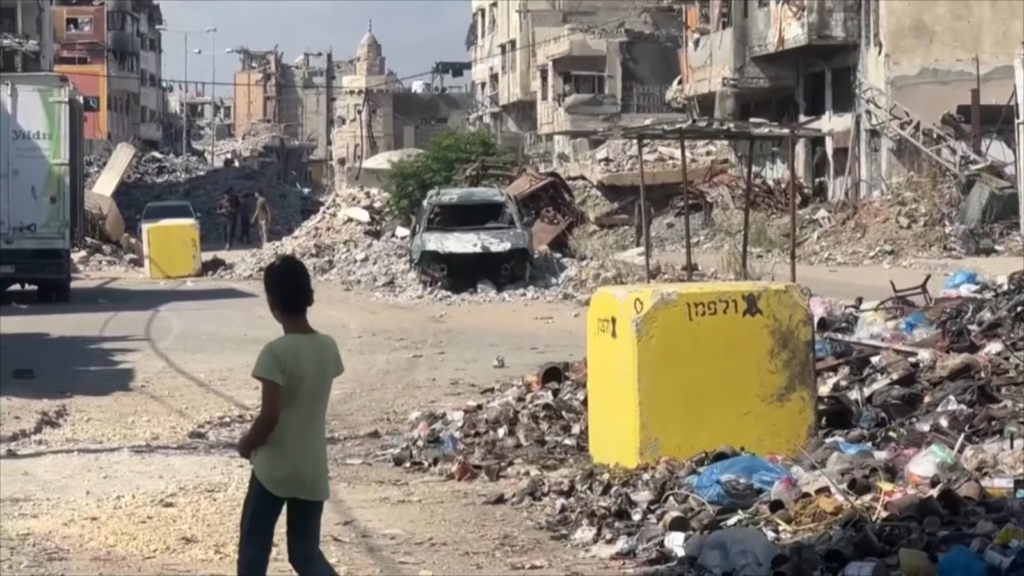
By March 2026, yellow concrete markers were placed dangerously close to UNRWA primary schools in eastern al-Maghazi, effectively trapping the family’s land behind an arbitrary, shoot-on-sight border zone.
The infrastructure around the Salah al-Din highway was similarly gutted, stripped of homes and vegetation to clear military lines of sight.
During a trip to Gaza City in June 2026, local drivers frantically warned passengers that military markers had crept further down the road. By the following week, more yellow blocks had been erected, surrounded by Israeli checkpoints where Palestinians were routinely detained.
Life Under Constant Threat
On one journey, the resident was packed into a tarp-covered cart pulled by a car carrying 18 people when a tire blew out directly in front of an armed Israeli tank position.
Stranded in a high-risk buffer zone where rules of engagement were dictated entirely by the military, the passengers waited in silent terror as they scrambled to fix the wheel under the barrel of a tank.
Refusing to Be Erased
Despite the omnipresent danger, the resident founded an English-speaking community in Gaza City in April 2026, offering education to over 200 young Palestinians striving for a future.
Yet, simple daily routines remain an exercise in survival. A routine 15-minute commute now takes over an hour through heavily damaged roads, checkpoints, and unpredictable military movements.
For the residents of al-Maghazi, the existential threat grows deeper with every marker laid. The question is no longer just whether they will ever farm their stolen soil again, but whether their actual homes will be swallowed next by the expanding border.