Gaza Herald – The city of Hebron in the southern occupied West Bank faces a continuous military escalation since Friday, October 23, marked by the closure of city entrances and surrounding roads. Families are being forced to evacuate their homes, while buildings and commercial facilities are demolished. Concurrently, the Ibrahimi Mosque has been closed, disrupting daily life across the area.
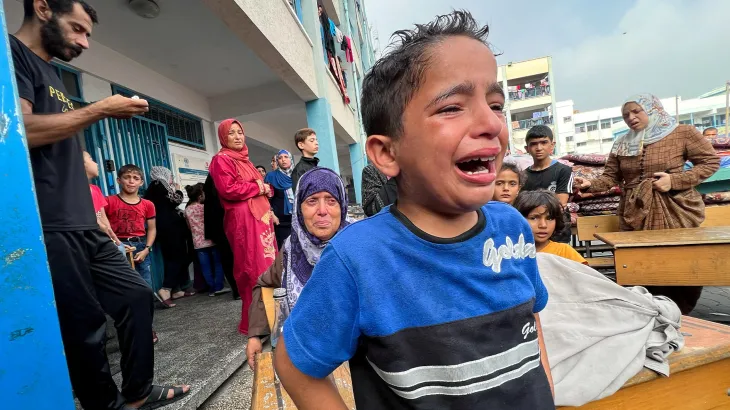
Yusuf al-Ja’bri, the mayor of Hebron, stated that approximately 2,200 Palestinians were displaced from the Der Baha area and parts of Al-Jalida. He described the city as “disaster-stricken” due to the siege, demolitions, and attacks on infrastructure. Al-Ja’bri explained that occupation forces compelled residents to leave via loudspeakers, forcing women, children, and the elderly to flee without shelter.
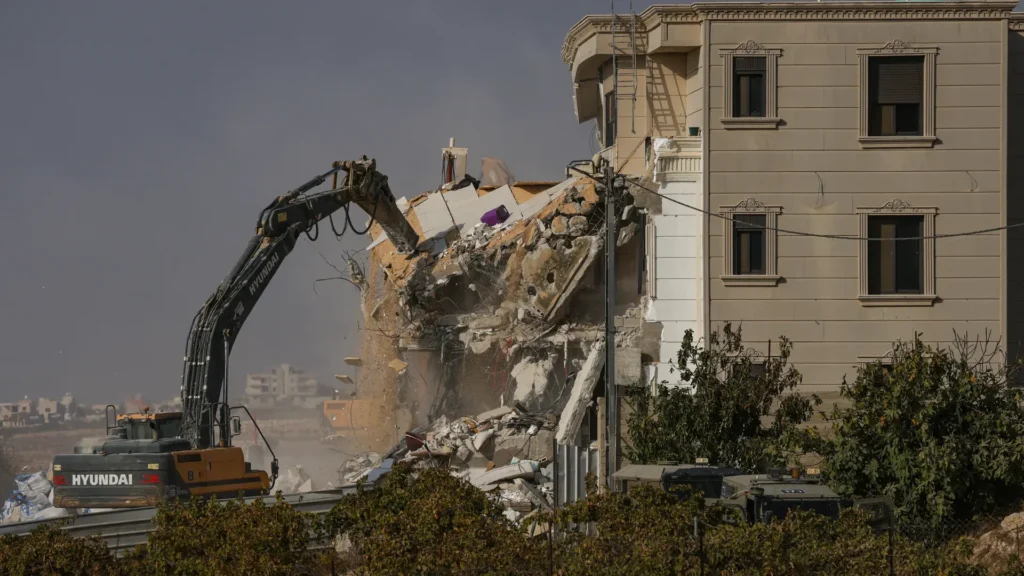
The evacuations coincided with raids and searches in targeted neighborhoods, accompanied by the deployment of military vehicles and bulldozers. Local reports indicated that more than 200 families had fled damaged areas. Palestinian sources warned that displacement operations could expand to include more residents. In the Fares Hawa area west of Hebron, occupation forces demolished a residential building comprising three apartments belonging to citizen Riad Amerish on Friday.
Al-Ja’bri noted that occupation forces demolished more than five commercial establishments and seized homes, converting residential buildings into military sites. He emphasized the continued presence of military machinery and bulldozers throughout the city. These measures raise fears among families who were forced to abandon their homes, particularly given the difficulty of returning and the unclear duration of military control over targeted zones.
The economic impact is severe, with closures hindering worker and cargo movement. Al-Ja’bri warned of critical economic consequences, noting that Hebron contributes about 40% to the national Palestinian economy. Many factories have stopped working due to workers’ inability to reach them and disrupted transport. Military procedures also restrict citizen movement between the city and surrounding towns, impeding access to work and essential services.
Attacks extended to streets, water networks, and sewage systems, alongside the seizure of municipal equipment. In the Old Town, occupation forces closed the Ibrahimi Mosque, expelled employees and caretakers, and prohibited prayer. Raids, arrests, and field interrogations intensified restrictions on movement.
In response to humanitarian repercussions, the Hebron Municipality declared a state of emergency and opened shelters, including the Childhood Happiness Center and the Palestinian-Korean Center. Governor Khaled Doudin chaired an emergency meeting to discuss aid for displaced families. A committee was formed to monitor affected households and coordinate relief efforts.
The Palestinian Ministry of Foreign Affairs called for urgent international action to pressure the occupation state and protect Palestinians. It directed embassies worldwide to mobilize efforts against forced displacement and destruction.
This report was produced in the Gaza Herald newsroom.