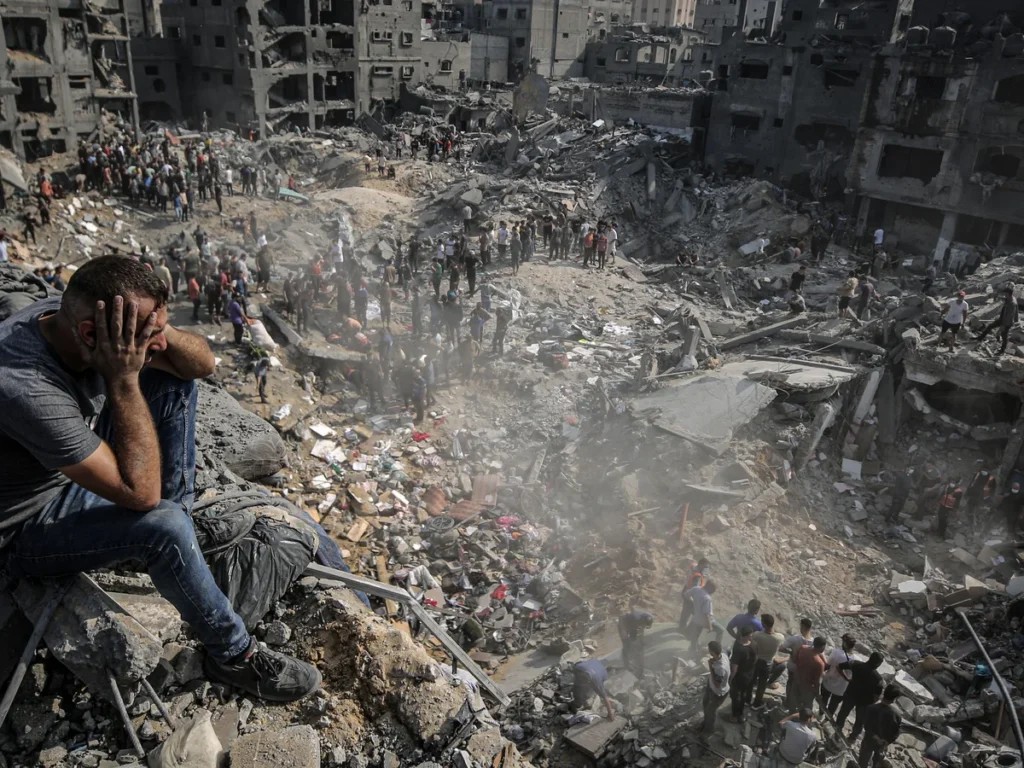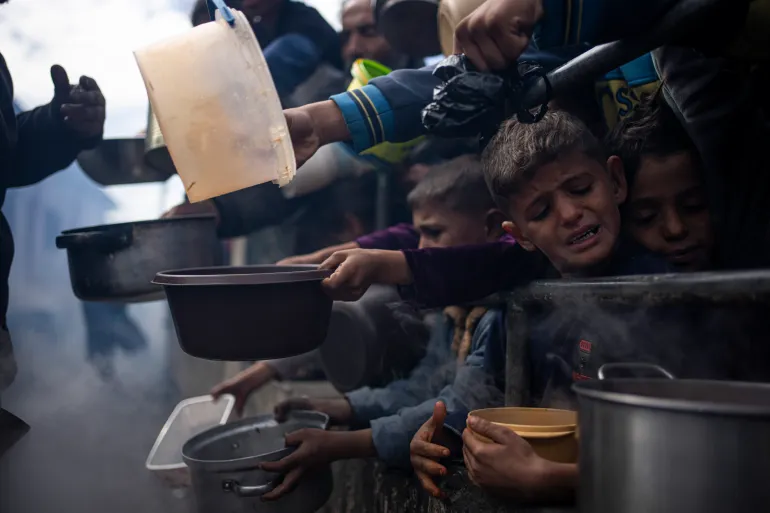
Gaza Herald — Desperate, miles-long queues outside bakeries have once again paralyzed daily life across the Gaza Strip, as an orchestrated flour blockade forces central bakeries to close and leaves the remaining few operating on empty. For millions of displaced Palestinians stripped of livelihoods and living under continuous military bombardment, the sudden collapse of Gaza’s primary staple transforms the simple act of securing a daily loaf of bread into a harrowing struggle for survival.
As commercial flour shipments remain blocked at Israeli checkpoints and international aid funding plunges, the starvation crisis has reached an acute tipping point. The Euro-Mediterranean Human Rights Monitor warns that with cooking gas supplies deliberately blocked and fresh produce eradicated from markets, families sheltering in tents have been systematically stripped of all culinary alternatives, leaving them entirely dependent on automated bakery lines that are rapidly grinding to an absolute halt.
Total Reserve Depletion Forces Mass Bakery Closures
Abdel Nasser al-Ajrami, head of the Gaza Bakery Owners Association, confirmed that commercial flour stocks across warehouses have been completely exhausted. The remaining seven operational bakeries across the enclave are projected to shut down within 48 hours unless border blockades are lifted.
Despite Israeli military claims of permitting non-food commercial goods through crossings, authorities have systematically denied entry permits for commercial wheat and flour for over ten consecutive days. The intermittent, token shipments granted entry fail to allow bakeries to build the emergency reserves necessary to sustain production during repeated border shutdowns, leaving the territory’s entire food supply permanently on the brink of collapse.
The return of bread lines coincides with severe operational scaling back by international aid organizations. On October 19, the World Food Programme (WFP) announced it was compelled to strip 500,000 Palestinians of food assistance, reducing its coverage from 1.6 million to 1.1 million people due to severe funding shortfalls, while slashing daily hot meal distributions from 250,000 to 150,000.
Human rights monitors document that families are routinely forced down to a single sparse meal per day, consisting solely of dry rice or lentils. For vulnerable groups, including elderly residents, wounded civilians, and young children, the complete loss of dietary variety and basic carbohydrates accelerates life-threatening acute malnutrition.
Conditional Delivery Promises Offer No Security Under Siege
While Israeli authorities tentatively approved 30 commercial flour trucks to cross Kerem Shalom on Sunday, October 25, alongside emergency Egyptian flour dispatches, local officials emphasize that political promises do not equal physical access.
With 22 bakeries operating under a WFP initiative attempting to sell subsidized bread bundles for three shekels, sustained operations remain entirely hostage to whether Israeli forces permit actual truck passage and continuous fuel deliveries.
Without an immediate, unhindered commercial corridor and a total end to the siege, temporary flour shipments will fail to prevent the imminent return of widespread famine across the Gaza Strip.