
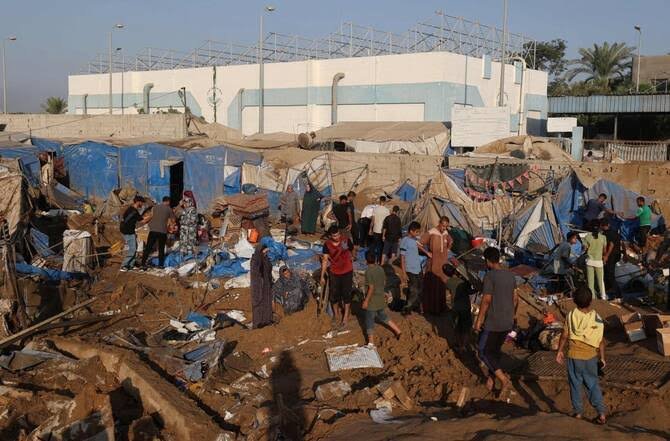
Gaza Herald – Gaza’s collapsing health system is facing a deeper crisis after an Israeli airstrike hit a medicine warehouse inside Al-Aqsa Martyrs Hospital in Deir el-Balah on Saturday, injuring three Palestinians and damaging vital medical supplies.
The strike comes as Gaza’s hospitals struggle with severe shortages of medicines, medical supplies, laboratory materials, fuel and spare parts, while Israeli attacks and restrictions continue to cripple the healthcare system.
The medicine warehouse was not the first medical storage facility at Al-Aqsa Martyrs Hospital to be hit this month. On August 1, Israeli strikes destroyed two of the hospital’s four warehouses and heavily damaged the remaining two, according to Gaza’s Ministry of Health.
For hospitals operating with already depleted stocks, the destruction of even a single warehouse can mean the loss of medicines and supplies needed for emergency care, surgeries, laboratory testing and long-term treatment.
The shortages are particularly threatening for patients with chronic illnesses, as well as children, pregnant women and cancer patients who depend on uninterrupted access to medication and specialized care.
According to the latest figures cited in the report, Gaza’s healthcare system is facing a 47% shortage in medicines, a 58% shortage in medical consumables, and an 85% shortage in laboratory supplies. Shortages of cancer and blood-disease medications have reached 61%.
More than 350,000 patients are at risk of losing access to essential medications for conditions including diabetes, hypertension and asthma, while kidney dialysis services also face disruption because of shortages of filters, solutions and other critical supplies.
The crisis extends beyond medicine. Damage to medical equipment, combined with shortages of spare parts, fuel and maintenance supplies, is leaving hospitals increasingly unable to operate diagnostic machines, surgical equipment and other essential systems.
What is happening in Gaza is therefore not simply a shortage of medicine. Israel’s ongoing attacks and restrictions are putting the entire medical supply chain at risk, from the entry and storage of lifesaving supplies to their delivery to patients who depend on them to survive.

