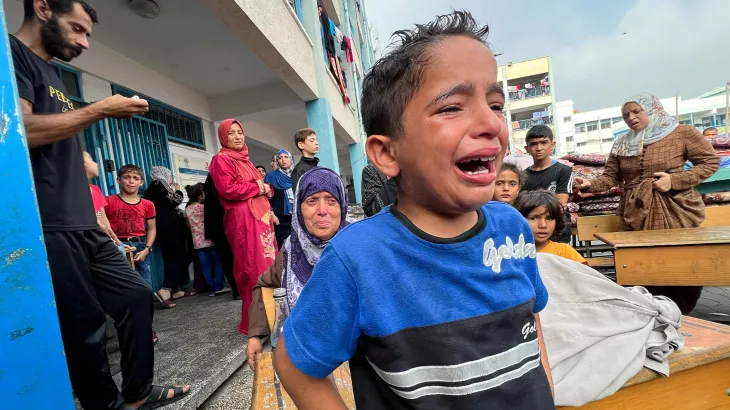
Gaza Herald – Gaza’s Palestinian refugees are facing a deepening humanitarian crisis as years of Israeli attacks, restrictions on aid, and mounting pressure on UNRWA have sharply reduced access to essential services.
For decades, UNRWA has been a lifeline for hundreds of thousands of refugee families in Gaza, providing healthcare, education, food assistance, social services, temporary employment, and emergency support. The genocidal war and restrictions on the agency have severely disrupted that safety net.
UNRWA says Israeli authorities have prevented its international staff and humanitarian supplies from entering Gaza since March 2025, despite food, flour and shelter materials being stored outside the Strip. International staff have also been unable to obtain the visas or permits needed to enter the occupied Palestinian territory, including Gaza, since January 2025.
For families who have relied on UNRWA for generations, the loss of these services has created new burdens on top of displacement, poverty and the destruction of homes and infrastructure.
The impact is particularly severe in healthcare. UNRWA reported that it remained Gaza’s largest provider of primary healthcare in 2025, accounting for about 40 percent of primary-care consultations and delivering roughly 4.5 million medical consultations to around 1.7 million displaced Palestinians.
As UNRWA’s services shrink, many Palestinians are being forced to pay for medicines and treatment they previously accessed through the agency, while humanitarian organizations struggle to fill the gap.
The pressure on UNRWA has also been reinforced by Israeli legislation. In October 2024, Israel’s parliament passed laws restricting the agency’s operations and prohibiting Israeli officials from communicating with it. The measures took effect in January 2025 and forced UNRWA to vacate its headquarters in the eastern part of occupied Jerusalem. The United Nations has warned that the restrictions undermine the agency’s ability to carry out its mandate.
UNRWA is also facing a severe funding crisis. In June 2026, the agency said it was facing a $100 million liquidity shortfall in its core budget and had been forced to cut service hours and reduce the pay of most Palestinian staff.
For Gaza’s refugees, the erosion of UNRWA is not simply a loss of aid; it is the dismantling of a decades-old lifeline at a time when Israel’s war and blockade have already devastated civilian life across the Strip.