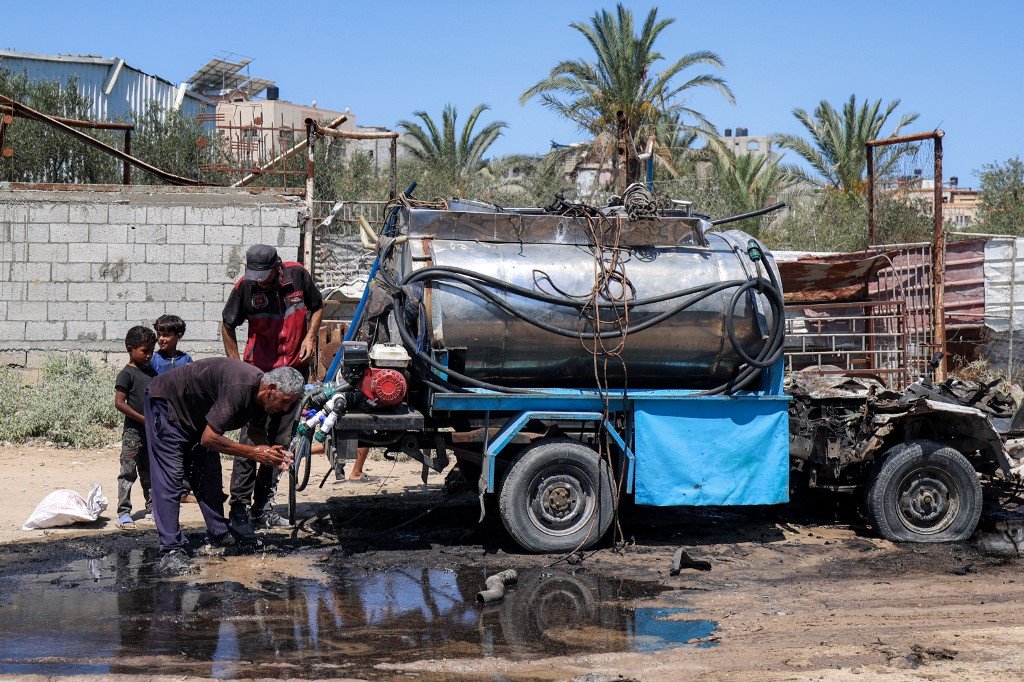
Gaza Herald – Gaza City is facing a severe water crisis, with available supplies falling more than 70% below daily needs, as an intense heatwave compounds the humanitarian, environmental and public-health crisis facing Palestinians across the Strip.
Husni Muhanna, spokesperson for Gaza Municipality, said the city requires approximately 100,000 cubic meters of water every day, but under the best circumstances receives only 15,000-20,000 cubic meters, meaning available supplies meet no more than around 20% of demand.
The shortage is becoming even more dangerous during the summer, as temperatures rise and displaced Palestinian families endure overcrowded tents with inadequate ventilation, little insulation, limited electricity and insufficient water.
Water is urgently needed not only for drinking, but also for personal hygiene, cleaning shelters and preventing the spread of disease.
The water shortage is unfolding alongside the collapse of Gaza’s wastewater infrastructure.
Damage to sewage networks and treatment facilities has caused untreated wastewater to spill into streets and residential areas and eventually reach the Mediterranean.
Around 24,000 cubic metres of untreated sewage are reportedly discharged into the sea off Gaza City every day, threatening marine ecosystems and further contaminating one of the few remaining public spaces available to Palestinians displaced by Israel’s genocide on the strip.
As temperatures rise, accumulated waste and sewage decompose more rapidly, intensifying foul odours and encouraging the spread of insects and rodents. Polluted wastewater and landfill leachate also pose a growing threat to Gaza’s already vulnerable groundwater reserves.
The combination of extreme heat, overcrowding, water scarcity and deteriorating sanitation is increasing health risks for displaced Palestinians.
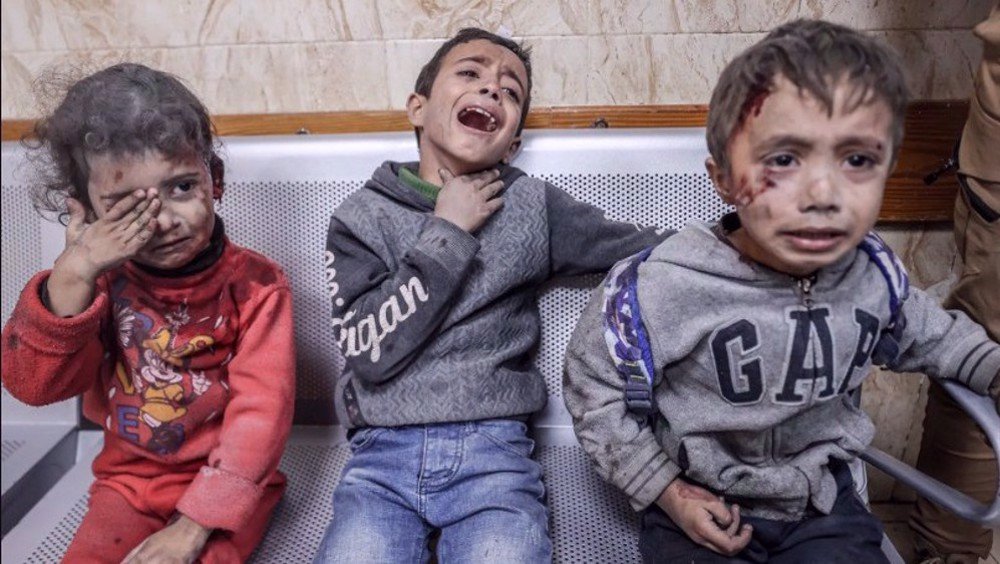
Limited access to water makes it increasingly difficult for families to maintain personal and household hygiene, creating conditions conducive to the spread of infectious, gastrointestinal and skin diseases, particularly among children, older people and other vulnerable groups.
Muhanna stressed that the crisis is an interconnected emergency of thirst, extreme heat, environmental pollution and collapsing sanitation services.
He stressed that the response cannot be limited to supplying drinking water. Gaza urgently needs the rehabilitation and operation of water and sewage networks, an end to the discharge of untreated wastewater into the sea, improved waste collection, and access to fuel, pumps, spare parts, lubricants, sanitation equipment and other essential municipal supplies.
Gaza Municipality says Israeli restrictions on the entry of construction materials, maintenance supplies, spare parts, lubricants, fuel, pumps, machinery and sanitation equipment are severely limiting its ability to repair damaged infrastructure and provide basic public services.
These restrictions affect not only water and sewage systems, but also waste removal, road clearance, stormwater drainage and emergency environmental response.
The municipality says these are not luxury items or secondary needs. They are basic supplies required to keep essential services functioning in a city whose infrastructure has suffered extensive destruction while the needs of its population continue to grow.
Muhanna called on international organisations, UN agencies, humanitarian groups and donors to urgently pressure Israel to open crossings and establish a sustained humanitarian supply route into Gaza.
He stressed that any meaningful humanitarian response must go beyond food and medicine to include the fuel, spare parts, pumps, pipes, maintenance materials and heavy equipment required to keep water, sanitation and municipal services operating.