Gaza Herald _The recent escalation of Israeli targeted killings in Gaza represents a direct violation of the understandings underpinning the ceasefire and threatens efforts to consolidate the truce, according to political writer and security researcher Hilal Nassar.
Nassar said the rapid increase in Israeli strikes reflects a rejection on the ground of the political process and the proposed roadmap for the next phase of the ceasefire.
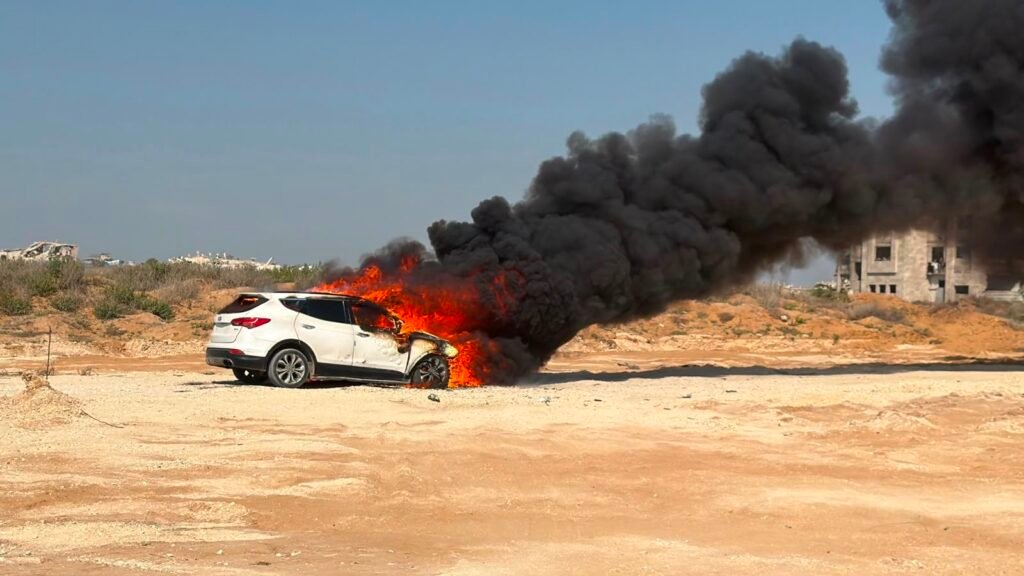
His comments came after three targeted killings were carried out across Gaza within 24 hours, including attacks in Beit Lahia, Khan Younis and Gaza City’s port area. The latest strike killed Gaza police chief Col. Jamal Abu Kmeil when his vehicle was hit along Al-Rashid Street.
Nassar said the Israeli government continues to treat Gaza as a territory under its unilateral military control, disregarding political arrangements and commitments involving the United States and international mediators.
He said Israeli military leaders had secured authority to target individuals they consider security threats based on intelligence assessments, effectively allowing continued military operations that undermine diplomatic efforts and place mediators and Washington under growing pressure.
Disputes over the roadmap
Addressing the proposed roadmap and arrangements linked to the Sharm el-Sheikh protocol and UN Security Council Resolution 2803, Nassar said Palestinian acceptance of the framework reflects an effort to protect civilians rather than an unconditional surrender of weapons or resistance rights.
He said the proposed arrangements envision placing heavy weapons under the supervision of an independent Palestinian technocratic committee through a gradual process tied to Israel fulfilling its obligations, including a full withdrawal and the reopening of crossings.
The plan, he said, is intended to pave the way for an international stabilization force and reconstruction while preventing the fragmentation of Gaza or the displacement of its population.
Targeting police and civilian institutions
Nassar also warned that repeated attacks against senior civilian police officials could further destabilize Gaza’s already fragile internal situation.
He pointed to the killing of Abu Kmeil and previous attacks on police commanders in northern Gaza and Jabalia, arguing that targeting civilian security structures risks weakening unified local administration and creating conditions for greater lawlessness.
“The war must end at any cost,” Nassar said, warning that nearly three years of destruction, displacement and mass civilian suffering have created an urgent humanitarian crisis.
He called on international actors and mediators to exert direct pressure on the Israeli government to comply with the ceasefire terms, arguing that Palestinian concessions made to protect civilians should not be met with continued violations and military escalation.
Gaza’s Interior and National Security Ministry and Hamas separately condemned the killing of Abu Kmeil and two companions on Thursday, August 13, describing the attack as a war crime and a violation of international protections afforded to civilian police forces.
Both warned that continued Israeli strikes could undermine efforts to maintain the ceasefire and deepen Gaza’s humanitarian crisis.