Gaza Herald_After 1,000 days of Israel’s ongoing war on the Gaza Strip, the territory’s agricultural sector faces one of the most severe crises in its history. Vast areas of farmland have been destroyed, agricultural infrastructure has been heavily damaged, and key sources of plant, livestock, and fishing production have been crippled.
As the blockade continues and restrictions on the entry of agricultural supplies remain in place, concerns are mounting over the collapse of Gaza’s food production system and the growing hardship facing thousands of families who depend on farming and fishing for their livelihoods.
Widespread Destruction Threatens Food Security
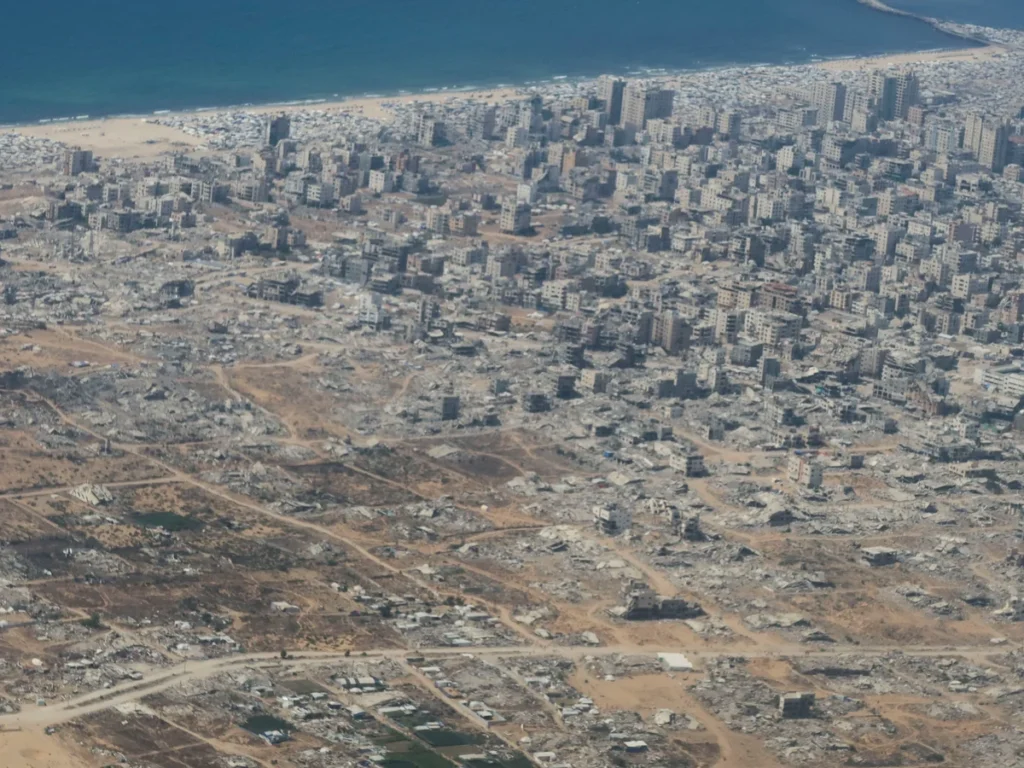
The war has inflicted extensive damage on Gaza’s agricultural landscape. Large tracts of farmland have been bulldozed or rendered unusable, while irrigation networks, water wells, and agricultural roads have suffered significant destruction.
The result has been a dramatic decline in local food production, increasing dependence on humanitarian aid and raising fears over long-term food insecurity.
Farmer Mohammed Maghari described the devastation of his agricultural land east of Al-Maghazi refugee camp, where he once cultivated olive and fig trees alongside seasonal crops.
“The war did not only destroy my source of income,” he said. “It also forced my family and me to flee after our home was completely destroyed.”
His story reflects the reality facing countless farming families across Gaza who have lost both their livelihoods and their homes during the conflict.
Poultry Industry Near Collapse
The livestock sector, particularly poultry production, has also suffered catastrophic losses.
Majed Jarada, director of the Agricultural Association for Hatcheries, Poultry, and Feed, said the industry has been devastated by widespread destruction.
According to Jarada, 15 of Gaza’s 17 hatcheries have been destroyed, along with approximately 1,500 poultry farms and three major feed factories.
The damage has crippled domestic poultry production and deprived hundreds of families of their primary source of income.
Industry representatives are calling for an urgent recovery plan that includes rehabilitating farms and hatcheries, providing feed supplies and alternative energy sources, and reopening crossings to allow the entry of essential agricultural materials needed to restart production.
Gaza’s Fishermen Pay a Heavy Price
The fishing sector has experienced similar devastation.
Nizar Ayyash, head of Gaza’s Fishermen’s Union, said losses in the maritime sector have exceeded $75 million as a result of the destruction of ports, fishing boats, and essential equipment.
He noted that both Gaza Port and the northern fishing harbor have suffered extensive damage, while other coastal facilities have also been severely affected.
Beyond the physical destruction, fishermen continue to face strict Israeli restrictions on access to fishing zones, limiting their ability to reach productive waters and significantly reducing fish catches.
These restrictions have further undermined the livelihoods of thousands of fishing families already struggling under the weight of war and economic collapse.
Economic and Humanitarian Consequences
Experts and representatives of Gaza’s agricultural and maritime sectors warn that the continued deterioration of these industries could have far-reaching consequences for the territory’s economy and food security.
Agriculture and fishing have historically played a vital role in providing food, employment, and economic stability for Gaza’s population. Their destruction has contributed to rising poverty, growing unemployment, and increased dependence on humanitarian assistance.
With local production severely weakened, residents face mounting challenges in accessing affordable food, while the broader economy continues to lose critical sources of income and resilience.
Calls for Urgent International Action
Agricultural specialists and industry leaders are urging international organizations, donor countries, and humanitarian agencies to intervene immediately to prevent further collapse.
They stress the need for reconstruction efforts aimed at restoring farmland, repairing irrigation systems, rebuilding poultry farms and hatcheries, rehabilitating fishing infrastructure, and ensuring unrestricted access to agricultural inputs.
Without urgent action, they warn, Gaza’s agricultural sector may face long-term devastation that could take years to reverse.
A Sector Fighting for Survival
One thousand days into the war, Gaza’s farmers, livestock producers, and fishermen continue to struggle against overwhelming odds.
What was once a vital pillar of the territory’s economy now stands battered by destruction, displacement, and shortages. As fields lie barren, hatcheries sit in ruins, and fishing boats remain idle, concerns continue to grow that the collapse of these sectors will deepen Gaza’s humanitarian crisis and further threaten the food security of millions.
For many families, the battle is no longer simply about preserving livelihoods it is about preserving the ability to feed future generations.