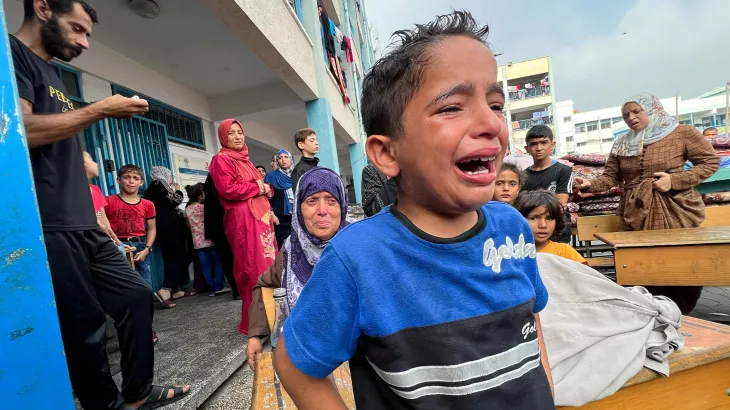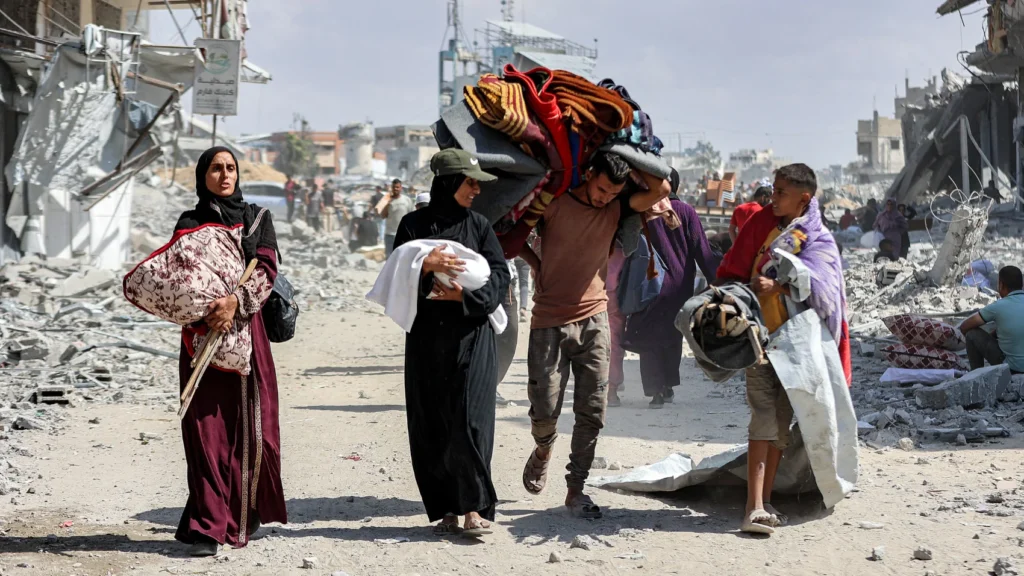
Gaza Herald – For Palestinians in Gaza, displacement has become a permanent condition rather than a temporary consequence of war. As Israeli occupation forces continue expanding so-called “buffer zones” across the Strip, hundreds of thousands of civilians are being pushed into ever-smaller pockets of land, with many families forced to flee repeatedly despite a ceasefire that officially came into effect months ago.
Among them is 32-year-old Jamal Abu Sukran, who has been displaced 25 times since the start of Israel’s genocide on Gaza in October 2023. His family first lost their home in Gaza City’s Shujaiya neighborhood during an Israeli airstrike. Since then, every place of refuge they have found has eventually fallen within newly expanded Israeli-controlled zones, forcing them to move again and again in search of safety that never arrives.
Palestinians say the expanding “yellow line” and newly established restricted areas have transformed large parts of Gaza into inaccessible military zones. Entire communities that once hoped to return home following the ceasefire have instead watched Israeli bulldozers level neighborhoods, agricultural lands, and civilian infrastructure. Families returning to inspect their properties often find their homes destroyed and their lands absorbed into expanding military perimeters.
The humanitarian consequences are severe. Municipal officials report that large portions of Gaza’s water infrastructure now lie inside restricted zones, cutting off critical resources for civilians. Water production has sharply declined, while access to sanitation facilities continues to deteriorate. Mountains of uncollected waste have accumulated near residential areas after municipalities lost access to key landfill sites located within Israeli-controlled territory.
Analysts and local officials argue that the expansion of these buffer zones is reshaping Gaza’s geography and demographics. By concentrating civilians into increasingly overcrowded areas while systematically destroying infrastructure elsewhere, they warn that Gaza is being rendered progressively less livable. Displaced families now face shortages of shelter, clean water, healthcare, and basic services while living under the constant threat of renewed evacuation orders.
In overcrowded displacement camps, the effects are becoming increasingly visible. Humanitarian agencies have documented rising concerns over disease outbreaks, deteriorating sanitation conditions, and growing environmental hazards. With much of Gaza’s infrastructure devastated and access to resources shrinking, many residents fear that displacement is no longer a temporary wartime measure but part of a broader reality that could shape life in the Strip for years to come.
For families like the Abu Sukrans, every new displacement means leaving behind what little stability remains. As Gaza’s habitable space continues to contract, civilians find themselves trapped between destruction, uncertainty, and the struggle to preserve a sense of home in a territory where safe ground is becoming increasingly scarce.