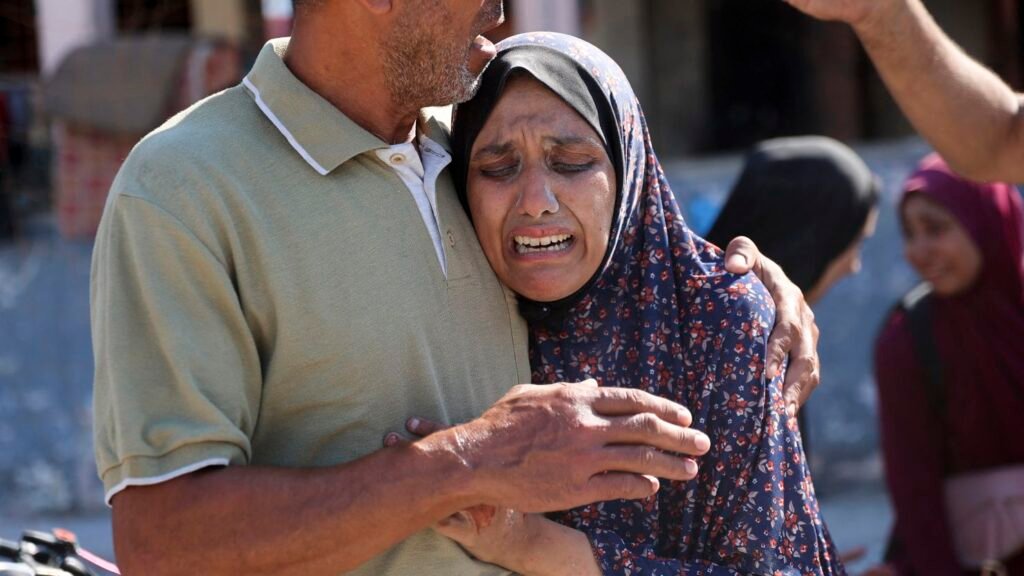
Gaza Herald _When Palestinian families are compelled to flee their homes because of bombardment, military threats, or evacuation orders, they lose far more than a physical residence. Displacement severs connections to community, security, memory, and the routines that shape everyday life. Any meaningful examination of Palestinian displacement must therefore move beyond numerical estimates and focus on the profound social disruption experienced by families whose lives are being systematically dismantled.
While forced displacement has long been a feature of the Palestinian experience, the ongoing war in Gaza and escalating pressures across the occupied West Bank and Jerusalem have intensified the phenomenon to unprecedented levels. What was once described as a consequence of conflict has increasingly become a mechanism of coercion, forcing civilians to abandon their homes under duress and trapping them in prolonged uncertainty without guarantees of safety, return, or rebuilding.
Rather than affecting every family member in the same way, displacement reshapes individual lives differently within the household. Fathers often face the collapse of their economic role after losing employment, businesses, farmland, or other sources of income. Mothers carry the burden of protecting children while struggling to secure food, hygiene, privacy, and basic necessities inside overcrowded shelters. Children, meanwhile, are thrust into a cycle of fear, interrupted education, sleep disturbances, and the gradual loss of any belief that home remains a permanent place they can one day return to.
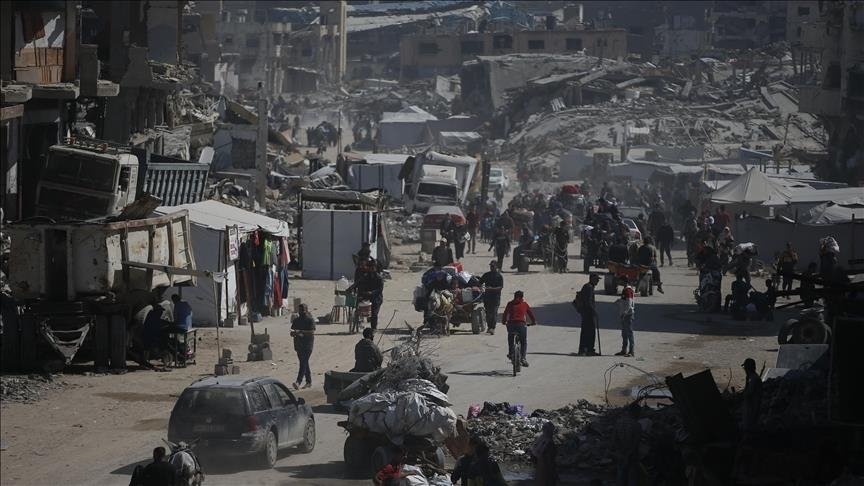
The Palestinian context makes these experiences even harsher because displacement rarely occurs within a stable or secure environment. Families may leave one neighborhood under military threat only to seek refuge in overcrowded schools, makeshift shelters, or tent camps that later come under threat themselves. Repeated displacement destroys the notion of temporary refuge, leaving families with no genuine sense of safety. What are presented as evacuation measures often translate on the ground into a widespread condition of vulnerability in which no location can truly be considered secure.
Displacement also extends far beyond the loss of housing. Families frequently lose official documents, medicines, educational opportunities, social networks, and personal privacy. Even when family members survive, the structure of their lives often does not. Understanding this distinction is essential to appreciating the full scale of the crisis beyond the language of statistics and humanitarian reports.
One of the most alarming aspects of the current situation is the treatment of forced displacement as a secondary effect of war rather than as a central feature of it. When residential neighborhoods are subjected to extensive attacks, evacuation orders are repeatedly imposed, roads are blocked, and essential infrastructure such as water systems, electricity networks, and healthcare facilities are damaged or destroyed, families are not leaving voluntarily. They are being compelled to move under conditions of overwhelming coercion. In this sense, displacement becomes embedded within the broader framework of military operations rather than existing as an accidental consequence.
In Gaza, this reality has become starkly evident. Families forced from the north toward central and southern areas of the Strip have often found themselves confronting renewed attacks, overcrowded shelters, and severe shortages of food, water, and medicine. In the occupied West Bank, displacement takes different forms through military raids, home demolitions, settler violence, and increasing pressure on rural and Bedouin communities. Although the methods vary, the outcome remains the same: making continued life in these areas increasingly difficult or impossible.
Since the earliest days of Israel’s military campaign, mass evacuation orders and military pressure have been used to facilitate one of the largest forced displacement crises in modern Palestinian history. More than 32 months of repeated displacement have left approximately two million Palestinians in Gaza trapped in a cycle of continual uprooting, uncertainty, and instability.