Gaza Herald _In the shattered remains of Palestine Stadium in Gaza City, Ali Tafesh moves across the field on crutches, passing the ball alongside his teammates from Gaza Al-Irada, a football team made up entirely of players who have lost limbs.
The stadium bears little resemblance to the world-class venues preparing to host the 2026 FIFA World Cup across the United States, Canada, and Mexico. Yet for Ali and his fellow players, it remains one of the few sports facilities in Gaza still partially usable after Israel’s devastating war, which has claimed the lives of nearly 73,000 Palestinians.
For these athletes, football is no longer simply a game. It has become a way to endure, heal, and reclaim pieces of a life shattered by war, displacement, injury, and loss.
Only four years ago, 24-year-old Ali was watching the World Cup in Qatar with friends at a café in Gaza, enjoying the excitement and celebrations that surrounded the tournament.
Today, as the world eagerly anticipates another World Cup, Ali is among thousands of Palestinians left permanently injured by the war, including hundreds of athletes who have lost limbs.
“Back in 2022, everyone supported their favorite team and the atmosphere was incredible,” Ali told Al Jazeera. “Today, life in Gaza is extremely difficult. At any moment, we can be targeted by bombardment or lose our lives.”
In February 2024, several months after the war began, an Israeli strike hit his family home in Gaza City’s Zeitoun neighborhood. The attack killed his mother and brother, while his injuries were so severe that doctors had no choice but to amputate one of his legs.
Following months of painful recovery and adjustment, Ali learned about Gaza Al-Irada through friends who had also undergone amputations. Before the war, he had been a successful sprinter who competed in local athletic championships. After losing his leg, he searched for another path that would allow him to remain connected to sports.
“When my leg was amputated, I felt like I had lost all hope,” he said. “I was a champion. I had won medals and achievements. Then my friends from Gaza Al-Irada visited me. I asked if I could become part of the team, and they welcomed me.”
Ali joined the club about six months ago.
While football fans worldwide prepare to watch elite players compete on the biggest stage in North America, Ali feels that Gaza exists in a completely different reality — isolated not only by war but also by the collapse of sports infrastructure and the absence of basic necessities.
“There’s no transportation,” he explained. “I have to travel on my crutches for more than two hours just to reach the training ground. We lack crutches, sports shoes, and many essential safety supplies.”
“Despite all of that, we continue playing with whatever resources we can find and try to keep football alive through our own efforts.”
Determined to Represent Palestine
The experience of 40-year-old Saadi al-Masri differs from many of his teammates.
While numerous members of Gaza Al-Irada lost their limbs during Israel’s current assault, Saadi lost one of his legs in a car accident when he was only two years old.
As he grew older, sports became a central part of his life. Over the years, he proudly represented Palestine in multiple disciplines, becoming a national swimming champion, a member of the Palestinian national volleyball team, and a player on the national amputee football team that competed in Asian championships.
Saadi understands the honor of representing Palestine on the international stage. Today, however, Israel’s restrictions have made travel outside Gaza extremely difficult. Even when athletes manage to leave, there is no guarantee they will be allowed to return home.
“Watching the World Cup is heartbreaking for us,” Saadi said. “Our amputee football team was supposed to participate in international qualifying competitions this year, but the war prevented that from happening. It is painful because we feel invisible and forgotten.”
“Our dream has always been to raise the Palestinian flag in international tournaments and show the world that we exist despite everything. But the war has affected every aspect of our lives, including sports.”
He explained that the widespread destruction of sports facilities has made any return to organized athletic activity nearly impossible without significant outside support. He also expressed disappointment with FIFA, which he says has yet to fulfill its commitments to Palestinian sports.
“Unfortunately, FIFA has not provided the support Palestinian sports desperately need,” he said. “We urgently require the reconstruction of sports facilities and stadiums that were completely destroyed so that athletic life can begin again.”
In February, FIFA announced a partnership aimed at rebuilding football infrastructure in Gaza.
According to the organization, the initiative includes plans for 50 mini-football fields under the FIFA Arena project, five full-size stadiums, a football academy, and a national stadium capable of hosting approximately 20,000 spectators. FIFA also pledged support for community-based sports development programs and efforts to rehabilitate the football sector.
However, Saadi and his teammates say these initiatives remain promises on paper.
FIFA stated that implementation would move forward in accordance with security assessments and safety conditions. Al Jazeera sought comment from FIFA but received no response before publication.
From Celebration to Survival
When Saadi reflects on the 2022 World Cup in Qatar, the contrast with life in Gaza today is overwhelming.
“The difference between then and now is enormous,” he said. “Back then, we watched matches at home and in cafés and fully enjoyed the atmosphere.”
“Today, there is no electricity, no television screens, and even following matches on mobile phones or through the internet has become incredibly difficult.”
As football supporters around the globe prepare to celebrate the opening of the World Cup, Saadi hopes participants and fans will not forget Palestine.
“We want the world to recognize that Palestinians deserve to live,” he said. “We hope Palestine remains present in the stadiums and among the supporters. We hope athletes speak about our suffering and stand with Palestinian athletes so they can continue despite everything they have endured.”
A Team Born from Loss
Gaza Al-Irada was established in May 2018 as an amputee football club designed to help people who lost limbs reconnect with sports and compete both locally and internationally.
The team includes players injured in successive Israeli wars on Gaza, as well as others who lost limbs under different circumstances.
According to estimates from the World Health Organization, between 5,000 and 6,000 Palestinians in Gaza have undergone amputations since the start of Israel’s war in October 2023. Thousands more had already lost limbs during previous Israeli military assaults.
The current war, however, has dealt an unprecedented blow to Palestinian sports.
A report published by the Palestinian Football Association (PFA) in March stated that 1,007 members of Gaza’s sporting community have been killed by Israel since October 2023. The victims include players, coaches, referees, administrators, and other sports professionals.
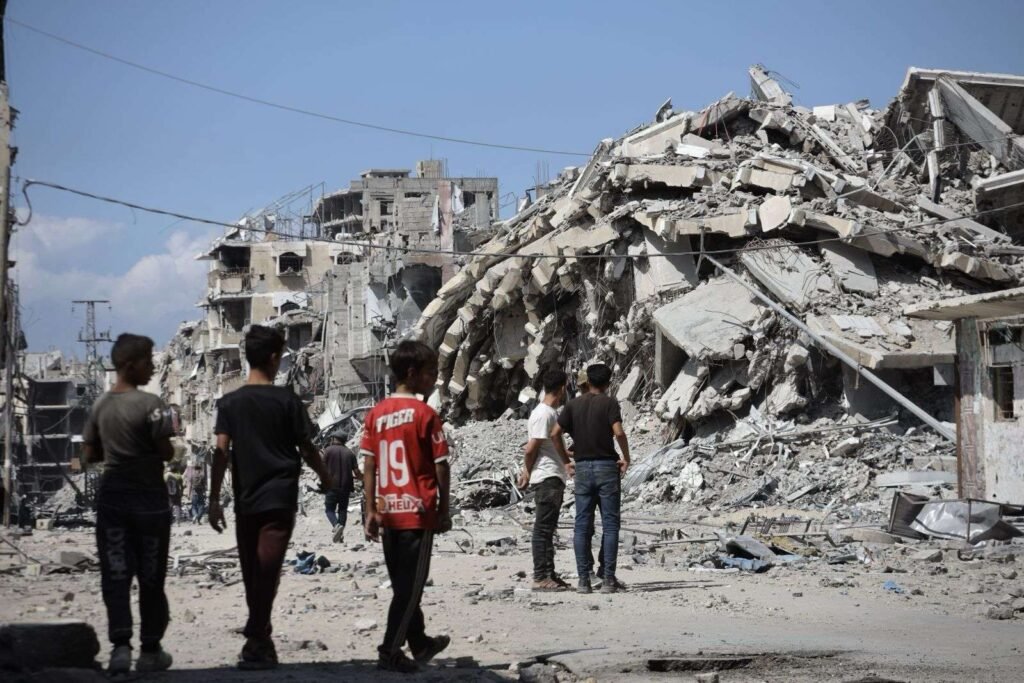
Sports infrastructure has suffered the same devastation inflicted on the rest of Gaza. According to the PFA, 265 sports facilities have been damaged or completely destroyed, including football fields, gymnasiums, club headquarters, swimming pools, and other athletic venues.
Many of Gaza’s largest stadiums have been heavily damaged, while others have been converted into shelters for displaced families.
The PFA says that the destruction has affected most of the facilities that once formed the foundation of sporting life throughout the Gaza Strip.
Football Under Siege
For Gaza Al-Irada coach Hatem al-Mughrebi, the approaching World Cup is both a celebration of football and a painful reminder of the isolation facing Gaza’s athletes.
“We will probably follow most of the tournament on mobile phones,” Hatem said.
“The war and siege have had a devastating psychological impact on our players, especially those who have lost arms or legs.”
“They dreamed of experiencing the World Cup like athletes elsewhere in the world. Instead, we have no public screenings, no sporting events, and we continue to live under daily bombardment and loss.”
Hatem remembers the 2022 World Cup in Qatar, when a delegation of Palestinian athletes from Gaza was able to attend matches and experience the tournament firsthand.
Today, he says, Gaza has been completely excluded.
“This sends a painful message from the international community to Gaza and its athletes,” he said.
“The silence must end. Palestinian athletes deserve the right to exist, compete, and be seen.”
“What we need is meaningful support that rebuilds our stadiums and sports facilities and gives these players a genuine opportunity to continue pursuing the sports they love.”