Gaza Herald _For many Western audiences, Israel’s assault on Gaza is often presented as a reaction to the events of October 7, 2023—a sudden conflict triggered by a single day of violence. Yet a growing body of historical evidence, testimonies, and archival research suggests a far different reality. According to accounts from Israeli soldiers, historians, and previously concealed military records, the policies now being carried out in Gaza did not emerge overnight. Rather, they reflect a decades-long pattern of displacement, military domination, and efforts to remove Palestinians from their homeland.
Recent revelations published by the Israeli newspaper Haaretz have brought renewed attention to testimonies from Israeli soldiers who participated in the 1967 war. Their accounts describe killings of civilians, forced expulsions, collective punishment, and military practices that many observers say mirror events taking place in Gaza today.
Soldiers Describe a Culture of Violence
Among the testimonies published are accounts from Israeli soldiers who served during the 1967 war and later spoke about what they witnessed and participated in.
One soldier recalled that Palestinian lives appeared to carry little value within the military environment, describing a reality in which killing was normalized and accountability was absent. Another explained that soldiers gradually became conditioned to stop viewing Palestinians as human beings, making it easier to carry out acts they had initially resisted.
A third soldier recounted how detainees were lined up and executed, later concluding that what had occurred amounted to murder. Another described operations inside Gaza refugee camps where troops conducted what he characterized as “purges,” claiming that soldiers established areas resembling concentration camps and frequently used lethal force against civilians.
These testimonies were not recorded during the current war. They date back nearly six decades and were originally gathered shortly after the 1967 war. Many were compiled in The Seventh Day: Soldiers Talk About the Six-Day War, a collection assembled by Avraham Shapira. According to reports, some of the most disturbing accounts were excluded from publication because of their graphic nature.
More Than History
The significance of these testimonies extends beyond historical documentation.
Critics argue that the actions described by soldiers from 1967 closely resemble practices documented in Gaza today, including widespread destruction of civilian infrastructure, attacks on homes, hospitals, schools, universities, bakeries, and government institutions, as well as mass civilian casualties and restrictions on humanitarian aid.
From this perspective, the devastation witnessed in Gaza since October 2023 is not viewed as a new phenomenon but as the continuation of a much older policy framework.
Supporters of this analysis argue that nothing fundamentally began on October 7. Instead, they see that date as a moment that provided Israeli leaders with an opportunity to intensify policies that had existed for decades. While the scale and duration may differ, they contend that the underlying objectives have remained largely consistent.
Expulsion Through Fear
The testimonies from 1967 suggest that military operations were often aimed not only at defeating armed opponents but also at creating fear among Palestinian civilians.
According to historical accounts, Israeli leaders viewed the territories captured during the 1967 war—including Gaza, the West Bank, and East Jerusalem—as an opportunity to continue a process of displacement that began during the events of 1947 and 1948.
By the end of those earlier campaigns, approximately 80 percent of Palestinians living within the borders of the newly established Israeli state had been displaced from their homes. Many became refugees in neighboring countries such as Lebanon and Syria, while others sought refuge in Gaza, the West Bank, and East Jerusalem.
For many historians, the 1967 war represented a second opportunity to expand territorial control while further reducing the Palestinian presence in historic Palestine.
Gaza as an Early Target
Historical records indicate that Israeli leaders openly discussed plans concerning Gaza shortly after the 1967 war.
Former Israeli Prime Minister Levi Eshkol reportedly told cabinet members that Gaza should be the first area targeted for depopulation efforts. Recognizing the likelihood of international scrutiny, he suggested that such policies would need to be carried out gradually and with limited visibility.
According to archival accounts, Eshkol proposed that worsening living conditions could pressure Palestinians into leaving. He reportedly discussed restricting access to essential resources, including water, in ways that would make life increasingly difficult for Gaza’s population.
Observers note that these discussions foreshadowed later policies, including the blockade imposed on Gaza beginning in 2007.
Years later, Israeli officials acknowledged calculating the minimum amount of food allowed into Gaza to prevent outright famine while maintaining pressure on the population. In 2006, senior adviser Dov Weisglass famously described the policy as placing Palestinians “on a diet” without allowing them to starve.
Following the events of October 2023, critics argue that these restrictions evolved into a far more severe siege characterized by extensive limitations on food, medicine, fuel, and humanitarian aid.
Historical Research and Forced Displacement
Research cited by Haaretz and conducted by the Akevot Institute details what historians describe as large-scale expulsions carried out following the 1967 war.
According to those findings, approximately 300,000 Palestinians and Syrians were displaced from the West Bank, Gaza, and the occupied Golan Heights. Researchers say these expulsions were accompanied by civilian killings, intimidation campaigns, looting, and destruction of property.
As in 1948, preventing displaced populations from returning became a major objective.
Journalist and former Israeli parliament member Uri Avnery documented testimonies from soldiers stationed along the borders with Jordan and Egypt. According to these accounts, troops were instructed to prevent displaced Palestinians from re-entering their homes, often through the use of lethal force.
One soldier described receiving orders to shoot anyone attempting to cross back, including women and children. He further recounted operations in which wounded survivors were killed and bodies buried before being collected and removed.
Echoes in Gaza Today
Human rights organizations and investigative reports have repeatedly raised concerns that similar practices continue today.
Investigations have documented allegations involving mass graves, the burial of civilian victims by military bulldozers, and attacks on civilians seeking humanitarian assistance.
Observers point to incidents including the killing of aid seekers and the deaths of Palestinian emergency workers, arguing that these events reflect a continuity of military doctrines described decades earlier.
One soldier from the 1967 testimonies recalled asking a commanding officer whether crying infants should also be shot. According to his account, the officer dismissed the concern.
Critics say such testimonies highlight a military culture in which Palestinian lives are routinely devalued and civilian suffering is normalized.
The Human Cost for Children
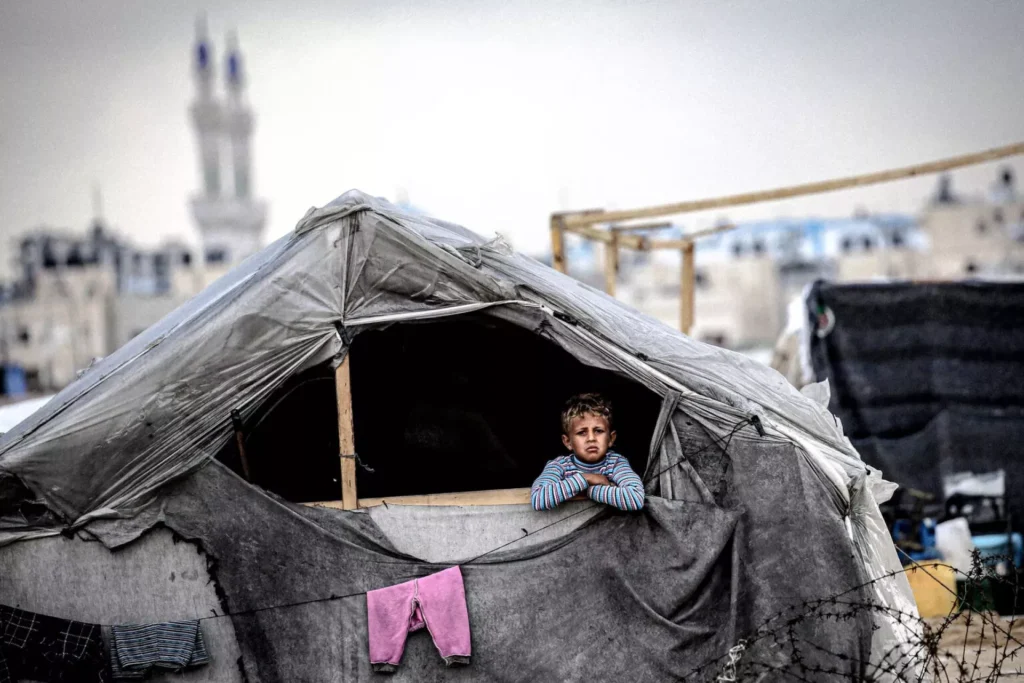
The war’s impact on Palestinian children has become one of its most devastating aspects.
Thousands of children have been killed, injured, orphaned, displaced, or permanently disabled during the conflict. Medical facilities, neonatal units, and hospitals have repeatedly come under pressure from military operations, shortages, and siege conditions.
Human rights advocates argue that children have often been among the first victims of policies restricting access to shelter, food, healthcare, clean water, and infant nutrition.
Cases involving infant deaths, both in Gaza and the occupied West Bank, have further intensified concerns over the protection of Palestinian civilians.
International Pressure Then and Now
One significant difference between 1967 and today, according to many analysts, is the level of international response.
Historical records indicate that international pressure eventually forced Israel to halt or modify certain policies following the 1967 war.
By contrast, critics argue that during the current war Western governments have continued to provide diplomatic support, military assistance, intelligence cooperation, and political cover despite mounting allegations of war crimes and genocide.
This support, they contend, has enabled Israel to continue military operations that would otherwise face stronger international constraints.
Understanding the Present Through the Past
Supporters of this historical interpretation argue that Gaza cannot be understood in isolation from earlier chapters of Palestinian history.
They contend that removing the context of 1948, 1967, decades of military occupation, settlement expansion, blockade, and repeated wars creates a distorted narrative that portrays current events as disconnected from their historical roots.
When those historical layers are restored, they argue, the destruction of Gaza appears less like a temporary military campaign and more like the latest stage in a long-running project aimed at reshaping the demographic and political reality of Palestine.
A Continuing Struggle
For Palestinians, the war in Gaza is not seen as an isolated tragedy but as part of a broader historical experience marked by displacement, dispossession, and recurring cycles of violence.
As military operations continue and humanitarian conditions deteriorate, many Palestinians view the current moment through the lens of generations who faced similar challenges before them.
From this perspective, Gaza is not an exception to history. It is its latest chapter—one that continues to shape the lives of millions while raising profound questions about accountability, justice, and the future of Palestine.