Gaza Herald _For government employees in Gaza, the expectation of receiving a full monthly salary has long disappeared. Instead, many now wait months for a modest financial payment that rarely exceeds 1,000 shekels and is often distributed only once every 100 days or more. As the cost of basic necessities continues to climb and humanitarian needs grow across the territory, thousands of families that once depended on public-sector wages are struggling to survive.
The crisis has created a painful paradox for many government workers. Because they remain officially registered as employees, numerous humanitarian organizations classify them as having an income source, making them ineligible for certain forms of aid. As a result, government employment has become less a symbol of financial stability and more an additional burden for families already facing severe hardship.
Small Payments, Mounting Debts
Government employees say the limited funds they receive no longer cover even a fraction of their families’ needs. Food, drinking water, and other daily essentials must often be purchased at sharply inflated prices, while many workers face another challenge: receiving part of their payments in damaged or worn-out banknotes that some merchants refuse to accept or discount below their face value.
Abu Ahmed, a 44-year-old police officer and father of five, says his life changed dramatically after the war began in Gaza.
Speaking to local media, he explained that the approximately 1,000 shekels he receives every few months barely makes a dent in the debts his family has accumulated.
“One thousand shekels every three months is not enough to cover even a small portion of what we owe,” he said. “I buy food on credit, postpone my children’s basic needs, and often find myself unable to provide even simple things they ask for.”
He recalled a time when his salary allowed him to maintain at least a modest standard of living. Today, he says, his primary concern is securing enough food and water for his family.
Psychological Toll Beyond Financial Hardship
The crisis is not only economic. Many workers describe growing psychological and social pressures as uncertainty becomes a permanent part of daily life.
Um Saed, a 38-year-old teacher in Gaza’s public education sector, says her family now survives largely through debt and humanitarian assistance.
“We live on loans and aid,” she explained. “Whenever a payment arrives, it immediately goes toward covering accumulated obligations. There is no sense of security or stability anymore.”
According to her, the uncertainty surrounding payment schedules is often more difficult than the small amounts themselves. With intervals between payments sometimes exceeding 100 days, families have little ability to plan ahead or budget for basic necessities.
Damaged Currency Creates Additional Burdens
Many government workers report receiving portions of their payments in old, damaged, or heavily worn banknotes, creating further obstacles when trying to purchase goods.
Abu Salim, a 45-year-old employee at the Ministry of Religious Endowments, says many shopkeepers either refuse such notes or reduce their value during transactions.
“The amounts we receive are already extremely small,” he said. “Then we lose part of that money because of the condition of the currency itself.”
Middle-Class Families Fall Into Poverty
Economic analysts say the crisis has transformed the lives of many government employees who were once considered part of Gaza’s middle class. Declining incomes, rising prices, and the collapse of economic activity have pushed large numbers of public-sector workers into poverty.
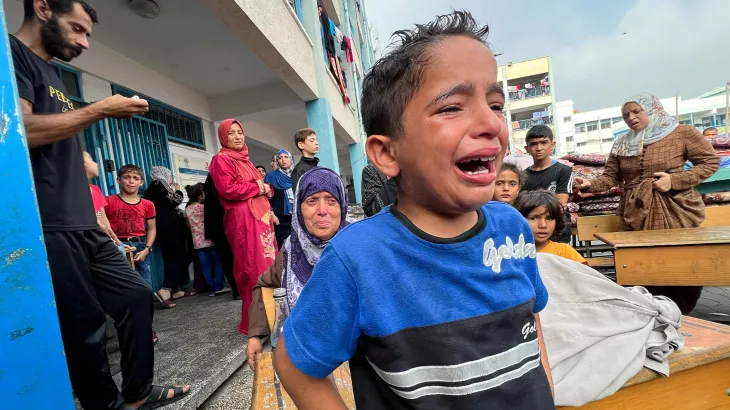
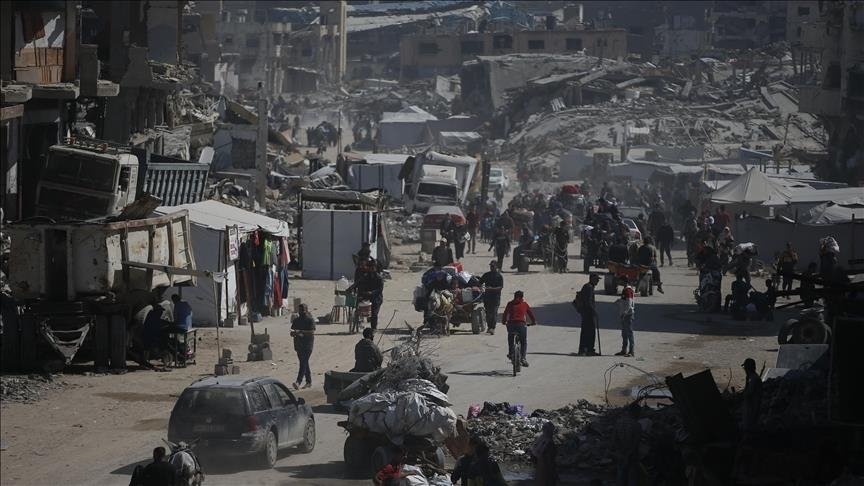
The salary crisis is unfolding against the backdrop of one of the worst economic and humanitarian situations in Gaza’s history. According to international estimates and recent economic assessments, more than 90 percent of Gaza’s population now lives below the poverty line, while unemployment has surpassed 80 percent following the widespread collapse of businesses and income-generating activities.
Most households now rely heavily on humanitarian assistance to meet their basic needs.
The World Food Programme has warned that the majority of Gaza’s residents are experiencing severe levels of food insecurity, with hundreds of thousands of families requiring food assistance after losing their sources of income.
An Uncertain Future
As international organizations continue to highlight catastrophic levels of poverty and food insecurity across Gaza, government employees face an increasingly impossible reality: minimal income, soaring prices, growing family responsibilities, and little certainty about what lies ahead.
With no clear signs that regular salary payments will resume, poverty and deprivation continue to spread among public-sector workers. A group once viewed as a pillar of economic and social stability is now among the communities most affected by Gaza’s deepening humanitarian crisis, reflecting the broader hardships confronting the territory as a whole.