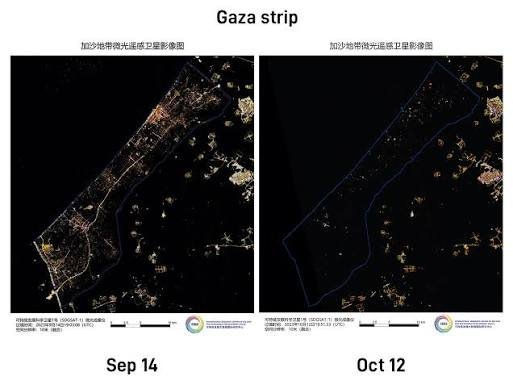
Gaza Herald – New satellite analysis has revealed the extent of Gaza’s prolonged electricity crisis, showing that the territory now retains only 19% of its pre-war nighttime illumination, nearly three years after the sharp decline in power supply began.
The analysis, based on NASA’s Black Marble nighttime light data, compared equal 28-day periods from before the genocide through July 2026. When areas currently under Israeli military control, known as the “Yellow Line”, were excluded, the remaining populated parts of Gaza showed only 12% of their previous nighttime light levels, highlighting the collapse of electricity access in civilian areas.
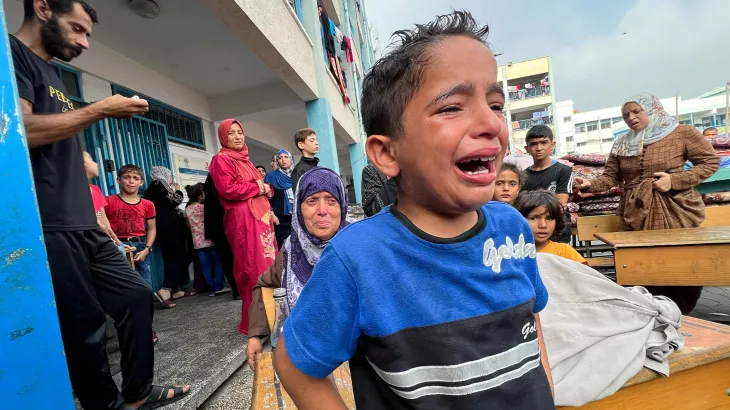
Beyond the satellite imagery, the loss of electricity has become a daily humanitarian challenge. Families living in overcrowded displacement camps struggle to operate fans, refrigerate food and medicines, or even light their shelters at night. High summer temperatures, combined with widespread insect and rodent infestations, have further worsened living conditions.
The electricity shortage has also severely disrupted essential services. Water wells, sewage pumping stations, hospitals, bakeries, telecommunications networks, and health facilities continue to operate under extreme constraints due to limited fuel and damaged infrastructure. Humanitarian agencies warn that these disruptions are affecting millions of civilians who rely on basic public services.
Healthcare has been particularly affected, with fewer than half of Gaza’s pre-war health service points remaining operational. According to humanitarian assessments, around 350,000 Palestinians living with chronic illnesses continue to face major interruptions in treatment due to power shortages, damaged water and sanitation systems, supply shortages, and access restrictions.
Education has also suffered as unreliable electricity and internet access disrupted the 2026 secondary school examinations. Thousands of Palestinian students were unable to participate on the first day of exams because they lacked charged devices or stable internet connections, forcing many others to take online tests inside crowded cafés or temporary shelters where electricity was available.
While satellite imagery does not directly measure electricity outages, analysts say the sharp decline in nighttime illumination provides one of the clearest indicators of the collapse of Gaza’s power network. Humanitarian organizations continue to warn that restoring reliable electricity is critical not only for lighting homes but also for maintaining healthcare, water services, communications, education, and other essential civilian infrastructure.