
Gaza Herald – Five-year-old Sidra Hassouna appeared in a haunting scene that captured the sheer horror of what unfolded: her small body hanging from the window of a destroyed home, while her mother’s hand, also killed in the strike, remained clinging to her, as if refusing to let go even in death.
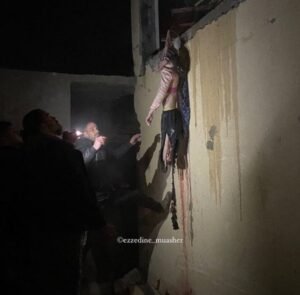 The force of the bombardment hurled Sidra outside, turning what should have been a moment of safety in her mother’s arms into one of the most harrowing images of the genocide in Gaza.
The image quickly became etched in memory, exposing the brutality inflicted on children. On February 12, 2024, Israeli airstrikes targeted the Hassouna family home along with several others in Rafah, southern Gaza.
Israel said the attack was carried out as cover for a military operation aimed at rescuing captives in Rafah. However, according to the Palestinian Center for Human Rights, at least 74 Palestinians were killed that night, including 27 children and 22 women, while large areas of homes and displacement tents were destroyed.
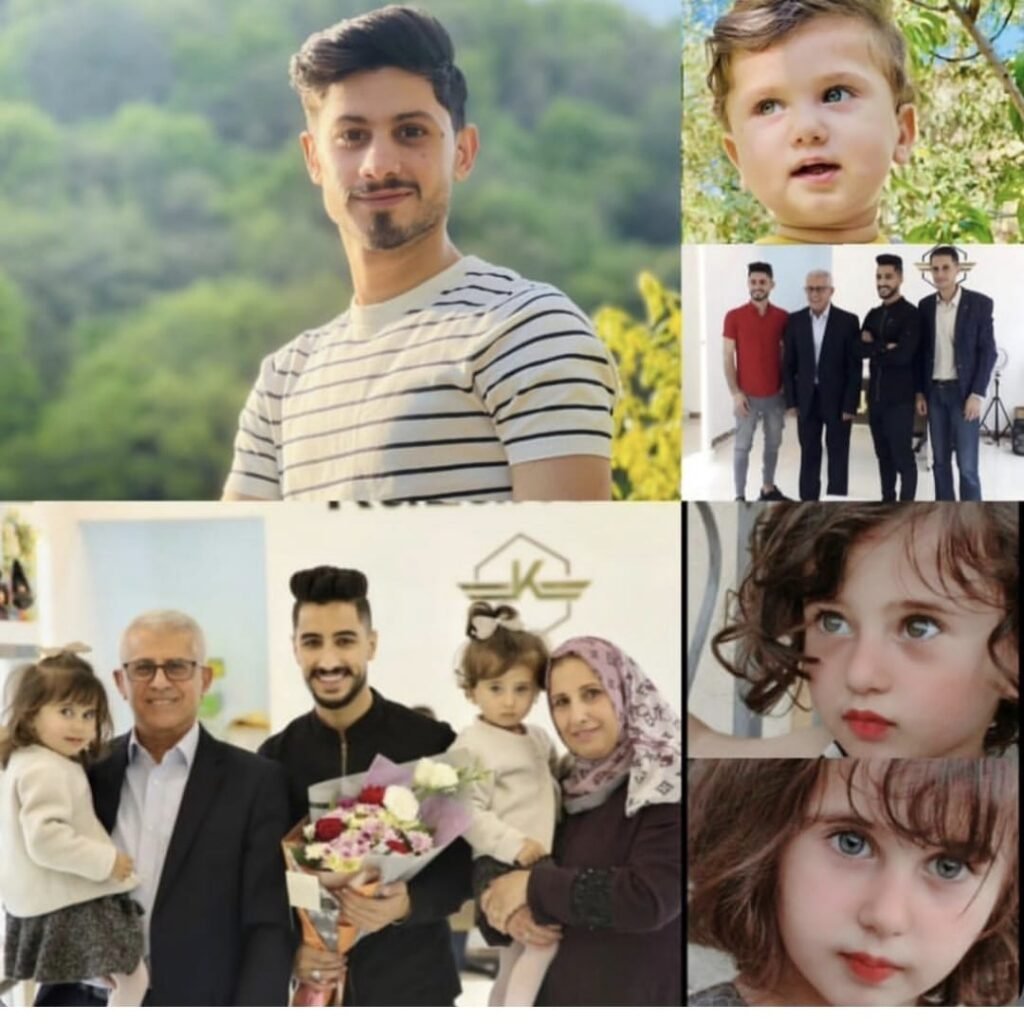
The Hassouna family had been forcibly displaced more than five times before settling in a small shop in Rafah, which had been designated as a “safe area” by the Israeli military. That night, Sidra was killed along with her twin, her younger brother Malek (18 months old), her parents, grandparents, and uncle, an entire family wiped out, with only three survivors remaining.
Ibrahim Hassouna, one of the survivors, recalled the moment in a voice heavy with grief: “I was about a kilometer away when we heard intense bombardment around 1 a.m. Explosions, I never imagined my family would be under.”
“When I returned, I couldn’t recognize the street or the place. Everything had changed, as if the land itself had been reshaped over the bodies,” he said.
“I fell to my knees. I couldn’t hear anything anymore. They took me to the hospital, and there I learned that my entire family had been killed. We were eleven; now we are only three.”
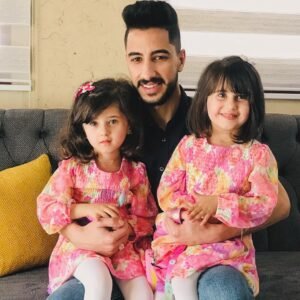 Sidra had been a lively child who loved to dress up and fill spaces with joy. But the missile left nothing recognizable, her small body burned, disfigured, and torn apart, with her mother’s hand still wrapped around her.
“I found my mother’s ring melted onto the wall,” Ibrahim said. “I recognized it by its bead. Sidra’s clothes were filled with shrapnel, even her small earring was hit. What about her body?”
“Nothing remained as it was. Food was shattered, stones were shattered, and so were people.”
He remembered how his mother used to worry about him constantly. “If I were late by an hour, she would call: ‘Where are you? Why are you late?’” he said. “Now, no one will ask about me.”
“I just wish I could hear her voice again, even once, saying ‘God be pleased with you, my son.’ But that’s impossible.”
Ibrahim added that he had returned from Turkey just a month before the war, hoping to take his family there for a better time. “It seems I came back only to bury them all with my own hands.”
“I wish I had died with them,” he said. “What is happening is not a war. This is genocide and ethnic cleansing.”
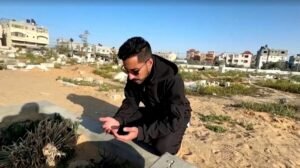 Sidra’s story is one of countless tragedies, reflecting the widespread and systematic toll on an entire generation. According to the Palestinian Central Bureau of Statistics, more than 21,000 children had been killed by the end of 2025, around 30% of total casualties, including 450 infants, 1,029 children under one year old, and over 5,000 under the age of five.

