Gaza Herald – Palestinian political factions and community leaders have voiced strong and unified opposition to a proposal put forward by international envoy Nikolay Mladenov, which calls for the disarmament of armed groups in Gaza as part of broader post-war arrangements.
According to details reported by regional media, the plan consists of a multi-phase framework linking reconstruction, humanitarian aid, and administrative governance in Gaza to gradual steps toward disarmament. Each phase would require parallel actions by both Israel and Palestinian parties, with progress subject to strict monitoring and verification.
The proposal reportedly includes a comprehensive ceasefire, partial Israeli withdrawal from certain areas, and the transfer of administrative responsibilities in Gaza, alongside the introduction of humanitarian relief and reconstruction efforts. However, advancement in these areas is tied directly to measurable progress in dismantling armed capabilities.
Observers argue that the plan effectively seeks to reshape Gaza’s political and security landscape by conditioning basic humanitarian needs and reconstruction on disarmament, raising concerns about imbalance and lack of guarantees.
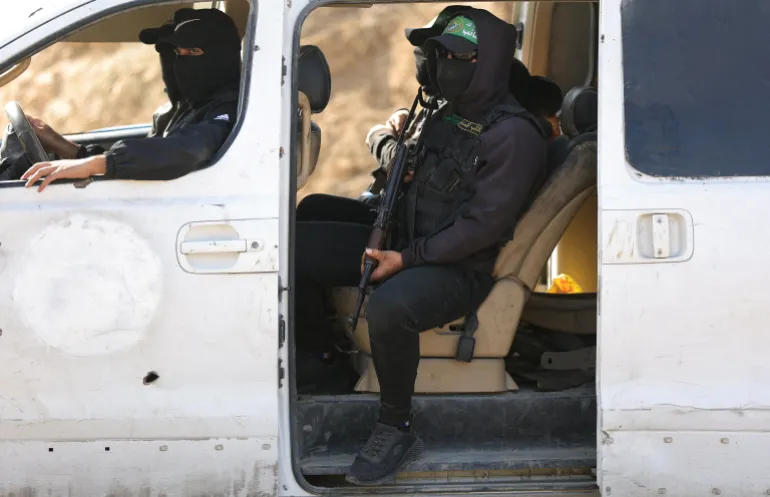
Palestinian factions across the political spectrum, as well as tribal and community representatives, have rejected the proposal, emphasizing that disarmament cannot precede the end of Israeli occupation or the realization of Palestinian national rights. They stress that weapons are viewed not merely as military tools but as part of the right to self-defense under ongoing occupation.
Critics of the plan argue that it places disproportionate responsibility on Palestinians while failing to ensure binding commitments from Israel, including lifting the blockade and fully ending military attacks.
The broad rejection reflects a rare consensus among Palestinian groups, who consider any attempt to impose disarmament as a precondition for reconstruction and ceasefire arrangements to be fundamentally unacceptable without a comprehensive political solution that addresses the root causes of the war.