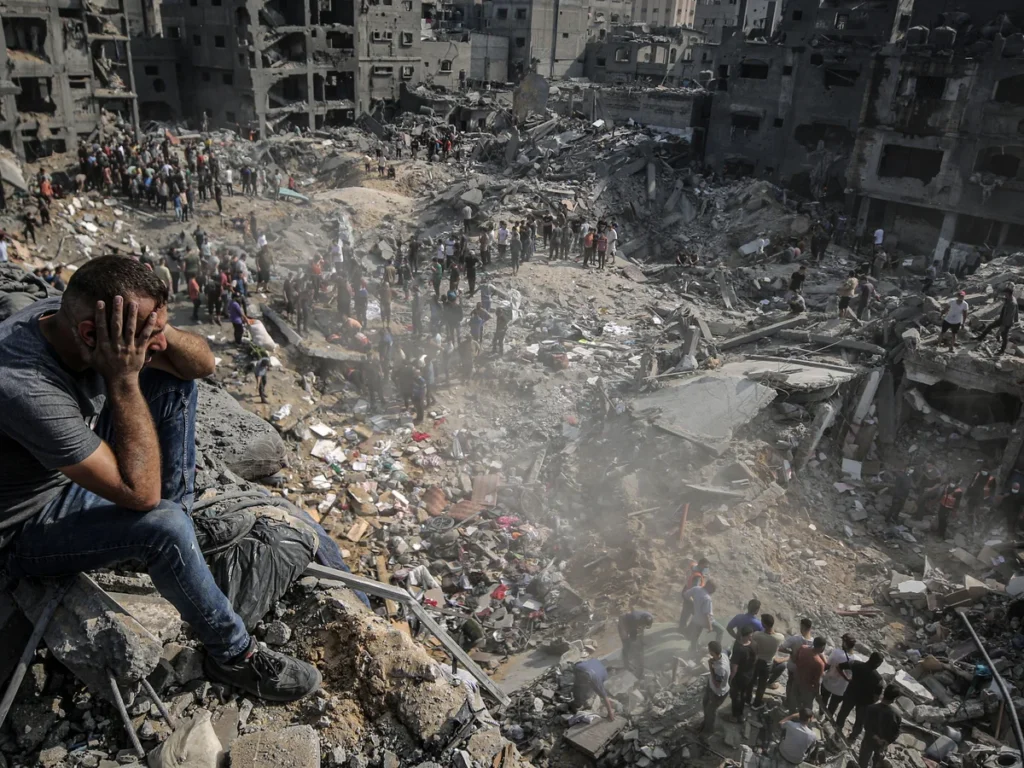
Gaza Herald _ Since the start of Ramadan, heartbreaking scenes are unfolding across the Gaza Strip. Children can be seen running behind garbage trucks, searching for scraps of wood, cardboard, plastic, or anything that can burn, hoping to help their families light a fire to cook in the absence of sufficient fuel.
As fuel shortages deepen, preparing for Ramadan in Gaza no longer revolves around planning meals or welcoming guests. Instead, families are consumed by one urgent question: how to secure enough cooking gas to prepare iftar and suhoor. The limited supply has transformed what was once a season of generosity and togetherness into one overshadowed by anxiety and deprivation.
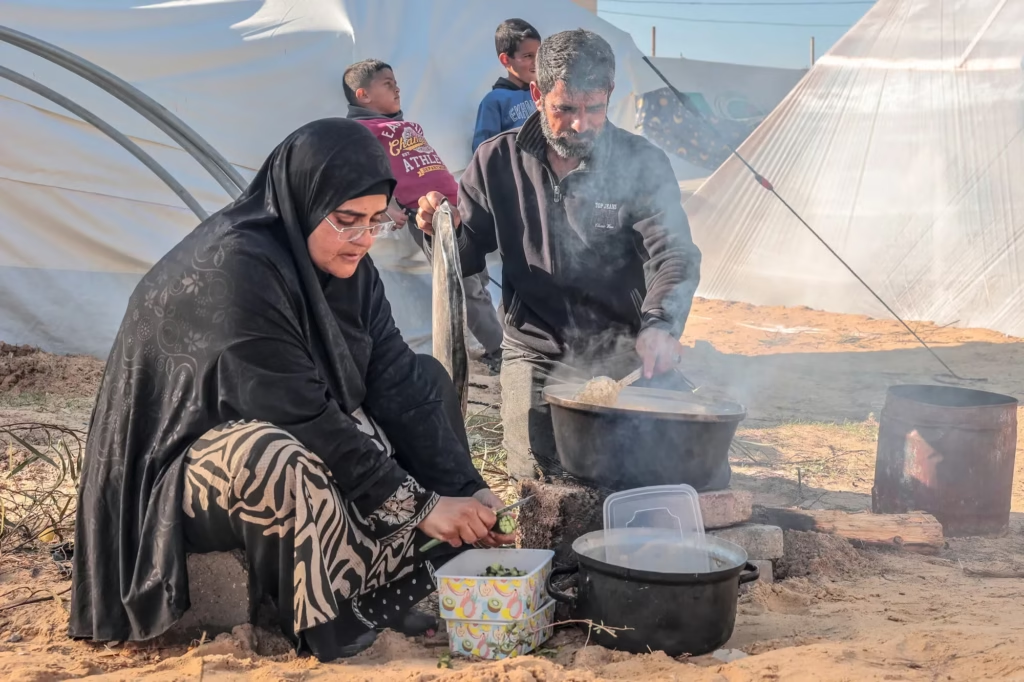
Israeli authorities allow cooking gas into Gaza only in very limited quantities. Residents receive a gas cylinder at long and irregular intervals, forcing many families to rely on open fires fueled by firewood, scraps of cloth, and plastic. Most households attempt to conserve their remaining gas for emergencies, especially during cold weather.
Bushra Abu Waheed said her family received a gas cylinder just days before Ramadan, but it was barely enough to last a short time for her large household. She explained that rising firewood prices and the scarcity of gas have made cooking increasingly difficult. As a result, she has resorted to burning worn-out clothing and plastic pieces her children collect from the streets and garbage dumps.
Ongoing economic collapse, the aftermath of war, and a prolonged blockade have left thousands of families without reliable energy sources. With fuel and firewood prices soaring, some households have no alternative but to turn to primitive methods. Children now carry the burden of searching for materials that can be used to prepare a single daily meal.
In several neighborhoods of Gaza City, children wait for sanitation trucks to pass, then rush to gather broken wood, cardboard boxes, or discarded furniture. Many do this daily, despite the health risks and the possibility of injury.
At a landfill in Al Maghazi refugee camp in central Gaza, dozens of children gather, waiting for garbage trucks arriving from across the Strip. They search for plastic containers, scraps of fabric, and anything combustible. Among them is Mohannad Farid, who goes out every afternoon at his mother’s request to collect plastic gallons, cloth, and other burnable items. He waits specifically for waste from charity kitchens, hoping to retrieve empty oil containers and food cartons. The dangers of digging through trash bags do not deter him. His focus is simple, finding fuel so his family can cook.
Mohannad said he wished he could experience Ramadan like other children around the world, in peace and comfort, instead of hardship and pain. He described his daily search as exhausting and hazardous, explaining that he suffers from shortness of breath and persistent skin irritation from spending long hours at the landfill. Waiting under the sun for trucks to arrive is often the most difficult part. When they finally unload, children and adults push and scramble to collect as many plastic containers and boxes as possible, risking injury and suffocation in the chaos.
His mother, Umm Yahya, said life has become unbearably difficult. Without fire, she cannot prepare food. She sends her son out well before iftar to find anything that can be burned under the cooking pot. Although she understands the health dangers of scavenging through waste, she sees no safer alternative.
She reflected on how Ramadan in Gaza once carried a strong social spirit, with families gathering around modest but loving meals. This year, however, poverty and scarcity have overshadowed the holy month. Rising prices and the lack of cooking fuel have made even basic meals difficult to prepare.
Cooking gas remains scarce, with residents receiving an eight kilogram cylinder roughly every six weeks, far from sufficient during Ramadan when meals are prepared twice daily. Cold weather further complicates efforts to cook outdoors at night, forcing families to reserve gas for quick meals or hot drinks.
As thousands of families depend on unsafe alternatives for cooking, doctors and health specialists warn that burning painted wood or plastic releases toxic fumes that can severely affect the respiratory system, particularly for children and the elderly. Scavenging in garbage dumps also exposes children to cuts, infections, and disease from contaminated waste.
Humanitarian workers say the sight of children performing such tasks underscores the severity of Gaza’s deepening crisis and raises alarm about the future of a generation growing up under constant deprivation. Local and international organizations are calling for the regular entry of fuel and cooking gas and for expanded humanitarian assistance to ease the burden on families, especially during Ramadan. They also stress the urgent need for protection programs and psychological support for children living under relentless economic and social pressure.