
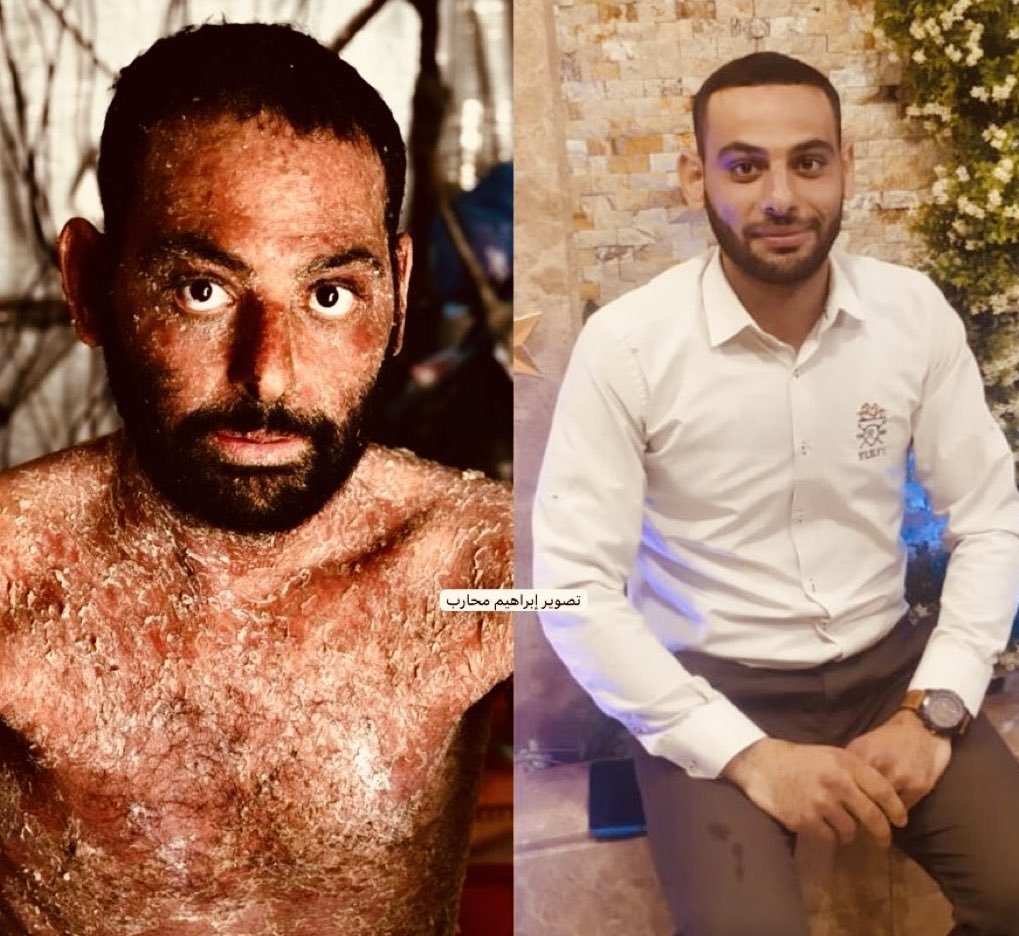
Gaza Herald _A rare and life-threatening autoimmune disease has left displaced Palestinian Ibrahim Abu Aram trapped in constant pain, as his condition continues to deteriorate amid the collapse of Gaza’s healthcare system and the absence of specialized treatment.
Abu Aram has been diagnosed with pemphigus vulgaris, a severe and uncommon skin disorder that causes painful blistering and widespread physical deterioration. The disease has stripped him of his ability to move freely or carry out basic daily responsibilities, profoundly affecting his role as a father and husband.
His condition has worsened significantly due to prolonged reliance on high doses of corticosteroids, which weakened his immune system and triggered serious complications. Medical sources report that he developed blood poisoning and dangerous infections, including abscesses affecting critical areas of his body. His life is now at extreme risk, with limited treatment options available locally.
Doctors say Abu Aram suffers from persistent muscle spasms and partial paralysis that has affected his tongue, right hand, and right leg, leaving him increasingly incapacitated. Specialists warn that continued delays in receiving proper medical care pose a direct and potentially fatal threat to his survival.
For the past four years, Abu Aram has been waiting for approval to travel outside Gaza for specialized treatment. However, ongoing war conditions and strict movement restrictions have prevented him from accessing the urgent care he needs.
His case has drawn widespread attention on social media, where activists and supporters have shared videos documenting his suffering and called for immediate intervention. Many have emphasized that Abu Aram represents the broader plight of thousands of Palestinians facing life-threatening medical conditions without access to adequate treatment.
Human rights advocates stress that his appeal is rooted in a fundamental right to healthcare and survival, not privilege. Abu Aram hopes to recover and resume his role supporting his family, who are themselves enduring displacement, poverty, and harsh living conditions.
Medical and humanitarian observers note that his situation reflects several health crises affecting Gaza. Dozens of patients with severe chronic illnesses remain unable to access surgeries or advanced therapies due to widespread destruction of hospitals and shortages of essential medical resources.
According to recent United Nations estimates, more than 18,500 patients in Gaza urgently require medical evacuation, including approximately 4,000 children. Many face uncertain futures as border crossings remain largely closed and humanitarian movement severely restricted.
International organizations and human rights groups have called for immediate action to establish safe humanitarian corridors for medical evacuations. They have urged the resumption of patient transfers to hospitals in the West Bank and East Jerusalem as an urgent measure to prevent further loss of life.
Meanwhile, Abu Aram remains in his displacement tent, battling worsening illness and enduring relentless pain. His case has become a symbol of the urgent need for medical access and humanitarian intervention, as his survival now depends on whether he can be allowed to leave Gaza in time to receive life-saving treatment.

