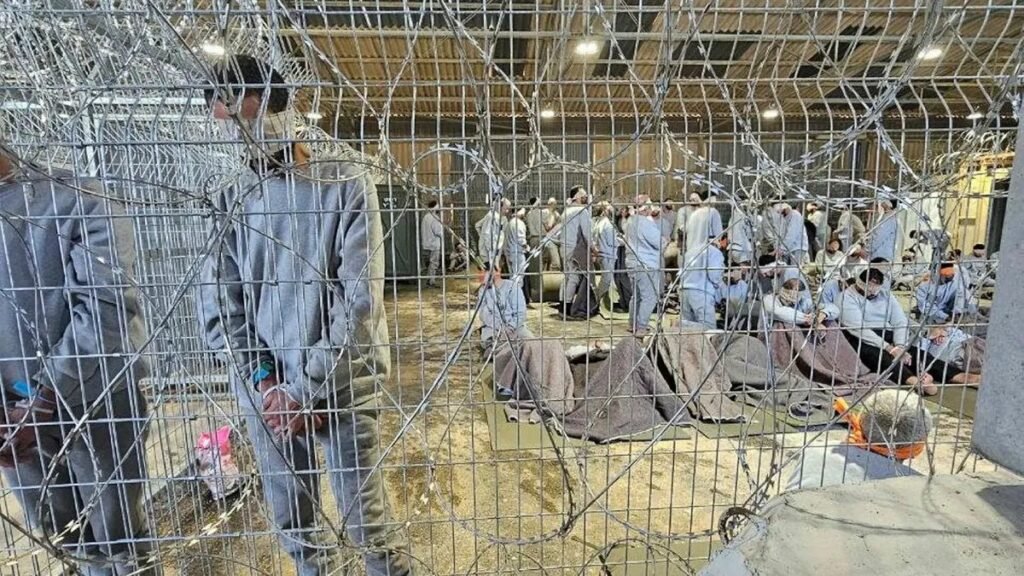
Gaza Herald — Israeli settlers were reportedly granted access to a highly secure Israeli prison facility in what observers described as a “safari tour,” allowing them to view Palestinian detainees lying handcuffed on the floor, as prisoner rights groups warn of worsening starvation and abuse, particularly during the holy month of Ramadan.
According to an investigation published by the Israeli outlet Shomrim, the head of the Israel Prison Service, Kobi Yaakobi, personally invited settlers from the illegal Har Homa settlement in Jerusalem to tour Nitzan Prison near the city of Ramla. The visit reportedly included access to multiple prison wings, religious instruction, and a prepared lunch for the guests.
The report described how more than 20 settlers were transported from Har Homa to the prison, where they were shown sections housing Palestinian detainees, including those accused of affiliation with Hamas’ Nukhba unit.
During the visit, Palestinian prisoners were allegedly forced to lie face-down on the floor while restrained with handcuffs, allowing the visiting settlers to observe them. Prison authorities reportedly stated that such restraints were standard procedure during operational security measures.
Restricted access for families and rights groups
The visit has sparked outrage among Palestinian prisoner advocacy organizations, which point out that family members, lawyers, and international monitors face strict restrictions when attempting to visit detainees.
The Israel Prison Service has previously barred independent human rights investigations and limited access by organizations such as the International Committee of the Red Cross. In September, prison authorities reaffirmed a sweeping ban on Red Cross visits, claiming such access posed a “national security threat.”
Critics argue that while independent oversight is restricted, ideological settler groups were granted privileged access under the supervision of prison officials.
Starvation and abuse during Ramadan
The visit comes as Palestinian prisoner rights organizations report worsening humanitarian conditions inside Israeli prisons, particularly during Ramadan.
The Commission of Detainees and Ex-Detainees Affairs said prisoners have been deprived of basic information about time, leaving some unaware of when to begin or break their daily fast.
Commission lawyer Khaled Mahajna described one encounter in which a detainee expressed shock upon learning Ramadan had begun, saying he had not been informed.
Mahajna also reported that prisoners are routinely denied suhoor, the pre-dawn meal, and are provided only minimal food at iftar, often insufficient to sustain them after long hours of fasting.
Advocates say these practices form part of a broader pattern of deprivation, humiliation, and psychological pressure inside Israeli detention facilities.
Growing scrutiny over prison conditions
Human rights groups have repeatedly warned of deteriorating conditions for Palestinian detainees since October 2023, citing allegations of physical abuse, starvation, medical neglect, and isolation.
They argue that allowing settlers to observe restrained prisoners, while denying access to humanitarian monitors, raises serious ethical and legal concerns about the treatment of detainees and the lack of accountability inside Israel’s prison system.
For many Palestinian families, the reports deepen fears for the safety and dignity of loved ones held behind bars, as calls grow for independent international oversight of Israeli detention facilities.