Gaza Herald – As United States President Donald Trump convened the inaugural meeting of his newly formed Board of Peace (BoP) in Washington on Thursday, discussions inside Gaza were far removed from diplomatic language or global strategy.
Across central and southern Gaza, in displacement camps and makeshift tents where hundreds of thousands struggle to survive, one pressing question overshadowed everything else: Will this initiative actually improve life on the ground?
For many residents, the announcement stirred more skepticism than hope.
“I’ve heard about funds being raised for Gaza before, but we never see real results,” said Amal Joudeh, 43, who lives in a tent in Deir el-Balah after being displaced from Beit Lahiya in northern Gaza. “My home is destroyed. My husband is injured. My children are injured. We just want reconstruction, real help, any solution.”
During the meeting in Washington, Trump stated that nine countries had pledged $7 billion toward rebuilding Gaza, while five nations committed to sending troops to form an International Stabilization Force in the Palestinian territory. He also announced that the United States would co ntribute $10 billion to the Board of Peace, though he did not clarify how the funds would be allocated.
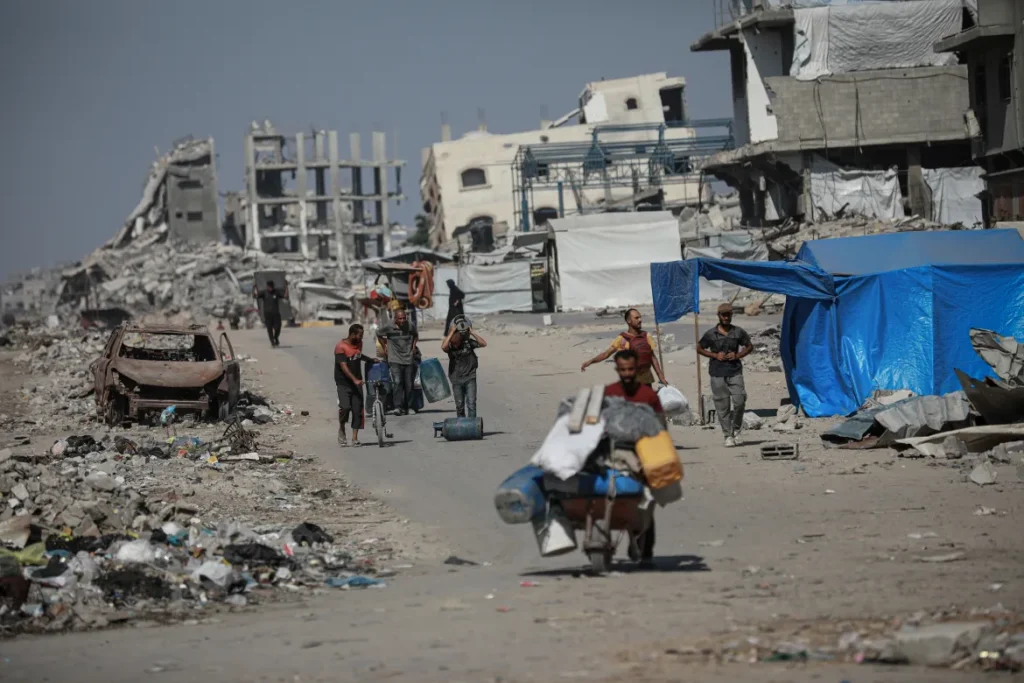
Even combined, these pledges fall far short of United Nations estimates, which place reconstruction costs as high as $70 billion following more than two years of continuous Israeli bombardment.
A Ceasefire With Little Relief
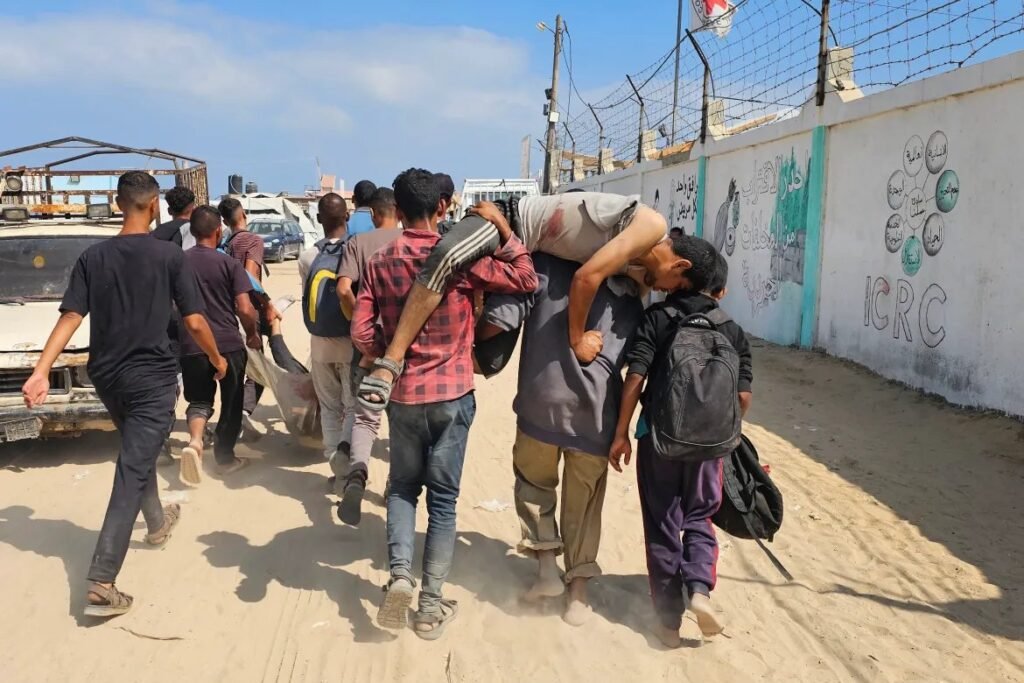
Despite a ceasefire agreement brokered by Trump that took effect in October last year, many Palestinians say daily life has barely improved.
Basic necessities remain scarce. Families struggle to secure food. Healthcare, sanitation, and education services remain severely disrupted.
According to Gaza’s Ministry of Health, more than 600 Palestinians have been killed by Israeli gunfire since the truce began. Official figures place the overall death toll from the two-year war at more than 72,000.
“Israel continues to attack and violate the ceasefire every day,” said Awad al-Ghoul, a 70-year-old displaced from Tal as-Sultan in Rafah who now lives in a tent in az-Zawayda. “If a peace board this powerful cannot stop violence in a small place like Gaza, how can it solve conflicts anywhere else?”
Trump has indicated that the Board of Peace is intended to address global disputes beyond Gaza.
Doubts Over Where the Money Will Go
Many Gazans recall past donor conferences that produced large financial commitments but little tangible change. For them, the newly announced funds prompt more questions than reassurance.
Al-Ghoul expressed doubts that the full amounts pledged would directly benefit Gaza’s residents. He suggested that much of the money could be consumed by administrative costs and political structures rather than reaching those in need.
Jamal Abu Makhdeh, 66, shared similar skepticism. “We’ve heard promises before,” he said. “Nothing changes. Anything Israel approves will not necessarily serve our interests.”
He argued that the Board of Peace may function as a political instrument rather than a genuine peace effort, claiming it could be used to advance geopolitical influence rather than address Palestinian suffering.
Over the past two years, reconstruction proposals have accompanied nearly every ceasefire announcement. Yet restrictions on the entry of construction materials have repeatedly stalled rebuilding efforts.
“Even if they promise reconstruction again, we’ve heard it before,” Abu Makhdeh said. “How can we trust a body that includes Israel, when it is Israel that destroyed our homes?”
He also voiced concern over ongoing discussions about disarming Hamas as part of the truce agreement, suggesting that such moves could trigger internal instability.
Meanwhile, he pointed to continued tensions in the occupied West Bank, including home demolitions and settlement expansion, as evidence that broader peace remains elusive.
Reconstruction Missing From the Agenda
Although Trump’s speech emphasized stability and peace, no detailed reconstruction framework was announced.
For al-Ghoul, rebuilding holds little meaning if security conditions remain unchanged. “What is the use of reconstruction if destruction continues?” he asked.
Joudeh, however, still holds onto cautious hope. She longs for her children to return to school, for daily life to resemble what it once was, and to leave the tent for a permanent home.
Far from diplomatic summits, Gaza residents express their demands in simple terms: safety, stability, and the ability to return home.
“I want to go back to my neighborhood in Rafah,” al-Ghoul said. “Even if I live in a tent, I want to return. What matters is that the army withdraws.”
Abu Makhdeh summarized his wish more broadly: “We are exhausted. We want justice. We want mercy. We want to live peacefully with our basic right to safety.”
For many in Gaza, the distance between Washington’s promises and their daily reality remains vast , and hope, though present, is fragile.