
Gaza Herald _For Palestinians in Gaza, even the act of returning home after life-threatening illness is shaped by war, siege, and control. What should be a simple journey of healing becomes a prolonged ordeal defined by border closures, military restrictions, and forced separation. Mariam al-Najjar’s return after two years in Egypt for cancer treatment is not only a personal victory but also a reminder of how Israel’s policies continue to trap patients, divide families, and deny Palestinians the basic dignity of movement and medical care.
Reunion After Years of Separation and Loss
At Nasser Medical Complex in Khan Younis, members of the al-Najjar family gathered early, anxiously waiting for the arrival of Mariam, the family’s matriarch. Their anticipation marked the end of nearly two years of painful separation after Mariam had traveled to Egypt in March 2024 to receive cancer treatment.
Her absence stretched far beyond what was expected. Following Israel’s seizure and closure of the Rafah crossing in May 2024, her temporary medical trip turned into a prolonged exile. During that time, her family endured immense suffering under Israel’s devastating war on Gaza, including the loss of relatives and the destruction of their homes.
Her son described the emotional weight of the moment, saying the family was overwhelmed with joy to see her again, despite the heavy losses they had endured. Like countless Palestinian families, they were forced to confront both reunion and grief simultaneously.
When Mariam finally stepped off the bus, her relatives rushed toward her, embracing her in a powerful moment that seemed to erase years of separation. Despite witnessing from afar the destruction of her homeland and the suffering of her loved ones, she never abandoned hope of returning. She affirmed that Gaza remained irreplaceable, even in its devastation.
Restricted Crossings and the Ongoing Reality of Occupation
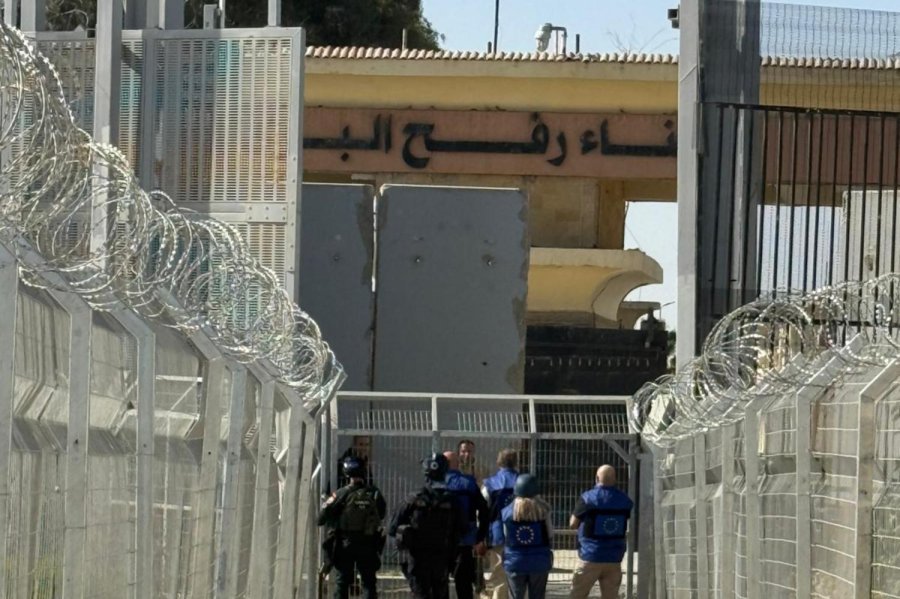
Mariam’s return was made possible only after Israel partially reopened the Rafah crossing under the ceasefire framework that took effect in October. However, the crossing continues to operate under strict Israeli control, with severe limits on the number of Palestinians allowed to enter or exit. Patients seeking treatment and families hoping for reunification remain subject to restrictive quotas, invasive inspections, and prolonged delays.
Although international health authorities had coordinated plans for dozens of patients to leave Gaza daily, only a handful were permitted to cross when the border reopened. This reflects a broader pattern in which access to medical care and freedom of movement remain tightly controlled.
Upon her return, Mariam remained at Nasser Hospital to continue her treatment, while her family returned to a tent shelter nearby. Their home had been destroyed during the war and now lies beyond the so-called Yellow Line, an Israeli-imposed boundary that separates areas under direct military control from those where Palestinians remain under constant threat of attack and displacement.
While Mariam’s homecoming brought relief and emotional healing, her family’s reality remains shaped by loss, displacement, and uncertainty. Her story reflects the ongoing suffering of countless Palestinians who remain separated from loved ones, trapped by military restrictions, and denied the stability and safety that every family deserves.

